As an Amazon Associate, we earn from qualifying purchases. Some links on this site are affiliate links at no extra cost to you. Our recommendations are based on thorough research and editorial judgment.

Understanding Foxing in Books: What Those Brown Spots Mean

Foxing refers to those brownish spots scattering older book pages, caused mainly by mold growth combined with iron traces reacting to moisture and air—an intriguing natural patent of age preserved on paper. While such markings can reduce value by dulling a book’s appearance, they also narrate fascinating environmental histories! Though treatments like hydrogen peroxide exist, prevention through stable humidity and proper storage is key. Curious about foxing’s chemistry and care? There’s plenty more to uncover ahead!
Key Takeaways
- Foxing refers to brownish or reddish spots on paper caused by fungal growth and chemical reactions with iron or copper in aged books.
- It occurs primarily in humid conditions, especially where moisture exceeds 50%, promoting mold and oxidation in the paper fibers.
- The spots reduce a book’s aesthetic appeal and can lower its market value, influencing collectors and preservation choices.
- Removing foxing involves chemical treatments or professional light bleaching, but improper DIY methods risk damaging rare books irreversibly.
- Preventing foxing requires storing books in controlled environments with stable humidity, good ventilation, and minimal exposure to pollutants.
Definition and Characteristics of Foxing
Foxing, those intriguing brownish or reddish spots that appear on the pages of aged books and documents, offers a fascinating glimpse into the page’s history and the environmental factors it has endured over time. Foxing typically manifests as uneven discoloration or splotches on old paper, sometimes resembling freckles but rarely damaging the paper’s structure, which is quite reassuring for collectors and historians alike! This charming imperfection arises mainly from fungal growth that thrives in humid conditions and interacts with iron or copper particles originally present in the paper pulp. While some might see foxing as a blemish diminishing a book’s appearance or value, others appreciate it as a natural fingerprint of time, reflecting the unique journey each well-loved volume has traveled across decades or centuries. Understanding the challenges addressed in thesis writing can similarly offer insight into how to preserve and protect valuable written works from deterioration or damage over time.
Historical Background of the Term Foxing
The intriguing term describing those rusty-brown spots gracing aged paper has a story as rich and layered as the discolorations themselves, with its earliest documented appearances stretching back to the early 1800s, hinting at a longstanding recognition of this unique bookish feature. References to “foxy” paper date to 1811, showing early awareness, yet a false derivation or mistaken notion about its origin has sparked debate among antiquarians. While some sources, including the dictionary of verbal corruptions, cite 1848 as the first use, these discrepancies reveal the term’s mysterious evolution. Discussions about causes and prevention rose alongside this, but pinpointing “foxing” in historical texts remains an adventurous quest that deepens appreciation for this fascinating marks’ legacy! This evolving understanding parallels how historical accuracy is critical when exploring forgotten histories in rare books and manuscripts.
Chemical and Biological Causes of Foxing
Understanding the origins of those curious rusty-brown splotches on treasured pages leads naturally into exploring the chemical and biological factors that bring them to life. Foxing arises mainly from chemical reactions, where tiny traces of iron present in paper pulp oxidize when exposed to moisture and oxygen, creating those infamous brown spots. Meanwhile, biological factors such as mold and bacteria—often encouraged by high humidity—combine with organic compounds left behind during paper production to cause further corruptions, perverting the page’s appearance. These processes aren’t merely random; they reveal a fascinating interplay between the paper’s age, raw material quality, and internal chemical breakdown. So, the next time you spot foxing, remember—it’s an indication of both chemical history and subtle biological activity, not just accidental damage! This complex degradation mechanism parallels how historical books require meticulous care to preserve their authenticity and quality over time.
Recommended Products

Paper and Book Cleaner putty absorbs dust and dirt and brings your books back to looking new again, best for getting grime off the dust jackets, book covers and book edges.

Absorene , book and paper cleaner , absorbs Dust - Dirt - Smoke - Film . Brings your books back to looking new again , used to get the grimeoff the dust jackets and pulls the dust off the paper.

TWO FAST-ACTING FORMULAS: The ultimate mold prevention kit, our bundle includes 1 spray bottle of RMR-86 and 1 spray bottle of RMR-141 RTU to kill mold and mildew instantly while lifting difficult stains that are left behind
Environmental Factors That Promote Foxing
Humidity plays a starring role in encouraging those pesky brown spots to spread, especially when it creeps above 50%, creating a cozy habitat for fungi enthusiastic to flourish. High humidity levels, combined with poor ventilation—think tightly sealed rooms or cluttered storage spaces—trap moisture, allowing foxing to get comfortable. Environmental pollutants, often lurking in dust or even within the paper’s organic impurities, team up with this dampness to accelerate discoloration. Books stored in basements or attics notorious for leaks and fluctuating moisture levels become prime victims as oxidizing metals react with these conditions. Recognizing these environmental factors is vital; by tackling poor airflow and reducing excess moisture, the unwelcome brown spots that can diminish a book’s charm stand less chance of making themselves at home! Maintaining balanced humidity levels similar to those promoting longevity in Blue Zone environments can help preserve books effectively.
Recommended Products
![FURWEY 100g [ 6 Packs] Rechargeable Desiccant Packs for Storage, Color Indicating Silica Gel Desiccant Packets, Moisture absorbers for storage, Dehumidifier bag for Closets](https://m.media-amazon.com/images/I/51+FVaudz3L._SL500_.jpg)
Convenient To Carry: One desiccant pack measures 5.5x3.1 inches in size and weighs 100 grams, making it very lightweight and compact, making it easy to carry.

Strong Dehumidifier Bags - This silica packets for moisture control adopts the transparent silica gel beads material, a highly active adsorption material and each 500g silica gel desiccant packs for storage adsorb 150g (max 180g) can still keep dry at the maximum saturation, which made the desiccant packs have the ultimate dehumidification ability. Note: white gel beads Only; These humidity control packs do not contain indicating beads and will not change color when they are saturated.

【Portable and Durable Silica Gel Aluminum Desiccant Containers】: Silica gel aluminum can is designed with convenience and durability in mind. Each canister measures 4 x 2 x 0.5 inches, providing a compact size that is easy to carry and store. The high-quality aluminum construction ensures the canister remains firm and sturdy, protecting it from dents and damage. With their independent and portable design, these small silica gel tin canisters are a convenient solution for your storage needs.
Methods for Repairing and Removing Foxing
Addressing foxing on treasured books can feel like tackling an ancient mystery, but various repair methods—ranging from carefully applied sodium borohydride treatments (a favorite in many conservation labs) to diluted hydrogen peroxide applications—offer promising results, though each technique carries its own risk of discoloration or paper weakening if used improperly. Methods for repairing foxing should always be approached cautiously; professional interventions often use controlled light bleaching to minimize damage while lightening those pesky brown spots. DIY attempts, tempting as they may be, risk irreversible harm, especially to rare editions! For modern readers, scanning and digital image processing provide an excellent way to erase foxing’s visual impact without touching the fragile paper. Of course, the best approach remains the Prevention of Foxing through proper storage and handling, safeguarding these precious volumes for future enjoyment! Understanding the availability and accessibility of different editions can also help collectors choose copies less susceptible to foxing.
Recommended Products

Archival material created and made in USA. Lineco is a leading and trusted brand for archival quality art, photography, and framing supplies

Automotive Bodywork and Rust Repair

This very thin and transparent pressure sensitive archival mending tissue is non-yellowing.
Impact of Foxing on Book Value and Collectibility
Books bearing foxing present an intriguing challenge in the world of collecting, as the presence of those reddish-brown spots—often scattered across creamy pages or forming delicate patterns on endpapers—can greatly sway their market value and appeal. In collectible books, the extent of foxing plays a significant role: minimal spots might be charming, adding an authentic patina of age that some enthusiasts truly treasure, while heavy foxing usually signals deterioration, lowering a book’s monetary value and sometimes relegating it to a lower condition grade. Yet, for rare or historically significant texts, foxing does not always diminish worth—such volumes can retain value despite visible marks, reminding us that sometimes, character and history hold their own irresistible appeal! Understanding the importance of practical examples can similarly enhance appreciation, bridging abstract concepts and real-world impacts in the field of book collecting.
Recommended Products

Contains listings for 225 species which are grouped by order


Prevention Strategies for Foxing in Book Preservation
While foxing may seem like an inevitable foe in the quest to preserve treasured volumes, implementing thoughtful prevention strategies can dramatically reduce its appearance—and that’s truly exciting for collectors and librarians alike! Maintaining stable temperatures between 60°F and 70°F with humidity levels around 40% to 50% can help avert foxing by minimizing moisture’s harmful effects on books printed on sensitive paper. Using acid-free archival materials, including protective boxes and interleaving sheets, shields pages from acidic reactions that contribute to deterioration. Enhancing air circulation with dehumidifiers or air conditioners in humid environments further combats mold, a frequent foxing accomplice. Regularly monitoring conditions and keeping books away from metals that might corrode guarantees a safer environment, effectively aiding in preventing foxing and preserving those cherished printed treasures! Additionally, using durable materials in storage solutions can enhance longevity and protection for valuable books.
Recommended Products

Brand Background: Lineco is a leading and trusted brand for archival quality art, photography, and framing supplies
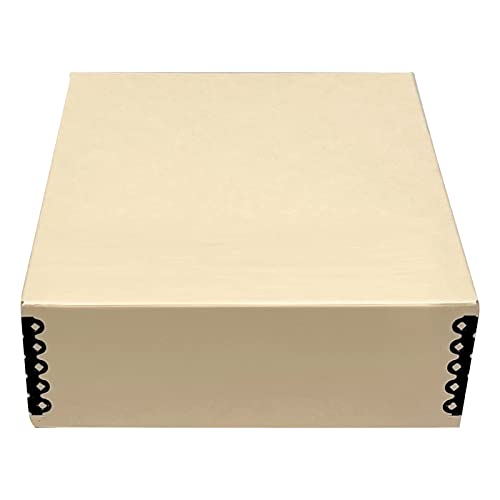
Premium Material: Our photos organizers are made of acid-free, lignin-free archival quality with 60 point board, which is good for long-term storage your values

Lineco is a leading manufacturer of archival storage for conservation of photos, documents, and artwork. Trusted by museums and archives, ideal for your family memorabilia
Foxing in Relation to Similar Paper Deterioration Issues
Prevention methods that maintain ideal temperature and humidity control certainly offer a promising line of defense against foxing, but the story doesn’t end there! Foxing, distinguishable by its characteristic brown or reddish spots, is just one form of paper deterioration influenced heavily by environmental factors like moisture and temperature swings. Other issues, such as yellowing, fading, or brittleness, also creep in as paper ages, sometimes accompanied by mold’s black or fuzzy patches—subtly different yet equally damaging. Damp conditions often provoke both foxing and staining, making careful identification essential for proper preservation strategies. Collectors and librarians alike should note that foxing not only mars appearance but can diminish a book’s value, reinforcing why understanding these nuanced paper deterioration types is crucial for anyone passionate about safeguarding treasured volumes! Similar to how environmental factors shape street photography styles, they play a pivotal role in the preservation or deterioration of various art and historical materials.
Frequently Asked Questions
What Do Brown Spots on Books Mean?
Brown spots on books indicate causes of foxing, mainly chemical reactions and fungal growth from humidity. Preventing foxing involves controlling moisture and ventilation, while treating foxing requires specialized cleaning to avoid damaging the paper’s integrity.
Is It Safe to Read a Book With Foxing?
Reading a book with foxing is generally safe, provided safety precautions include monitoring for mold. Ideal reading conditions and preservation techniques, such as controlled humidity and careful handling, help maintain the book’s condition and prevent further deterioration.
Does Foxing Affect a Book’s Value?
Foxing typically lowers the value of collectible editions, depending on rarity and condition. Accurate value assessment requires professional evaluation, while preservation methods may mitigate damage, maintaining market appeal for certain collectors or niche interests.
What Are the Brown Foxing Spots?
The brown foxing spots result from causes of foxing like oxidation and fungal growth. Prevention methods include controlling humidity, while restoration techniques involve careful cleaning and chemical treatments to reduce discoloration and preserve the book’s appearance.