As an Amazon Associate, we earn from qualifying purchases. Some links on this site are affiliate links at no extra cost to you. Our recommendations are based on thorough research and editorial judgment.

How Humidity Affects Books and What to Do About It

Humidity dramatically impacts books—too high (over 50% RH) invites mold, ink bleed, and warped pages, while too low (below 30%) causes brittle, fragile paper and cracked bindings. Maintaining a stable 30%-50% relative humidity is essential, using dehumidifiers or airtight cases alongside hygrometers for constant monitoring. These proactive steps shield precious collections from damage, enhance longevity, and keep pages pristine (yes, even those vintage hardcovers!). Curious about fine-tuning preservation tactics for every book lover’s dream library?
Key Takeaways
- Maintain book storage RH between 30% and 50% to prevent mold growth and paper brittleness.
- High humidity leads to mold, ink bleeding, weakened bindings, and warped pages.
- Low humidity causes brittle paper, detached covers, and curled, fragile pages.
- Use dehumidifiers, hygroscopic materials, and airtight containers to stabilize humidity levels.
- Regularly monitor humidity with data loggers and adjust conditions to protect book collections.
Optimal Humidity Levels for Book Preservation
Although many might overlook it, maintaining an ideal relative humidity (RH) between 30% and 50% is absolutely vital for preserving books, especially delicate paper materials that can suffer a lot if conditions stray too far from this range. Within these storage areas, humidity levels must be carefully balanced to prevent mold growth, which notoriously thrives above 65% RH, and to avoid excessive drying that causes brittleness under 30%. Fluctuations in humidity pose a sneaky threat too—rapid changes lead to warping and fiber degradation, undermining document conservation efforts. That’s why real-time monitoring using hygrometers or data loggers remains fundamental, allowing instant adjustments and safeguarding collections from invisible harm. These steps guarantee cherished books stand the test of time—because preserving memories properly is truly an art! Incorporating daily habits for environmental monitoring can significantly enhance the long-term preservation of valuable books.
Effects of High Humidity on Books
When humidity climbs beyond 65%, books begin to suffer in ways that sometimes surprise even seasoned collectors, as pervasive moisture not only encourages mold and mildew—which leave stubborn stains and that unmistakable musty smell—but also promotes paper deterioration that destabilizes finely crafted volumes like vintage HarperCollins editions or delicate, hand-bound anthologies, causing pages to weaken, tear, and curl, while ink can bleed across lines, undermining the beauty and legibility of treasured texts (and yes, it truly breaks a bibliophile’s heart!). High humidity also weakens adhesives, leading to loosened bindings, while humidity levels fluctuate, causing warping that distorts pages. The damage caused to books and documents in such environments is why maintaining the ideal environment is essential to protect these precious works and prevent ongoing paper degradation and mold growth! Understanding signal integrity principles can help in designing better protective storage systems for valuable printed materials.
Recommended Products
![FURWEY 100g [ 6 Packs] Rechargeable Desiccant Packs for Storage, Color Indicating Silica Gel Desiccant Packets, Moisture absorbers for storage, Dehumidifier bag for Closets](https://m.media-amazon.com/images/I/51+FVaudz3L._SL500_.jpg)
Convenient To Carry: One desiccant pack measures 5.5x3.1 inches in size and weighs 100 grams, making it very lightweight and compact, making it easy to carry.

Strong Dehumidifier Bags - This silica packets for moisture control adopts the transparent silica gel beads material, a highly active adsorption material and each 500g silica gel desiccant packs for storage adsorb 150g (max 180g) can still keep dry at the maximum saturation, which made the desiccant packs have the ultimate dehumidification ability. Note: white gel beads Only; These humidity control packs do not contain indicating beads and will not change color when they are saturated.

Efficient Dehumidification: Traps excess moisture quickly. Vacplus moisture absorbers use spherical calcium chloride to enlarge the absorbing area. The large collecting capacity of this moisture remover keeps a long time dry.
Consequences of Low Humidity on Paper Materials
Low humidity levels, especially those dipping below 30% RH, can wreak havoc on treasured paper materials, turning once supple pages brittle and fragile, prone to quick cracking and tearing during even the gentlest handling—something any owner of a first edition Penguin classic or a detailed National Geographic volume will want to avoid at all costs! When RH levels fall too low, cellulose fibers in paper lose essential moisture, causing structural weakening that accelerates degradation. Books often suffer damage as adhesives in bindings dry out, leading to detached covers and loose pages—a heartbreaking sight for collectors! Paper may also curl or warp, detracting from readability and aesthetics. Prolonged exposure to low humidity risks irreversible damage, ultimately compromising the longevity of printed materials, underscoring why maintaining balanced humidity is vital for preserving beloved books. Proper storage methods, including controlling environmental factors such as light and humidity, are crucial for ensuring the longevity of high-quality animation art books and similar collector’s editions.
Recommended Products
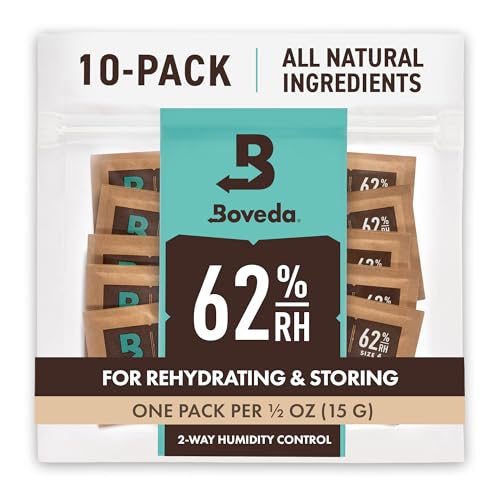
LIMITED AVAILABILITY - Boveda for Growers has a new name: Vivi Fresh. Exact same product. Exact same performance. Now part of a freshness-focused brand. Search for Vivi Fresh on Amazon, and see what’s fresh.

LIMITED AVAILABILITY - Boveda for Growers has a new name: Vivi Fresh. Exact same product. Exact same performance. Now part of a freshness-focused brand. Search for Vivi Fresh on Amazon, and see what’s fresh.

The Role of Humidity Fluctuations in Material Damage
Because books keenly absorb and release moisture from their surroundings—a hygroscopic habit that seems innocent at first—they face constant internal stress whenever humidity levels swing wildly, causing pages to swell, shrink, or warp in ways that can quickly degrade a prized hardcover or a delicate vintage pamphlet. Such humidity fluctuations, especially when relative humidity (RH) moves outside the ideal 30%-50% range, lead to serious potential damage through the weakening of paper fibers and the degradation of paper strength. Excessive moisture not only accelerates this deterioration but also invites mold growth, though that’s a topic for later! Maintaining stable conditions minimizes these risks and preserves book integrity over time, making it clear how vital a controlled environment is for any collection’s longevity. Proper display solutions, such as acrylic book stands, can help reduce exposure to environmental stressors by allowing better air circulation around books and minimizing direct contact with damp surfaces.
Mold Growth and Pest Problems Related to Humidity
Excess moisture doesn’t just cause pages to swell and warp; it also sets the stage for unwelcome visitors like mold and silverfish, which thrive in environments where relative humidity lingers above 65% and temperatures stay comfortably warm. Mold growth becomes a serious concern in storage areas with RH above this threshold, as it can stain, weaken, and eventually disintegrate precious book materials. Pests, especially silverfish, find these damp, warm conditions perfect for infestation, nibbling away at paper and bindings. Continuous exposure to high humidity causes paper fibers to swell, making them more vulnerable to both mold and pest damage. For effective conservation, maintaining relative humidity between 30% and 50% in well-ventilated spaces is essential to protect collections and prevent such destructive growth and pest problems! Applying practical emotional regulation techniques from conflict resolution literature can similarly help manage the stress of dealing with damaged collections.
Recommended Products

【Portable & Durable Silica Gel Tin Canister】 : Each tin canister is 7.24 inch x 7.24 inch x 0.8 inch. Pinhole of can body size: Tapered outer diameter φ2.00±0.02mm, inner diameter φ0.5.00±0.02mm. Independent small portable silica gel tin canister is convenient for you to use or store. They are commonly used in a variety of applications, including safe or any storage containers.

Protect your firearms, gun accessories, ammo and more from excess moisture, rust, and corrosion by keeping this reusable dehumidifier unit handy with moisture-control crystals to indicate humidity control

🌱Absorb Excess Moisture(Calcium chloride):Our hanging moisture absorber packets are made using an advanced formula.Spherical calcium chloride enlarges the area to absorb quickly,Protects clothes and items from excess moisture damage.
Effective Methods for Controlling Storage Humidity
When preserving cherished book collections, controlling storage humidity becomes an art in itself, requiring a blend of practical tools and mindful habits to keep those precious pages safe! Maintaining relative humidity (RH) between 30% and 50% is vital, as consistent humidity levels prevent mold growth and avoid the swelling or shrinking that warps papers. Dehumidifiers, especially adsorption models, excel at managing moisture in cooler environments, while passive humidity control—using hygroscopic materials or airtight containers—offers a low-maintenance, steady defense against fluctuations caused by environmental factors. Though monitoring with data loggers isn’t the focus here, understanding these control methods helps collectors confidently protect their books from damage. Employing these thoughtful approaches guarantees a stable atmosphere where treasured volumes can endure beautifully for generations to come! Just as precise control of environmental factors like moisture is key in cooking with an Instant Pot, maintaining proper humidity is similarly essential for preserving delicate materials — both require attention to practical techniques.
Recommended Products

【Portable and Durable Silica Gel Aluminum Desiccant Containers】: Silica gel aluminum can is designed with convenience and durability in mind. Each canister measures 4 x 2 x 0.5 inches, providing a compact size that is easy to carry and store. The high-quality aluminum construction ensures the canister remains firm and sturdy, protecting it from dents and damage. With their independent and portable design, these small silica gel tin canisters are a convenient solution for your storage needs.
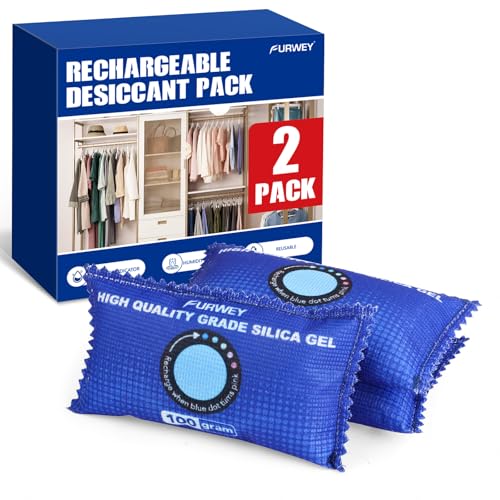
Convenient To Carry: One desiccant pack measures 5.5x3.1 inches in size and weighs 100 grams, making it very lightweight and compact, making it easy to carry.
![Dry & Dry 30 Gram [20 Packets] Silica Gel Packets Desiccants, Silica Packets - Rechargeable Moisture Absorbers for Food Storage, Electronics, 3D Filament & Safes](https://m.media-amazon.com/images/I/51FgsHEeeSL._SL500_.jpg)
[Pure and Safe] Pure white silica gel beads; These packets do not contain indicating beads and will not change color when they are saturated; 30 gram desiccant packets can cover approximately 3600 cubic inch(2.08 cubic foot) volume containers; We recommend placing more packets than recommended for extra protection; (Packet dimension: 3 inch x 4 inch)
Monitoring Humidity to Protect Book Collections
A reliable humidity monitoring system serves as the cornerstone for any book collection’s preservation strategy, ensuring relative humidity consistently stays within the ideal 30% to 50% range recommended by experts like the Library of Congress. Regular monitoring using hygrometers or automated systems allows for quick detection of harmful humidity levels that threaten paper quality, preventing the warping and brittleness that often follow unchecked moisture fluctuations. High humidity levels above 65% encourage mold spores and insect activity, which devastate storage areas if left unnoticed. Automated systems, paired with humidity sensors, adjust dehumidifiers or humidifiers seamlessly, maintaining optimal levels without constant manual checks. Adding proactive inspections to this regimen boosts effectiveness and keeps collections safe, combining technology and vigilance in a practically unbeatable preservation duo! For those managing collections, quick-reference tools can offer immediate access to climate control guidelines critical in preventing humidity-related damage.
Recommended Products

Unique Book Design: Disguised as a decorative book with a colorful Vitrales art-inspired cover, high-gloss piano lacquer finish, and gold-edged detailing; sits naturally on any bookshelf or office shelf for discreet, stylish cigar storage; suitable for connoisseurs and gift givers

Frequently Asked Questions
How to Protect Books From Humidity?
Humidity control in book storage involves climate monitoring, ensuring adequate air circulation, and using protective covers. Incorporating moisture absorption materials like silica gel aids preservation. Consistent humidity regulation provides essential preservation tips to prevent damage and deterioration.
How Humid Is Too Humid for Books?
Humidity levels above 65% are too humid for books, risking moisture damage and poor book preservation. Maintaining ideal storage involves climate control, air circulation, and dehumidification methods to prevent deterioration and protect collections effectively.
How to Fix Papers That Got Ruined by Humidity?
Paper restoration techniques include gentle drying methods using absorbent towels, careful dehumidifier use, and climate monitoring. Employ archival supplies and bookbinding repair to restore damaged pages, ensuring ongoing moisture control for long-term preservation.
How Long Does It Take for Humidity to Ruin Books?
Humidity effects can cause mold growth within days, while book degradation like paper warping and ink bleeding emerges over weeks to months. Preservation techniques and environment control are essential to prevent irreversible damage in sensitive collections.