As an Amazon Associate, we earn from qualifying purchases. Some links on this site are affiliate links at no extra cost to you. Our recommendations are based on thorough research and editorial judgment.

The Appeal of Miniature Books Throughout History

Miniature books have fascinated readers for millennia, from ancient Sumerian tablets to delicate 15th-century printed prayer scrolls, blending profound ideas with charming portability. Their tiny size—defined by the Miniature Book Society as under three inches—showcases exquisite craftsmanship, like ornate bindings or ion beam etching, making each a collector’s treasure. These pocket-sized volumes once spread provocative political and social ideas, while today publishers such as Uneek Books craft innovative pop-ups. The enduring allure of miniature books hides a rich world waiting just beyond the cover!
Key Takeaways
- Miniature books have historically offered accessible, portable formats for sharing profound religious, philosophical, and provocative ideas.
- Their intricate craftsmanship and ornate designs showcase exceptional artistry that captivates collectors and readers alike.
- Tiny books create intimate reading experiences, fostering personal connections and nostalgic fascination with literature.
- Miniature volumes served as discreet political and satirical tools, enabling the covert circulation of sensitive or controversial content.
- Despite digital trends, miniature books remain culturally relevant, symbolizing human creativity and preserving historical narratives with unique storytelling.
Origins of Miniature Books
Miniature books, tiny marvels of human ingenuity, have a rich history that stretches back thousands of years, beginning with the Sumerians around 2500 BCE who crafted small cuneiform tablets used for trade and communication—an early nod to the practicality of compact texts. These earliest miniature artifacts hint at humanity’s long-standing fascination with small books, which evolved markedly by the 15th century when printed miniature books emerged, often carrying religious themes. One notable example is Peter Schoffer’s 1468 Diurnal Mogantium, a marvel of early compact printing that set a precedent. By the 17th century, the popularity of miniature Bibles in England delighted readers needing portable scripture, while the 19th century expanded this love for small books into children’s stories and decorative keepsakes, proving these tiny volumes’ enduring charm! Similarly, the inclusion of illustrations and maps in miniature formats has historically enhanced the reader’s engagement and understanding.
Defining Characteristics and Size Categories
Shrinking books to pocket-sized wonders has enticed artists, printers, and collectors for centuries, as their compact dimensions invite curiosity and admiration alike! Miniature books, officially defined by the Miniature Book Society as measuring no more than 75mm (3 inches) in any dimension, offer a fascinating spectrum within a small footprint. Their size categories range from macro miniatures (3 to 4 inches)—still delightfully tiny—to micro miniatures (1/4 to 1 inch), and the ultra micro miniatures under 0.25 inches, challenging readability and craftsmanship to astonishing degrees. These classifications enrich any miniature library, showcasing incredible skill (like Galileo’s tiny 2.5 type prints) alongside playful records such as the impossibly small Teeny Ted from Turnip Town. Among such small delights, these books embody artistry and precision, sparking joy in collectors and bibliophiles alike! Exploring design variety in miniature books can add another layer of fascination, showing how style and craft adapt even within the tiniest formats.
Recommended Products

Package Includes:Buy our products and you will get 30 miniature books in different styles,there are 3 styles to meet your various dollhouse decoration needs


Early Uses and Religious Significance
Devotion found new dimensions when religious texts were delicately crafted into tiny volumes, often no larger than a thumb, inviting faithful readers to carry spiritual guidance wherever life led them. Miniature books, beginning as early as 770 AD with Japanese Empress Shotoku’s prayer scrolls measuring just 2 3/8 inches tall, served as portable companions for personal worship. By the 15th century, these small religious texts became essential, especially in 17th-century England where “thumb Bibles” allowed individuals to maintain a close spiritual connection. Beyond convenience, these miniature books often featured ornate bindings and illustrations, symbolizing not only faith but wealth. Calendars and prayer books in miniature forms discreetly offered continuous guidance, showcasing how these tiny treasures shaped personal devotion through history—truly fascinating! Their compact design resembles the user-friendly layouts found in modern cookbooks, highlighting how small size can enhance accessibility and personal engagement.
Craftsmanship and Artistic Techniques
When spiritual texts were carefully crafted into tiny, portable volumes, the craftsmanship behind these treasures quickly became a marvel worth appreciating on its own. Tiny books showcase exceptional skill through legible miniature type and intricate bindings that often surprise with their delicate precision. The production process demands mastery of printing and binding techniques, turning each book into a specialized art piece. For instance, the lavish Wünsche zum Beylager project highlighted craftsmanship by emphasizing detailed illustrations and decorative covers, not just practical use. Innovations like ion beam etching pushed boundaries further, enabling incredibly small books without sacrificing clarity. Collectors often seek out these beautifully bound tiny books, appreciating their blend of artistry and technical mastery—truly miniature marvels that display artistic finesse and historical charm in a compact form! Exploring varied materials and techniques can similarly enrich other artistic crafts, demonstrating how diverse approaches enhance mastery and creativity.
Recommended Products


Compact Size: Each sticker measures approximately 1.57 inches (4 cm) in length and 0.79 inches (2 cm) in width, making them perfect for mini and small-sized books.
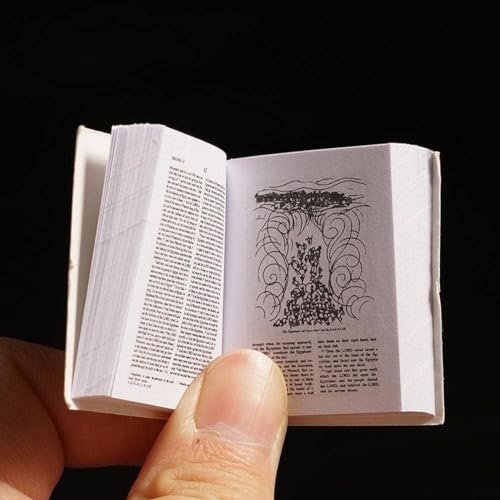
SCALE AND SIZE: Perfectly crafted in 1/12 scale, this miniature Bible measures approximately 0.5 inches in height, ideal for dollhouse displays
Notable Historical Miniature Editions
Miniature books have a rich history marked by remarkable editions that continue to captivate collectors and bibliophiles with their tiny scale and impressive detail. Among notable historical miniature editions, the 1468 Diurnal Mogantium, bound by Peter Schoffer, stands out as an early masterpiece in the history of miniature books. The 1878 “fly’s eye Dante,” measuring just 1¼ by 1¾ inches, highlights the incredible craftsmanship involved. David Bryce’s 1896 one-inch Authorized Version of the Bible, complete with a tiny magnifying glass, adds an element of practical charm. The 1828 Horace’s odes edition, featuring the name “Henri Didot” printed smaller than the main text, delights with its fine detail. Queen Mary’s dollhouse collection, bound by Sangorski & Sutcliffe, reflects the enduring fascination with tiny literature! These miniature editions often require meticulous planning and structured approaches to effectively capture detailed content in such small formats.
Recommended Products

Compact Packaging: The miniature dollhouse books are thoughtfully packaged in a sleek design measuring only 8.58 x6.1x0.7 inches, ensuring easy storage and safe transport while maintaining top-notch quality


【Value Package】 You will get 300pcs mini books, rich quantity enough to meet your different needs. Cute and realistic, perfect for your various dollhouse decorations, home decorations, desk decorations and other DIY programs, no people can refuse them
Miniature Books as Political and Satirical Tools
Although often overlooked in favor of more lavish editions, miniature books served as surprisingly effective political and satirical tools, especially in the 19th century, when their compact size allowed for discreet circulation and witty commentary. These tiny volumes, like Gen. Cass’ Letter to the Harbor and River Convention, packed sharp political literature into a portable format perfect for campaigning, with publishers capitalizing on their easy distribution during heated elections. Beyond politics, works such as Charles Knowlton’s Fruits of Philosophy cleverly concealed sensitive topics like contraception, while injecting satire through playful errata aimed at opponents (a neat literary jab!). Miniature books enabled authors to challenge societal norms quietly, offering an accessible medium where political dissent and biting humor could travel unbarred—proving that small can indeed be mighty! Their ability to blend historical context and evidence with accessible narratives parallels the approach used in African American history books, which balance scholarly depth with readability to engage diverse audiences.
Miniature Books Containing Controversial Content
Since their compact dimensions allowed for discreet handling, niche publishers produced provocative miniature books like Charles Knowlton’s 1832 classic *Fruits of Philosophy*, a daring 72-page volume wrapped in distinctive yellow pictorial covers that boldly tackled contraception—a topic taboo enough to invite obscenity charges! These miniature books, despite their diminutive size, masked controversial content that often faced censorship, making them perfect for sensitive subjects like female anatomy discussion or political dissent. For example, miniature political pamphlets, such as Gen. Cass’ 1848 election letter, circulated challenging societal norms with remarkable subtlety. The ingenious balance between visual appeal and secrecy in these tiny books not only shielded provocative ideas but also fueled essential conversations around sexuality, contraception, and freedom of expression—demonstrating how miniature books became unexpected yet powerful vessels for stirring public debate and reflection. This tradition of compact yet impactful publications parallels how modern Stoicism texts emphasize practical exercises to convey profound philosophical ideas in accessible formats.
Psychological and Emotional Appeal to Readers
There is a special magic in owning a tiny book, like Methuen’s 1923 edition of *The Ballad of Reading Gaol*, with its 112 delicately printed pages tucked into a cover no larger than a postcard, which invites readers to lean in closer, creating a personal, almost secret bond with literature. The emotional attachment formed with such miniature volumes is profound, as their collectible nature sparks fascination beyond mere size. Readers delight in the intimacy and nostalgia these books evoke, often cherishing them as precious keepsakes that encapsulate entire stories within their modest frames. This playful, compact charm encourages a delightful engagement (and occasional challenge!) that transforms reading into a unique, heartfelt experience—a whispered connection between reader and text that miniature books uniquely foster. Additionally, the balance in portability and puzzle count seen in many puzzle books reflects a similar appreciation for compactness and functionality in reading materials.
Collectibility and Market Value
Shifting focus from the intimate allure miniature books hold for readers, their appeal also extends into the passionate world of collectors, where rarity and craftsmanship dictate fervent enthusiasm and escalating market value. Collectibility centers on scarce editions, especially those produced by esteemed publishers with exceptional artistry, whose tiny pages—often fewer than a hundred—demand meticulous care and speak volumes in historical context. The Miniature Book Society plays an essential role here by promoting standards that spotlight these treasures’ unique charm and enhance appreciation among aficionados. Because so many miniatures have perished over time due to fragility, surviving copies gain exceptional desirability and, consequently, impressive market value. For anyone drawn to exquisite, tangible history wrapped in a pocket-sized marvel, the world of miniature book collecting offers endless joy and rewarding discoveries! Many collectors find it essential to consider presentation and performance skills as a factor when assessing the artistry and appeal of these works.
Recommended Products



DRAGON HIDE FORGED EXTERIOR: Upgrade your arsenal with the highest-grade Dragon Hide (available in 5 colors) and show off your Collector's Edition DnD Backpack with the included metal charm keychain
Modern Production Challenges and Innovations
Although crafting miniature books presents intricate challenges requiring extraordinary precision in printing and binding, publishers like San Francisco’s Miniature Publishing Co. continue to amaze collectors with editions rarely exceeding fifty pages, showcasing fine leather covers, gilded edges, and sometimes clever innovations like pop-up scenes or flip designs that elevate these tiny treasures beyond mere novelty—truly, anyone fascinated by craftsmanship and storytelling packed into palm-sized formats will find this world endlessly rewarding! Modern production demands not only precise techniques but also innovative production methods, such as ion beam etching, which push the boundaries of how small and detailed these works can be. The higher costs and creative limitations inspire designers to craft concise, impactful stories, proving that miniature books remain a dynamic blend of art, technology, and tradition. The fusion of detailed visuals and rich narratives, similar to what makes photographic exploration in abandoned places so captivating, is crucial to the appeal of these tiny volumes.
Recommended Products

✅ Pure Unlined Leather Miniatures Journals for Your daily Notes , Poems , Educational Purpose , Office Use . 7.5 X 7.5 cm. Size Of Each Diary : 136 Number Of Pages : Unlined Sides.
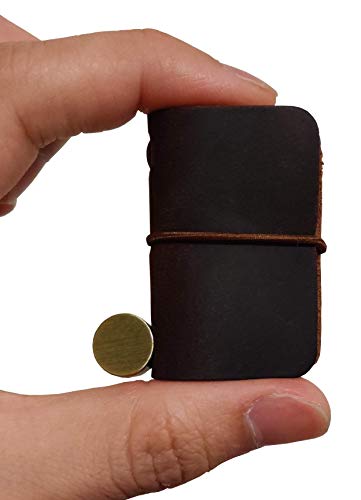
The world's tiniest notebook. Well, not really... but it's pretty freaking small.

【Miniature Note Book】 This is a 4.8 x 3.2 x 1.5 cm (1.9 x 1.3 x 0.6 in) tiny leather travels notebook with 32 blank inner pages inside. It is small and easy to carry, so you can also hang it on your bag or put it in your pocket
The Continued Cultural Relevance of Miniature Books
While digital media continues to dominate how stories are told today, miniature books surprisingly maintain their charm and cultural relevance, enchanting both seasoned collectors and casual admirers who appreciate their blend of nostalgia, craftsmanship, and artistry. These tiny treasures preserve traditional knowledge in compact form, often reflecting historical narratives with intricate bindings and exquisite designs that spark joy among collectors. Publishers like Uneek Books and Kickshaws continue to innovate, offering pop-up styles and elaborate printing techniques that push this art form’s limits. Enthusiasts prize miniature books not only as decorative items but as symbols of human creativity and cultural legacy, their demand fueling niche markets where rarity often raises value. Thanks to the Miniature Book Society’s efforts, these diminutive delights receive growing recognition, too—keeping them relevant and treasured!
Frequently Asked Questions
What Is the Appeal of Miniature Books?
The appeal of miniature books lies in their collectible editions that balance portability with artistic expression, showcasing intricate craftsmanship. They captivate enthusiasts through the charm of compact narratives, merging functionality with detailed, visually appealing design on a tiny scale.
What Is the History of Mini Books?
Miniature books trace back to ancient texts, evolving considerably through advancements in production techniques during the 19th century. These innovations enabled detailed, compact works, reflecting both religious significance and artistic craftsmanship within limited physical dimensions.
Why Are Miniatures so Appealing?
Miniatures appeal due to their collectible value and demonstration of artistic expression. Their intricate craftsmanship and rarity attract enthusiasts, while their novelty and intimacy create a unique reading experience, blending practicality with aesthetic and historical significance.
What Is the Psychology Behind Miniatures?
Miniatures mesmerize minds through manipulating the perception of size, sparking subconscious connections to childhood nostalgia. This psychological interplay fosters fascination, familiarity, and fondness, allowing individuals to feel comforted and captivated by tiny, tangible treasures.