As an Amazon Associate, we earn from qualifying purchases. Some links on this site are affiliate links at no extra cost to you. Our recommendations are based on thorough research and editorial judgment.


10 Best Stoicism Books to Read in 2026 — Timeless Wisdom for Modern Life

You’ll love these Stoic picks for 2026: The Wisdom of the Stoics Boxed Set (deluxe hardbound, 720 pages, gilt), Meditations (Modern Library, ~304 pages), Letters from a Stoic (Penguin Classics, ~256 pages), The Daily Stoic Boxed Set, The Little Book of Stoicism (192 pages), The Practicing Stoic (~320 pages), The Stoic Mindset (272 pages), and Art of Modern Stoicism — practical, contemporary, and grounded! Keep going and you’ll find picks, pros, and how to choose.
Key Takeaways
- Prioritize a mix: classics (Marcus, Seneca, Epictetus), modern interpreters, and practical workbooks for application in daily life.
- For beginners, choose accessible guides like The Little Book of Stoicism or Beginner’s Guide to Stoicism for clear exercises and orientation.
- Include foundational texts: Meditations, Letters from a Stoic, and Discourses/Enchiridion for original Stoic philosophy and timeless guidance.
- Pick at least two practical companions (The Practicing Stoic, The Stoic Mindset, The Daily Stoic) offering drills, prompts, and journaling.
- Consider format, depth, and author credibility: 200–400 pages, readable translations, reputable publishers, and authors with philosophical expertise.
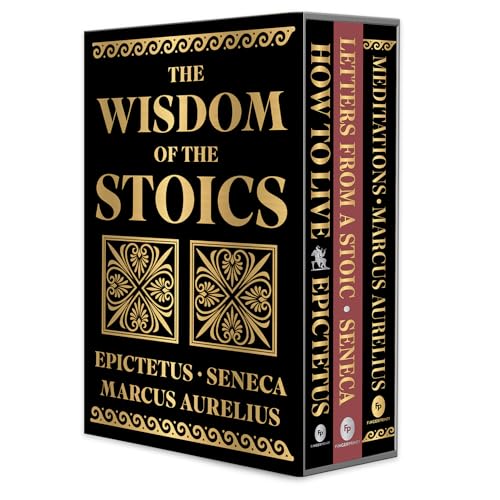
The Wisdom of the Stoics Boxed Set (Deluxe Hardbound Edition)

You may be interested

10 Best 3D Printing Books to Master the Art and Technology
August 12, 2024


If you want a single, lasting introduction to Stoicism that’s both practical and beautiful, this deluxe hardbound boxed set — containing Seneca’s Letters from a Stoic, Marcus Aurelius’s Meditations, and Epictetus’s How to Live (The Enchiridion and Discourses) — is perfect for readers who want a thorough, gift-ready collection that doubles as a durable reference you’ll keep returning to, and I’m genuinely excited about recommending it (yes, I judge books by their covers sometimes!). Gilt-edged volumes with slipcase from Modern Library, 720 pages (Seneca ~200, Marcus ~240, Epictetus ~280), delivering practical resilience, reflection, techniques for inner peace to apply.
Best For: readers seeking a durable, gift-ready introduction to Stoic philosophy that combines practical self-improvement guidance with classic primary texts.
Pros:
- Includes three foundational Stoic works (Seneca, Marcus Aurelius, Epictetus) for a comprehensive view of Stoic thought.
- Deluxe hardbound design with gilt edges and slipcase makes it attractive as a keepsake or gift and durable for frequent reference.
- Practical, timeless guidance on resilience, inner peace, moral reflection, and personal growth applicable to everyday life.
Cons:
- Deluxe edition likely more expensive than paperback alternatives.
- Dense, classical texts can be challenging for readers looking for a modern, guided introduction or commentary.
- Some readers may find overlapping themes across the three works repetitive rather than varied.
The Little Book of Stoicism
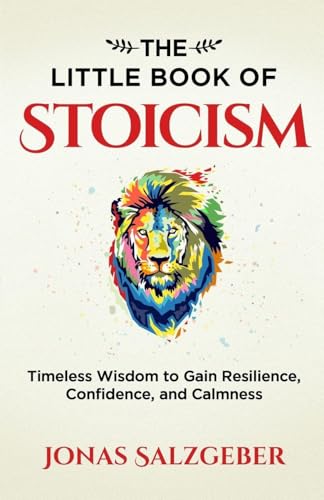
You’ll find The Little Book of Stoicism especially useful if you want a compact, practical primer that fits into a busy life, offering bite-sized exercises and clear principles rather than dense theory, and it’s perfect for readers who prefer hands-on guidance. Published by Watkins in a 192-page paperback edition with a sturdy cloth spine and compact trim, it condenses Epictetus-inspired counsel into actionable prompts, exercises, and reflective quotes. You’ll get mental-health strategies to curb recurring negative thoughts, resilience techniques for loss and fear, plus a call to accountability (how long will you wait?), which I love! Read it now.
Best For: Readers seeking a compact, practical primer on Stoicism with actionable exercises for managing negative thoughts, building resilience, and practicing accountability.
Pros:
- Bite-sized exercises and clear principles that fit a busy life and encourage daily practice.
- Practical mental-health strategies to curb recurring negative thoughts and cope with loss and fear.
- Actionable, Epictetus-inspired prompts that emphasize personal accountability and self-improvement.
Cons:
- Concise format means less depth on Stoic theory for readers wanting comprehensive analysis.
- May feel prescriptive to those who prefer open-ended philosophical exploration.
- Limited page count (192 pages) can restrict coverage of broader Stoic texts and historical context.
The Practicing Stoic

Readers seeking a practical, no-nonsense guide to Stoic practice will find Ward Farnsworth’s The Practicing Stoic especially useful, offering a compact, well-edited manual (about 320 pages in many paperback editions) that collects ancient quotations and clear commentary into one approachable volume. You’ll appreciate how Farnsworth organizes Stoicism by topic, pairing concise translations with crisp explanatory notes, so you can flip to anger, grief, or resilience and get usable lessons quickly, and the sturdy paperback feel (portable, readable, no-frills) makes it easy to carry for daily reference, a terrific companion for applying timeless wisdom. You’ll smile at its clarity, often!
Best For: Readers seeking a compact, practical, and accessible handbook to apply Stoic teachings to everyday challenges.
Pros:
- Concise, well-edited compilation of ancient quotations paired with clear, usable commentary.
- Organized by topic for quick reference (e.g., anger, grief, resilience), making it easy to flip to relevant lessons.
- Portable, no-frills paperback format suited for daily reading and practice.
Cons:
- Not a deep scholarly treatment—more a practical manual than an academic commentary.
- Brief translations and short notes may lack comprehensive context or philosophical nuance.
- Plain presentation and compact size may feel too elementary for advanced Stoicism students.
The Stoic Mindset: Guide to Inner Strength, Mental Clarity, and Emotional Resilience
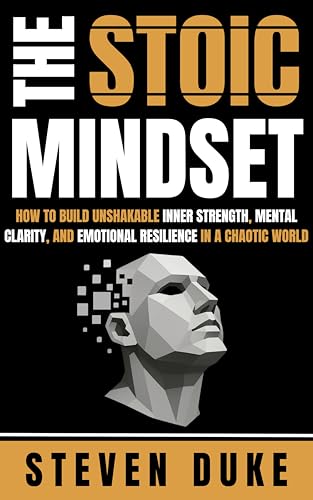
The Stoic Mindset: Guide to Inner Strength, Mental Clarity, and Emotional Resilience serves you best when you want a hands-on, modern manual rather than abstract philosophy, packaged as a sturdy 272-page paperback from Beacon Press with a cloth-like cover and wide margins (great for notes!), and it reads like a coach who’s done the work and keeps the drills short and actionable. You’ll get the Dichotomy of Control central, practical drills like Circle of Control and Voluntary Discomfort, and Amor Fati framed as resilience training, all aimed at rewiring biases and steadying emotions so you act calmly, with measured enthusiasm.
Best For: Readers who want a hands-on, practical Stoic manual — short, actionable drills and modern coaching voice for building resilience and clarity rather than abstract theory.
Pros:
- Practical, action-oriented drills (Circle of Control, Voluntary Discomfort) you can apply immediately.
- Clear, coach-like tone with short chapters and wide margins ideal for notes and reflection.
- Framing adversity (Amor Fati) as training helps rewire biases and steady emotions.
Cons:
- Not for readers seeking deep historical or academic Stoic theory — it’s pragmatic over scholarly.
- The tough, no-comfort approach may feel harsh or prescriptive to some.
- Short, drill-focused format may lack depth for readers wanting extensive psychological or philosophical exploration.
Beginner’s Guide to Stoicism: Tools for Emotional Resilience and Positivity
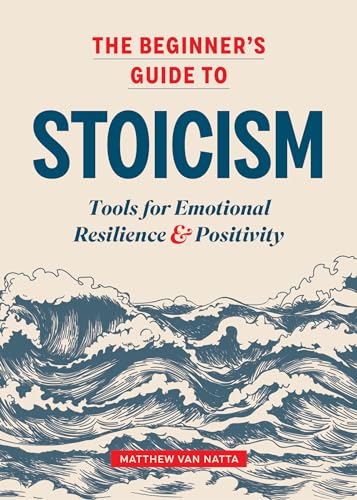
If you’re new to Stoicism and want a clear, practical starting place, this list is ideal for curious beginners who prefer accessible, well-bound editions (think Penguin Classics paperback or Harvard University Press clothbound), each title chosen to pair solid philosophy with real-world exercises, concise page counts (often 200–320 pages), and helpful extras like end-of-chapter questions and indexes. You’ll learn Stoicism’s history and core disciplines—Desire, Action, Assent—through compact volumes that teach emotional resilience and positivity, offer ethical questions and exercises, and show how shifting perception improves relationships and civic life, all in readable, attractive editions you’ll enjoy! practical guidance included.
Best For: Beginners and curious readers who want a compact, practical introduction to Stoicism with readable editions and actionable exercises.
Pros:
- Clear, beginner-friendly selection that pairs philosophical overview with real-world exercises for emotional resilience.
- Concise, well-bound editions (200–320 pages) with helpful extras like end-of-chapter questions and indexes.
- Focuses on practical disciplines (Desire, Action, Assent) and applying Stoic tools to improve relationships and civic life.
Cons:
- Too introductory for readers seeking deep scholarly analysis or primary-source translations.
- Shorter volumes may oversimplify complex Stoic concepts and historical nuance.
- Some attractive editions (clothbound or special presses) can be more expensive than basic paperbacks.
Modern Stoicism: A Guide to Stoic Philosophy and Mindful Living
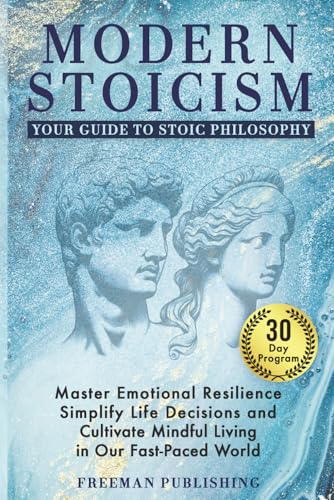
For anyone juggling a hectic job and family life, Modern Stoicism: A Guide to Stoic Philosophy and Mindful Living stands out as a practical primer that you’ll actually use, packed with clear exercises and real-world examples (about 240 pages, hardback with a ribbon marker). You’ll find publisher notes (Penguin Life edition), about 240 pages, solid hardback with a ribbon marker, and clear chapter exercises that guide daily practice, which I recommend. The book helps you tackle stress, decision fatigue, and emotional swings with Stoic virtues, practical prompts, empathy-building questions, and step-by-step routines that make resilience habitual (yes, it works!).
Best For: Anyone juggling a hectic job and family life who wants a practical, easy-to-use introduction to Stoic techniques for stress, decision fatigue, and emotional regulation.
Pros:
- Practical primer with clear, step-by-step exercises and daily routines you can actually use.
- Real-world examples and empathy-building prompts that make Stoic concepts relatable and actionable.
- Compact hardback edition (about 240 pages, Penguin Life) with a ribbon marker for easy daily reference.
Cons:
- Requires regular practice to see benefits—results aren’t instantaneous.
- Not a deep scholarly treatment of Stoic texts; more practical than academic.
- Some readers may find the modern simplifications oversimplify complex ancient ideas.
The Art of Modern Stoicism: 50 Lessons to Build Resilience and Find Meaning
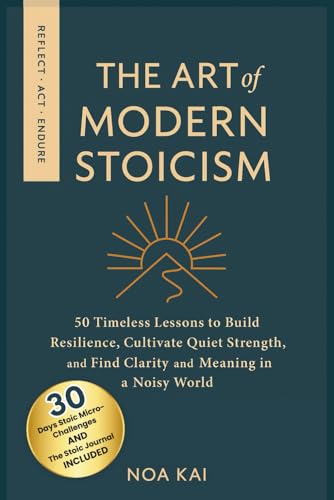
You’ll love this if you want 50 practical Stoic lessons, clear daily prompts, and a companion journal plus a 30-day micro-challenge, all written in accessible, lively prose! Noa Kai condenses Epictetus, Marcus Aurelius, and Seneca into 50 compact lessons, published by Beacon Ridge (paperback, 272 pages), with a durable ribbon marker. Each chapter fits daily life, offers “Ask Like a Stoic” prompts, and pairs with a 144-page companion journal and a practical 30-day micro-challenge calendar. You’ll find clear steps to build emotional clarity, choice-based discipline, and resilient habits, written in plain language that feels energizing and useful (yes, really!).
Best For: readers who want a practical, accessible, day-by-day guide to applying Stoic principles for greater resilience and purposeful habits.
Pros:
- Clear, lively prose that makes Stoic ideas easy to apply in everyday life.
- Fifty concise lessons with “Ask Like a Stoic” prompts, plus a 144-page companion journal and 30-day micro-challenge for practice.
- Emphasizes actionable daily disciplines (one breath, one choice, one practice) to build emotional clarity and resilience.
Cons:
- Not a deep historical or academic treatment of Stoicism—focuses on practice over scholarship.
- Compact lessons may feel too brief or surface-level for readers seeking advanced philosophical depth.
- Practical tools (journal/calendar) may be less useful to those who prefer self-directed or long-form study.
Letters from a Stoic (Penguin Classics)
Sale

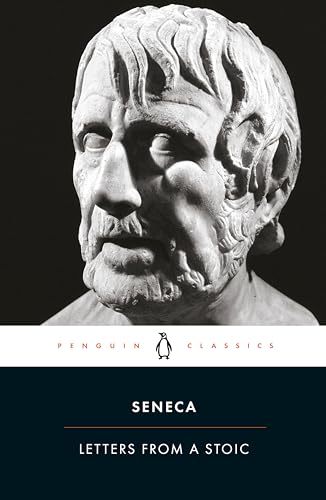
Letters from a Stoic (Penguin Classics)
- Penguin Books
- It ensures you get the best usage for a longer period
- It ensures you get the best usage for a longer period
A great choice if you want Stoic advice that reads like a friend’s tough, warm letter, Penguin Classics‘ Letters from a Stoic (Robin Campbell translation) gives you approachable wisdom in a compact, well-edited package, about 240 pages with a helpful introduction and explanatory notes that make ancient arguments feel immediately useful. You’ll find Seneca’s humane ethics and sharp wit, his critiques of slavery and gladiatorial spectacle, and a steady emphasis on individual dignity and practical self-possession that still lands today. You’ll read concise, accessible translation notes (Robin Campbell), elegant Penguin design, and feel encouraged to apply Stoic practice immediately!
Best For: Readers seeking a concise, friendly, and practical introduction to Seneca’s Stoic ethics and personal advice in an accessible, well-edited paperback.
Pros:
- Clear, approachable Robin Campbell translation that reads like a warm, practical letter rather than dense scholarship.
- Compact ~240-page edition with a helpful introduction and explanatory notes that make ancient arguments immediately useful.
- Elegant Penguin Classics design and accessibility, encouraging readers to apply Stoic practices right away.
Cons:
- Shorter, streamlined edition may omit some letters or extensive scholarly apparatus desired by specialists.
- Conversational translation style may feel too modern or informal for readers wanting a more literal, classical rendering.
- Limited footnotes and commentary compared with academic editions for in-depth historical/philosophical study.
The Daily Stoic Boxed Set
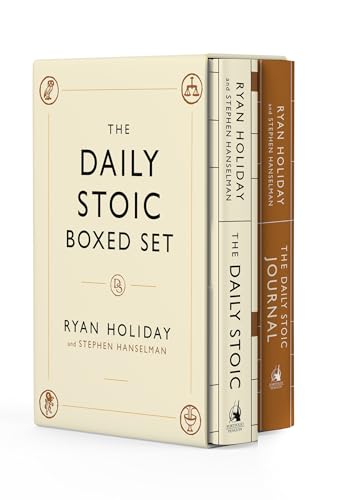
Think of the Daily Stoic Boxed Set as an everyday philosophy toolkit, pairing Ryan Holiday’s The Daily Stoic (Portfolio, 416 pages) with The Daily Stoic Journal in matching hardcover editions you can display proudly. You’ll get two bestselling volumes—the only authorized U.S. hardcovers—packaged for gift giving, designed to help you build serenity, self-knowledge, and resilience through 366 daily meditations, modern translations, and 52 weekly journal themes that guide reflection, making it practical for leaders and everyday people, and yes, it’s spent over 300 weeks on bestseller lists (which is impressive!). Keep this set nearby, use it daily, repeat regularly.
Best For: Individuals seeking a practical, daily guide to build serenity, self-knowledge, and resilience through short Stoic meditations and structured reflection.
Pros:
- 366 daily meditations paired with 52 weekly journal themes for consistent, long-term practice.
- Includes both The Daily Stoic and The Daily Stoic Journal in matching authorized U.S. hardcovers—attractive and gift-ready.
- Modern translations and practical prompts make ancient Stoic teachings accessible and actionable for everyday life and leadership.
Cons:
- Not a substitute for an in-depth, academic study of Stoic philosophy.
- The daily-devotional format may feel repetitive or too prescriptive for some readers.
- Hardcover boxed set is less portable and may be bulkier than single paperback or digital options.
Meditations by Marcus Aurelius (Adapted for Contemporary Readers)

If you’re looking for a Stoic primer that feels immediate and usable, Meditations (adapted by James Harris) delivers Marcus Aurelius’ core, presented in a contemporary, approachable paperback edition, roughly 200–300 pages, with readable type and a durable cover that’s perfect for daily carrying or desk reference — I love recommending it to readers who want direct, practical reflections without wading through dense commentary (yes, it’s the kind of book you’ll actually open every morning!). You’ll get distilled, practical reflections across the twelve books, a portable paperback (about 240 pages), readable type, durable cover, and usable daily for personal growth.
Best For: Readers seeking a concise, practical, and portable introduction to Marcus Aurelius and Stoic practice that they can use for daily reflection.
Pros:
- Presents core Stoic teachings in a contemporary, highly readable format ideal for everyday use.
- Portable paperback (around 240 pages) with durable cover and readable type—easy to carry or keep on a desk.
- Practical, distilled reflections across the twelve books that are immediately usable for personal growth.
Cons:
- As an adaptation, it may omit some of the original text’s nuance and historical context.
- Shorter, accessible format means less in-depth commentary for serious scholars.
- Readers seeking a fully annotated or academic edition may find it too simplified.
Factors to Consider When Choosing Stoicism Books
When you’re picking a Stoicism book, check author credibility and practical applicability, noting publisher (Penguin Classics, Harvard University Press), page counts and whether it’s hardcover or paperback—I’m excited! Consider historical versus modern editions (Marcus Aurelius translations versus contemporary guides), how thoroughly core themes are covered, and readability, noting Modern Library or Oxford University Press editions, ribbon bookmarks occasionally! You’ll favor books around 200–400 pages with clear chapter breaks and sturdy clothbound covers (great for daily use), I personally recommend checking ISBNs and publisher notes for credibility.
Author Credibility
One clear sign of a reliable Stoicism book is the author’s scholarly background, including advanced degrees and prior publications from respected presses like Cambridge, Oxford, or Princeton University Press, which usually signals careful scholarship and solid editorial standards. You should check whether the author studied ancient philosophy, has peer-reviewed articles, or released a well-regarded monograph (200–320 pages) with a sturdy hardcover and readable typography, since those physical cues often reflect professional care. Look for multiple books or edited volumes that show sustained commitment, and note endorsements from reputable philosophers or universities, which boost trust. If reviews from educators praise accuracy and footnotes, you’ll feel more confident choosing that title, so pick authors who marry expertise with clear, engaging prose! You’ll thank yourself later, truly.
Practical Applicability
Practicality matters: you want Stoicism books that give clear, usable advice and exercises, ideally from respected presses like Oxford or Princeton, about 200–320 pages in sturdy hardcover with readable typography, so you’ll reach for a volume that feels built to last and easy to read. Choose titles that offer actionable strategies and the Dichotomy of Control framework, because you’ll use them in day-to-day stress and decision making. Prefer books with exercises, prompts, or reflection questions that push you to practice (yes, you’ll have to try them!), and pick structured formats such as daily meditations or thematic chapters that guide steady progress. Favor authors who translate Stoic principles into modern scenarios, keeping teaching practical, relatable, and immediately useful, with solid indexes and reading guides included.
Historical Vs Modern
After you’ve settled on a usable, well-made volume (think Oxford or Princeton hardcovers, readable typography, roughly 200–320 pages), you’ll want to choose whether to read the original Stoics—Seneca, Marcus Aurelius, Epictetus—or a modern interpreter who translates their lessons into today’s dilemmas, because each option gives different payoffs: historical texts offer deep ethical arguments and context-rich guidance (great if you want philosophy that’s lively and rigorous), while contemporary books package those ideas into exercises, daily prompts, and practical frameworks you can actually use at work or during stress-packed commutes—I’m excited about both approaches, honestly! You’ll pick originals like Cambridge or Penguin Classics (annotated, 180–300 pages, hardcover) for depth and context, or modern books from Basic Books or Harvard (220–280 pages, practical paperbacks) for usable routines.
Coverage of Core Themes
Pick a book that actually digs into Stoic core themes—ethical living, resilience, managing desires and emotions, friendship, and self-discipline—preferably an annotated Penguin or Cambridge hardcover (180–300 pages, readable typography) or a practical Basic Books/Harvard paperback (220–280 pages) so you get both rigorous argument and usable routine, and you’ll be glad you did! When you evaluate candidates, prioritize texts that explicitly tackle virtue ethics, emotional regulation, resilience strategies, and friendship, because these are the operational heart of Stoic practice and fulfillment. Look for authors who translate ancient techniques into clear routines, offering moral reasoning and self-discipline exercises you can test daily (yes, do the short practices!), which is invaluable. Avoid books that skip friendship or dignity, because those omissions erode true Stoic guidance and growth.
Readability and Style
For a reader who wants clear, usable Stoicism, you’ll look for books that marry plain language with smart layout—think Penguin or Cambridge hardcovers (180–300 pages) and Basic Books or Harvard paperbacks (220–280 pages), readable typography, generous margins, and concise chapters that make arguments and routines easy to follow, plus commentary alongside original texts so dense ideas become daily practices you’ll try (yes, do the short exercises—trust me!). You’ll favor authors who translate classical thought into modern idiom without dumbing it down, with crisp sentences, concrete examples, and structural cues that guide study, you’ll check that editions adapt ancient cases to dilemmas, include explanatory notes, and balance scholarly rigor with approachable tone, making the book feel like a teacher you want to revisit right now!
Exercises and Practice
When you’re choosing a Stoicism book focused on exercises and practice, look for Penguin or Basic Books editions around 180–300 pages, with short daily entries, clear prompts, and roomy margins that invite regular journaling. You’ll want tools like the Dichotomy of Control presented as drills, prompts that guide reflection, and suggested voluntary discomfort practices that build resilience and emotional strength over time. Aim for books that pair mindfulness and gratitude exercises with journaling space, offer daily reflections to enhance clarity, and include concrete prompts for applying Stoic lessons in ordinary life with practical examples! Choose editions with durable covers, clear typography, and a size that fits your bag, so you’ll actually carry, read, and practice Stoic drills consistently every single day (yes, it matters)!
Frequently Asked Questions
Can Stoicism Help With Clinical Anxiety or Depression?
Yes, it’ll help you as a tool for anxiety or depression, giving practical daily skills and calmer habits you can use alongside therapy! Try The Daily Stoic (Penguin, 320 pages, paperback with ribbon bookmark), and A Guide to the Good Life (Oxford University Press, 288 pages, hardcover). They’ll give clear exercises, steady perspective, and hopeful, practical guidance you can try today (I get excited about pages that honestly really help!).
Which Modern Authors Are Influenced by Stoicism?
You’ll find modern authors like Ryan Holiday, William B. Irvine, and Massimo Pigliucci clearly influenced by Stoicism, their books mixing practical advice with classical insight. Holiday’s The Obstacle Is the Way (Portfolio, 224 pages, hardcover) and Irvine’s Guide to the Good Life (Oxford, 288 pages) teach habits. Pigliucci’s How to Be a Stoic (Basic Books, 288 pages, cloth-bound), plus Holiday’s modern essays, give lively, tested daily tools you’ll actually use!
Are There Stoic Practices Compatible With Religious Beliefs?
Yes, you can blend Stoic practices with religious beliefs, and you’ll find William B. Irvine’s The Stoic Challenge (Oxford University Press, 240 pages) practical! You’ll also benefit from Donald Robertson’s How to Think Like a Roman Emperor (St Martin’s Press, 368 pages, cloth), which maps exercises to prayer! Try morning reflection, evening examen, and brief breathwork, you’ll see Stoic routines strengthen your faith, daily worship, and pastoral guidance notes.
How Long Until Stoic Practices Show Real Benefits?
Imagine Sarah, who after two weeks of daily morning reflection and brief negative visualization noticed calmer reactions and clearer priorities, so you can expect initial benefits within 1–3 weeks. Pair practice with The Daily Stoic (Penguin, 416 pages, paperback), which gives clear daily prompts and steady structure you’ll truly appreciate! Stick with it for three months, you’ll see habits solidify and resilience grow, and I’m excited for your progress (seriously).
Do Stoic Teachings Conflict With Modern Psychology?
They don’t fundamentally conflict, you can use Stoic principles alongside modern therapy, and you’ll notice practical overlap with CBT techniques for reframing thoughts and managing emotions. Try Ryan Holiday’s paperback from Penguin, 272 pages, sturdy matte cover, it offers modern takes that pair well with clinical methods (I love the clarity!). You should also read Massimo Pigliucci’s 320-page University of Chicago Press edition, dense but practical, with helpful endnotes included.