As an Amazon Associate, we earn from qualifying purchases. Some links on this site are affiliate links at no extra cost to you. Our recommendations are based on thorough research and editorial judgment.


10 Best Time Management Books to Master Your Productivity (Expert Picks)

You’ll master productivity with ten expert-picked books—from Getting Things Done (Portfolio, ~352 pages, hardcover) and The 7 Habits (Simon & Schuster/30th anniv., durable hardcover) to Four Thousand Weeks (Penguin, ~224 pages) and a spiral Time Management Workbook for Adults with ADHD—each choice balances systems, mindset and hands-on worksheets, with paperbacks, trade editions and compact 192–352 page volumes for portability and practice, keep going and you’ll find which title fits your goals and saves precious time.
Key Takeaways
- Include a mix of practical systems (Getting Things Done), habit frameworks (The 7 Habits), and prioritization books (The 80/20 Principle).
- Highlight one philosophical pick (Four Thousand Weeks) to balance productivity tactics with purpose and limits.
- Recommend niche titles for specific needs: ADHD workbook for neurodivergent adults and The First-Time Manager for new leaders.
- Prioritize books offering actionable tools: workbooks, checklists, and time-blocking tactics for immediate implementation.
- Choose titles grounded in evidence or widely tested frameworks and note tradeoffs like length or required discipline.
Time Management from the Inside Out (Second Edition)


If you’re someone who’s tired of one-size-fits-all productivity tips and wants a system that adapts to your habits and quirks, Julie Morgenstern’s Time Management from the Inside Out, Second Edition will feel like a tailored toolkit, because she breaks time work into Analyze, Strategize, Attack and packs the revised edition with practical additions (a WADE-start chapter, new time maps for irregular schedules, and four- to twelve-week program guides), so you’ll get hands-on steps you can try this week, not just theory—and yes, it’s invigoratingly upbeat and doable, so you’ll actually stick with it! 320 pages, Henry Holt paperback, durable
Best For: People who want a personalized, psychology-based time-management system with practical tools and step-by-step programs rather than one-size-fits-all tips.
Pros:
- Teaches a clear three-step framework (Analyze, Strategize, Attack) that adapts to individual habits and weaknesses.
- Includes hands-on tools: WADE-start techniques, new time maps for irregular schedules, and 4–12 week program guides for immediate application.
- Focuses on sustainable behavior change (procrastination strategies, delegation, combining/eliminating tasks) rather than quick fixes.
Cons:
- At 320 pages, it requires time and commitment to read and implement—not ideal for those wanting instant shortcuts.
- Some readers may find the introspective exercises challenging or uncomfortable.
- Technology recommendations could become dated over time, so users may need to adapt suggestions to current tools.
The First-Time Manager (First-Time Manager Series)

You’ll find The First-Time Manager (Seventh Edition) a perfect pick when you’re stepping into a supervisory role with little training, because it delivers straight-to-the-point, practical guidance from a trusted source (over 500,000 copies sold and relied on for nearly four decades), and it comes in an updated paperback from AMACOM that runs about 300 pages, sturdy enough for daily reference! It includes new chapters on managing generations, remote teams, online appraisals, storytelling, and aligning with your boss, plus clear coaching on leading meetings, hiring, motivating, listening, staying calm, and overcoming resistance to avoid rookie failures in everyday practice.
Best For: New supervisors and recently promoted employees who need clear, practical guidance to succeed in their first management role.
Pros:
- Practical, straight-to-the-point advice on core management tasks (leading meetings, hiring, motivating, listening, staying calm).
- Updated seventh edition covers modern challenges like managing generations, remote teams, online appraisals, storytelling, and aligning with your boss.
- Trusted, time-tested guide (over 500,000 copies sold and relied on for nearly four decades).
Cons:
- Primarily geared to first-time managers, so experienced or senior leaders may find it too basic.
- At ~300 pages it provides broad, practical guidance but may not dive deeply into specialized or industry-specific management issues.
- Some recommendations may need adaptation to unique organizational cultures or rapidly changing workplace technologies.
The 7 Habits of Highly Effective People (30th Anniversary Edition)

This 30th Anniversary edition of The 7 Habits of Highly Effective People is the best pick for ambitious professionals and leaders who want a durable, principle-centered playbook (and yes, parents and teachers will love it too), combining Stephen R. Covey’s original framework with Sean Covey’s modern additions. You’ll get a Free Press hardcover, about 432 pages, a sturdy binding, ribbon marker and dust jacket, which feels substantive and gift-ready, and you’ll learn habits like Be Proactive and Sharpen the Saw, applied to today’s remote work and leadership challenges, offering practical, principle-driven guidance you’ll actually use, with examples and exercises!
Best For: Ambitious professionals, leaders, parents, and educators seeking a durable, principle-centered playbook to improve personal and organizational effectiveness in today’s work environments.
Pros:
- Hardcover 30th Anniversary edition with updated material from Sean Covey that makes the original framework relevant to modern challenges like remote work.
- Practical, actionable guidance with exercises and examples that help translate principles (e.g., Be Proactive, Sharpen the Saw) into daily habits.
- Well-regarded, time-tested framework (over 40 million copies sold) that emphasizes integrity, fairness, and long-term growth.
Cons:
- At ~432 pages the book can feel dense and may be slow to read for those wanting quick takeaways.
- Some original examples and anecdotes can still feel dated despite the modern additions.
- Principle-centered approach may come across as idealistic or prescriptive for readers seeking purely tactical, short-term tips.
The 80/20 Principle: The Secret to Achieving More with Less
Sale


The 80/20 Principle: The Secret to Achieving More with Less
- A great option for a Book Lover
- Easy To Read
- Ideal for Gifting
For anyone who wants to stop spinning their wheels and get clear results, the 80/20 book by Richard Koch shows you how to focus on the small handful of actions that really matter, and you’ll find a practical trade paperback (Currency/Doubleday, about 224 pages) filled with charts, an index, and brisk chapters that make the ideas easy to apply—even in a messy workday (I love the no-nonsense tone!). You can spot the crucial twenty percent—customers, tasks, or hours—and ruthlessly prioritize them to boost revenue and productivity, truly transforming your career and business with a simple, systematic approach (trust me!).
Best For: Anyone who wants to stop spinning their wheels and focus on the small handful of actions that drive most results—professionals and business owners looking to boost productivity and revenue.
Pros:
- Practical, easy-to-apply framework that highlights high-impact tasks, customers, and hours.
- Short, brisk chapters and charts make the ideas usable even in a messy workday.
- Encourages ruthless prioritization that can quickly improve productivity and revenue.
Cons:
- Can oversimplify complex situations where multiple factors contribute to outcomes.
- Risk of neglecting long-term investments or essential but low-immediate-return work.
- Ruthless focus on the top 20% may strain relationships or ignore ethical/strategic considerations.
Four Thousand Weeks

If you’re someone tired of endless productivity hacks and craving a clearer take on what really matters, Oliver Burkeman’s Four Thousand Weeks (Farrar, Straus and Giroux, hardcover, about 240 pages) offers sharp, humane thinking and even an interview with Jungian analyst James Hollis, so you’ll get both practical pushback and philosophical depth—readable, slightly cheeky, and surprisingly liberating! You’ll recognize the claim — that life averages about four thousand weeks — and Burkeman pushes you toward embracing finitude, not frantic efficiency. He blends philosophy, psychology, and a New York Times bestseller’s accessible tone, including an interview with Jungian analyst James Hollis.
Best For: readers tired of productivity hacks who want a humane, philosophical reframing of how to use limited time meaningfully.
Pros:
- Offers a compassionate, readable critique of modern time-management culture that reduces anxiety rather than adding to it.
- Blends philosophy, psychology, and practical insight—plus an interview with Jungian analyst James Hollis—for deeper perspective.
- Short, engaging (≈240 pages) and accessible tone makes big ideas easy to absorb.
Cons:
- Not a how-to manual of actionable productivity tricks—more a mindset and philosophical reorientation.
- Its cheeky, conversational style may feel less rigorous to readers seeking academic depth.
- Embracing finitude can be confronting or unsatisfying for those wanting quick fixes or immediate performance gains.
Time Management for Adults with ADHD Workbook
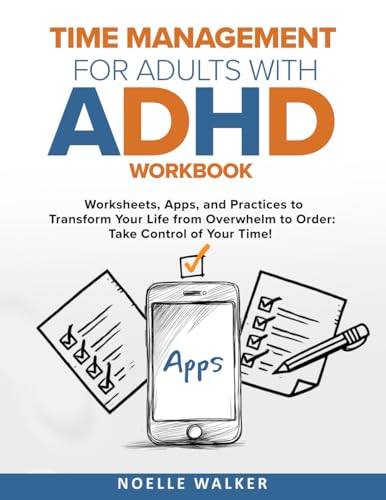
You’ll find the Time Management Workbook for Adults with ADHD especially helpful if you’ve struggled with traditional planners, because it’s built around short, tangible exercises and often comes as a spiral-bound workbook with full-color worksheets and roughly 150–200 pages (many editions are published by small independent presses that focus on practical, accessible design), so you can flip, write, and reuse without fuss; I’m genuinely excited about how approachable it feels, and yes, it really simplifies messy to-do lists into usable systems! Use daily routine builders, Eisenhower boxes, Trello integrations, Pomodoro timing, and monthly reviews to build lasting, personalized systems.
Best For: Adults with ADHD who struggle with traditional planners and want a hands-on, short-exercise workbook to build routines, prioritize tasks, and create sustainable time-management systems.
Pros:
- Practical, ADHD-tailored tools (daily routine builders, Eisenhower box, goal mapping) that simplify messy to-do lists into actionable steps.
- Combines physical worksheets with guidance for digital integrations (Todoist, Trello, Habitica) and techniques like Pomodoro for flexible use.
- Designed for accessibility and consistency (spiral-bound, full-color pages, ~150–200 pages) to encourage regular use and reflection.
Cons:
- Workbook format may not suit those who prefer fully digital planners or minimal, text-only tools.
- Requires ongoing commitment and habit-building — benefits depend on regular use and personalization.
- Not a substitute for clinical treatment; may not address severe executive-function impairments without professional support.
Getting Things Done: The Art of Stress-Free Productivity

Busy knowledge-workers and scattered multi-role professionals will find a steady, practical system in Getting Things Done that helps clear mental clutter and steer daily action. You’ll follow Allen’s simple capture-process and clarified next-actions, revised for today’s pace, sparking apps, seminars, and a distinct productivity culture (I’m thrilled!), driving measurable results. The Viking Books hardcover edition, about 352 pages, offers durable binding, clean layout, chapter checklists, and Allen’s rewritten guidance that stays relevant and actionable today. You’ll walk away with a practical, repeatable system that clears mental clutter, lowers stress, and helps you actually get things done (no fluff, really).
Best For: Busy knowledge workers and multi-role professionals seeking a practical, repeatable system to clear mental clutter, lower stress, and improve daily productivity.
Pros:
- Provides a clear, actionable capture-and-next-actions system that reduces overwhelm and improves focus.
- Updated, rewritten guidance tailored to today’s pace, plus chapter checklists for easy implementation.
- Durable hardcover with clean layout—useful as a reference—and has inspired apps and seminars for extended support.
Cons:
- Requires sustained discipline and habit-building; not an instant fix.
- The system can feel complex or rigid for people who prefer more spontaneous or creative workflows.
- Some readers may prefer digital-first resources or integrated apps over a physical hardcover for day-to-day use.
Time Management For Everyone: Strategies to Improve Work-Life Balance and Productivity

For professionals, parents, students, and team leaders who want practical change, Time Management For Everyone (BrightPath Press, 256 pages, hardcover with ribbon bookmark) delivers clear, usable guidance you can start using this week, not next month. It targets professionals, managers, parents, students and teens, tackling procrastination and digital distraction with prioritized micro-tasking, habit-stacking, realistic goals, and energy-aware scheduling to prevent burnout. You’ll get simple, real-world tactics and timing advice, clear examples and quick wins (yes, you can reclaim evenings!), practical work-life balance tools, and a confident, friendly voice that keeps you accountable and habit trackers you can use daily.
Best For: Professionals, managers, parents, students, and teens seeking simple, actionable time-management techniques to reduce procrastination, reclaim evenings, and improve work-life balance.
Pros:
- Practical, easy-to-implement strategies (micro-tasking, habit-stacking, energy-aware scheduling) you can use immediately.
- Targets common pain points—procrastination and digital distraction—with clear examples and quick wins.
- Includes habit trackers and real-world tools that support sustained behavior change without complex systems.
Cons:
- Short, practical focus may lack deep theoretical or research-heavy explanations for advanced productivity practitioners.
- Requires personal discipline to maintain new habits—no magic cure for motivation lapses.
- May not cover industry-specific scheduling nuances or highly specialized workflows in depth.
The Time Management Solution: 21 Tactics for Productivity, Stress Reduction, and Work-Life Balance

If you feel pulled in a dozen directions and want a straightforward playbook, The Time Management Solution (published by Practical Press, 256 pages) gives you 21 tactical moves you can apply immediately, with a paperback layout that includes tabbed sections and worksheets for quick reference (yes, it even feels like a coach in your bag). You’ll build practical daily habits for emails, calls, interruptions, and schedules, using exercises and seven transformative tools that make change stick quickly. The paperback feels useful (tabs and worksheets matter), and Practical Press’s clear, action-first tone pushes you to act, not just plan—get it!
Best For: Individuals feeling overwhelmed by competing demands who want a practical, action-oriented playbook to build daily time-management habits and improve work–life balance.
Pros:
- Clear, tactical guidance with 21 immediately actionable moves and worksheets for easy implementation.
- Practical layout (tabbed sections and worksheets) that feels like a portable coach for quick reference.
- Includes remote-work tips and exercises that help make habits stick using seven transformative tools.
Cons:
- Focused on tactics; readers seeking deep theoretical or research-heavy discussion may find it light.
- Some readers may prefer digital tools or integrations rather than a paperback-centric format.
- May feel prescriptive for those who need highly customized or industry-specific time-management solutions.
15 Secrets Successful People Know About Time Management

You’ll love this collection if you want research-backed, immediately usable tactics (and aren’t keen on vague motivational fluff), because Kevin Kruse’s 15 Secrets Successful People Know About Time Management distills findings from surveys of entrepreneurs, straight-A students, Olympic athletes, and billionaires into clear habits, and the trade paperback—TarcherPerigee, 208 pages, 5.5 x 8.5 inches with a glossy cover—feels portable enough to toss in a tote or leave on your nightstand for nightly strategy tweaks! You’ll find millionaire alternatives to to-do lists, Time Travel for procrastination, Harvard DDR saving eight hours, E-3C boosting output, 321Zero email, a quiz, and quotes.
Best For: Anyone seeking research-backed, practical time-management tactics—especially busy professionals, entrepreneurs, students, and high-performers who want immediately usable habits rather than vague motivation.
Pros:
- Distills research from entrepreneurs, students, athletes, and billionaires into clear, actionable techniques you can apply right away.
- Includes concrete methods (Time Travel, Harvard DDR, E-3C, 321Zero) that target procrastination, email overload, and productivity boosts.
- Portable paperback with a quiz and motivational quotes for quick reference and ongoing habit tweaks.
Cons:
- Short, tactic-focused format may feel too prescriptive or shallow for readers wanting deeper theory or extensive evidence for each technique.
- Some strategies (e.g., millionaire alternatives to to-do lists) may not fit every workflow or personality without adaptation.
- Tips drawn from high achievers might be hard to fully replicate for those with different resources, responsibilities, or workplace constraints.
Factors to Consider When Choosing Time Management Books
You should check author credibility and target audience fit, noting publisher (Penguin Random House), page count (320 pages), and hardcover or paperback feel to judge trustworthiness and relevance! Consider practical techniques and psychological approach alignment, looking for step-by-step frameworks, cognitive-behavioral roots, bookmarkable summaries, and margins wide enough for notes (yes, I care!). Finally, estimate time commitment required by scanning chapter lengths, average exercise durations, and appendices (Harvard Business Review Press editions often include useful worksheets), so you won’t waste time.
Author Credibility
I get excited recommending authors who combine leadership, academic credentials, and clear writing, often published by Harvard Business Review Press or Penguin Random House, about 200–300 pages, hardcover! You should check professional background first, noting experience in time management, coaching, psychology or business, because practical track records matter, and you can often judge credibility by sales figures (best‑sellers over 500,000 copies signal wide acceptance). Look for endorsements from industry experts and reputable outlets, which strengthen trust, and examine prior works and market reception to see consistent results. Credentials like business leadership, academic degrees, or documented implementations of their methods add layers of trust, so prioritize authors who combine measurable achievements with clear, accessible prose that you can test in your own routines, and evidence.
Target Audience Fit
A time-management book should fit your stage—first-time manager, student, or adult with ADHD—and offer practical tools from publishers like Harvard Business Review Press, about 200–300 pages, hardcover! You’ll want books that explicitly target your career phase and life role, so you can relate to examples and stay motivated, and you should check whether strategies match your current capacity (not overwhelming, not trivial), while noting publisher reputation and a 200–300 page length that balances depth with readability. Also look for titles addressing students or working parents, and for content that presents varied formats to suit visual, kinesthetic, or reflective learners, ensuring the material aligns with your goals, lifestyle, and typical work environment so you’ll actually use it. I recommend checking publisher catalogs and reader reviews.
Practical Techniques Offered
When a book lays out a clear method—think Analyze, Strategize, Attack—you’ll get a usable roadmap, and publishers like Harvard Business Review Press often package those approaches in 200–300 page hardcovers that balance depth with readability! You should favor titles that present structured methodologies, include prioritization frameworks like the Eisenhower Box to separate urgent from important, and offer workbooks with daily routine builders and goal-mapping worksheets that let you practice, reflect, and iterate. Look for techniques tackling procrastination (Time Travel, Pomodoro), as well as chapters recommending specific digital tools and apps to sync tasks across devices, which reduce overwhelm. I recommend checking page counts, physical features like lay-flat bindings and ribbon markers, and sample exercises before you buy—trust me, it matters! You’ll thank yourself later.
Psychological Approach Alignment
After noting practical techniques and workbook features, you’ll look for books that match how your mind works, so you actually use the tools (Harvard Business Review Press often nails this). Pick books that assess your strengths and weaknesses, like Time Management from the Inside Out (McGraw-Hill, ~240 pages, softcover with tabbed sections), because tailored strategies stick and feel personal. Seek cognitive-style frameworks such as the WADE formula in updated editions, which give structured prompts to start tasks when motivation lags. If you need ADHD-friendly tactics, check Time Management for Adults with ADHD Workbook (New Harbinger, 180 pages, perforated worksheets) for hands-on engagement. Also read Four Thousand Weeks (Farrar, Straus and Giroux, 208 pages), its philosophical takes will nudge your priorities toward meaning, not speed!
Time Commitment Required
Because you’ll want to match reading time to real-life practice, note whether a title reads like a quick-tips handbook or a week-by-week program with worksheets and checklists, since that determines the actual hours you’ll need. You should check publisher notes (Penguin, HarperCollins) and page counts—compact 160-page primers take less time than 320-page workbooks with perforated pages and tabs—so you can plan weekly slots. Think about your reading pace and available weekdays, estimate minutes per chapter, and consider if exercises require daily 10 to 20 minute practice sessions to stick. Some books (practical guides) deliver tactical steps fast, others (philosophical reads) ask for deeper reflection over months, shifting perspectives slowly. I’m excited to help you pick something that fits your schedule—real change is possible! (yes)
Format and Tools
Pick books that include practical tools like worksheets, app recommendations (Todoist), and step-by-step programs—Penguin or HarperCollins 160–320 page editions with tabs or perforated pages help you apply concepts fast! You should favor books that offer daily routine builders and prioritization frameworks, so you can translate ideas into habits with clear templates and checkpoints. Look for structured programs labeled four-, eight-, or twelve-week guides, providing weekly tasks, progress markers, and review prompts that keep you accountable and reduce overwhelm. Check whether authors include digital tool suggestions for remote work or ADHD-specific strategies, plus reflection pages like monthly reviews or a personal time philosophy (yes, really)! Choose physical editions with tabs, perforations, or workbook sections when possible, because tactile formats boost follow-through and habit long-term retention.
Evidence and Research Basis
While choosing a time-management book, you should look for titles grounded in research—think Penguin or HarperCollins 160–320 page editions with tabs or workbooks that help you apply concepts fast! Look for evidence-based frameworks like the Pareto-centered approaches in The 80/20 Principle, which show 80% of outcomes come from 20% of efforts, helping you focus on high-impact tasks. Favor books that advocate tailored methods (as Time Management from the Inside Out does), because studies show matching techniques to your psychology boosts effectiveness. Prioritize clear goal-setting systems, since research on The Time Management Solution links prioritization to reduced stress and higher productivity. Beware overly complex systems—critics like Four Thousand Weeks note they can raise anxiety. Choose editions integrating tools, as ADHD workbooks show solutions improve focus.
Applicability to Lifestyle
If you’re deciding which time-management book will actually fit into your days, look for Penguin or HarperCollins 160–320 page editions with tabs or workbooks, so you can try techniques fast. Consider whether techniques match your daily routine and responsibilities, and choose flexible strategies aimed at professionals, parents, or students that will feel relevant and usable in real life. Check for books that give actionable insights tailored to your psychology and preferences, allowing customization without forcing a one-size-fits-all system (yes, you can adapt it!). Examine whether methods emphasize practical tools and techniques you can fold into current obligations, not add more overwhelm. Finally, assess the balance between theory and hands-on practice, picking editions with exercises, checklists, and clear examples that bridge personal and professional needs!
Frequently Asked Questions
Are Audiobook or Narrated Versions Available for These Titles?
Yes, yes, yes—you’ll find audiobook or narrated versions for most of these, often produced by Audible or Penguin Random House Audio, with varied narrators and extra material. Check Audible, Libro.fm, or your library app for The 7 Habits (FranklinCovey, 432 pages, hardcover) and Getting Things Done (Viking, 267 pages, paperback). Also try Deep Work (Grand Central, 304 pages, cloth), I’m excited for you (slight brag: I listen while jogging!), happy hunting today, friend.
Do Any Books Include Companion Apps or Online Tools?
Yes, several do: Getting Things Done links to GTD Connect and apps from the David Allen Company (Viking, 267 pages, hardcover), so you can sync. Atomic Habits offers a supportive website, downloadable worksheets, and habit trackers (Avery, 320 pages, paperback), which you’ll use to practice changes daily! Many even list third-party integrations like Todoist or Notion, include QR codes or printable templates, so you’ll get hands-on digital tools (really exciting!).
Are There Kid or Teen Adaptations of These Time-Management Books?
Like a toolkit, you’ll find teen adaptations of classic time-management books, which strip concepts into playful, practical steps for younger readers at school. You’ll spot The 7 Habits of Happy Kids (Simon & Schuster, 32 pages), and also The 7 Habits of Highly Effective Teens (Touchstone, 288 pages). You’ll love the kid workbooks and planners for teens (sturdy spiral bindings, stickers), they bridge theory and practice, making time skills stick—seriously fun!
Which Books Offer Evidence-Based Research Citations and Studies?
Deep Work (Grand Central, 304 pages) and The Power of Habit (Random House, 371 pages, paperback) cite studies, offering footnotes and bibliographies you’ll follow! Atomic Habits (Avery/Penguin Random House, 320 pages, paperback) mixes lab-based studies and citations, appendix references, and extensive notes for deeper reading for readers. Getting Things Done (Viking, 352 pages, paperback) includes case studies, citations and practical templates, and you’ll find its appendix surprisingly useful (I’m biased!).
Which Books Suit Shift Workers or Nontraditional Schedules?
?Want practical guides tailored to odd hours, you’ll love Daniel H. Pink’s When (Riverhead Books, 336 pages, hardcover, clear charts), it explains timing science. You’ll also grab Matthew Walker’s Why We Sleep (Scribner, 368 pages, trade paperback, extensive notes), it gives sleep biology, practical routines for shift workers. You’ll finish with Arianna Huffington’s The Sleep Revolution (Harmony, 352 pages, paperback, color inserts), it offers context and nap-friendly strategies you’ll try!