As an Amazon Associate, we earn from qualifying purchases. Some links on this site are affiliate links at no extra cost to you. Our recommendations are based on thorough research and editorial judgment.


5 Best Sports Training Books to Boost Your Athletic Performance in 2026

If you want to boost your athletic performance in 2026, grab *Principles of Athletic Training* by McGraw-Hill for deep, evidence-based injury prevention, or Michael Boyle’s *New Functional Training for Sports* with its practical movement drills and online videos. Don’t miss *Strength Training Anatomy* for stunning visuals, *Mental Toughness for Young Athletes* if you’re coaching kids, and NSCA’s *Strength Training for Football* with custom programs. These guides cover everything, from strength to mindset—keep going and you’ll uncover the best fit for your goals!
Key Takeaways
- Choose books like *Principles of Athletic Training* for evidence-based injury prevention and rehabilitation to enhance athletic performance safely.
- Use *New Functional Training for Sports* for sport-specific movement patterns and balance, strength, and power development.
- Reference *Strength Training Anatomy* for detailed anatomical illustrations and exercises that improve muscle function and prevent injury.
- Select *Mental Toughness for Young Athletes* to develop psychological resilience and manage performance anxiety for youth athletes.
- Apply *Strength Training for Football* for position-specific resistance training programs grounded in scientific research and practical application.
Principles of Athletic Training: Evidence-Based Clinical Practice Guide

If you’re diving into the world of athletic training and want a thoroughly modern, evidence-based guide that walks you through everything from injury prevention to rehabilitation, “Principles of Athletic Training: A Competency-Based Approach” should be at the top of your list! Published by McGraw-Hill and recognized as a Doodys Core Title in 2015, this binder-ready, loose-leaf book covers all key competencies, blending scientific theory with clinical practice. You’ll appreciate the included McGraw-Hill Connect® access, featuring SmartBook® and progress dashboards, which help you stay on track and improve based on real-time feedback. It’s practical, detailed, and designed just for you.
Best For: Students and professionals in athletic training and sports medicine seeking a comprehensive, evidence-based resource that integrates scientific principles with clinical practice.
Pros:
- Covers a wide range of competencies from injury prevention to rehabilitation with a competency-based approach.
- Includes McGraw-Hill Connect® access, providing adaptive SmartBook® technology and progress tracking for personalized learning.
- Offers flexible format options including a loose-leaf binder-ready edition with free shipping.
Cons:
- Requires a subscription to McGraw-Hill Connect® for full digital features, which may add to the cost.
- Primarily focused on athletic trainers, so may be less suitable for those outside the field or with different training needs.
- Being a comprehensive textbook, it may be dense and challenging for beginners without prior knowledge in sports medicine.
Recommended Products


New Functional Training for Sports
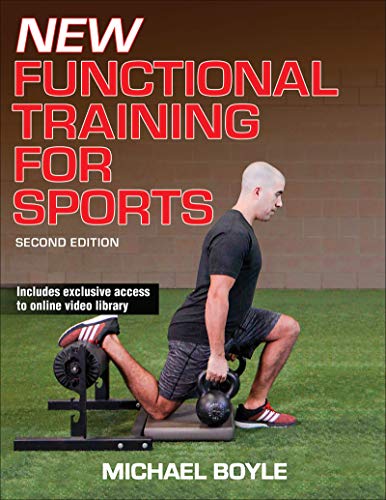

For anyone serious about elevating athletic performance while preventing injuries, New Functional Training for Sports, Second Edition, stands out as a must-have resource, especially since it’s crafted by Michael Boyle, a renowned coach whose strategies have shaped countless champions; you’ll appreciate its practical approach to movement patterns across a variety of sports—court, field, track, and mat—and the way it breaks down exercise progressions with clear guidance on balance, strength, and power development. This 416-page book, published by Human Kinetics, offers high-def visuals, online videos, and customizable training plans that will seriously level up your game—trust me, it’s worth every page!
Best For: Athletes, coaches, and sports performance professionals seeking comprehensive, injury-preventive training methods tailored to multiple sports disciplines.
Pros:
- Offers detailed exercise progressions emphasizing balance, stability, strength, and power crucial for sports performance.
- Includes high-definition visuals and online video access for enhanced learning and practical application.
- Provides customizable training programs based on functional assessments to meet individual athlete needs.
Cons:
- May be too technical or advanced for casual fitness enthusiasts or beginners.
- Requires access to online videos, which may be inconvenient for users with limited internet connectivity.
- The 416-page length could be overwhelming for those seeking quick or simplified training guidance.
Recommended Products

Description|Table of Contents|Author|Excerpts|Quotes
Description|Table of Contents|Author|Excerpts|Quotes

Enduring and Flexible: Soccer cones are made from sturdy and long-lasting plastic materials. Regardless of weather conditions or frequent use, they maintain their shape and functionality, ensuring reliable performance over time
Strength Training Anatomy

Anyone keen to deeply understand how muscles work during exercise will find Strength Training Anatomy an absolute gem, especially given its stunning 700-plus anatomical illustrations and 231 exercises showcased with precision, making it not just a book but a visual masterclass by Frédéric Delavier. This fourth edition, packed with 90 new detailed drawings, goes beyond muscle layers to highlight bones, ligaments, and tendons, helping you train smarter and safer. Whether you’re a newbie or seasoned athlete, its practical tips on stretching, injury prevention, and morphology-tailored workouts make it a must-have guide, brilliantly blending art and science for peak performance!
Best For: Anyone looking to deeply understand muscle anatomy and improve their strength training techniques through detailed, visually rich guidance, from beginners to advanced athletes.
Pros:
- Over 700 detailed anatomical illustrations, including 90 new ones in the latest edition.
- Covers 231 exercises with variations and highlights muscles along with bones, ligaments, and tendons.
- Includes practical advice on stretching, injury prevention, and training tailored to individual body morphology.
Cons:
- May be overwhelming for those looking for a simple workout guide without extensive anatomical detail.
- Primarily focused on anatomy and form, so less emphasis on comprehensive workout programming or nutrition.
- The detailed medical and anatomical terminology might require additional learning for complete beginners.
Mental Toughness For Young Athletes: Mindset Exercises for Kids and Teens
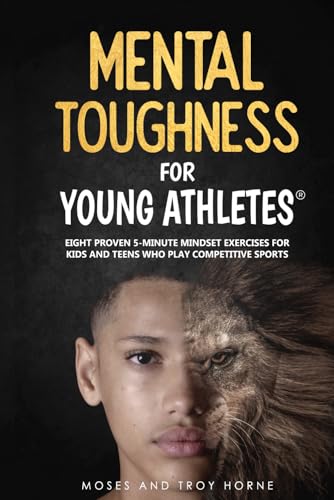
Young athletes who face intense competitive pressure will find *Mental Toughness For Young Athletes: Eight Proven 5-Minute Mindset Exercises For Kids And Teens Who Play Competitive Sports* an incredibly valuable resource, especially since it directly tackles the mental hurdles that often go unaddressed in youth training books. Authored by Moses and Troy Horne, this 128-page guide offers simple, effective mindset exercises designed for kids aged eight and up, helping you quickly manage performance anxiety while staying passionate about your sport. With insights from elite athletes and practical parental advice, this approachable hardcover is a game-changer for building resilience in just five minutes a day!
Best For: Young athletes aged 8 and up who participate in competitive sports and need practical tools to manage performance anxiety and build mental resilience.
Pros:
- Includes eight easy-to-follow, proven 5-minute mindset exercises tailored specifically for youth.
- Combines insights from both an elite young athlete and parental guidance for comprehensive support.
- Derived from interviews with top sports figures, providing credible and tested mental toughness strategies.
Cons:
- May be less engaging for very young children who require more interactive or pictorial content.
- Focuses on mindset exercises, so it might need to be complemented with physical training programs.
- Readers unfamiliar with mindset coaching might require additional explanation or support to implement exercises effectively.
Recommended Products


In this first book of an illustrated middle grade series by a #1 New York Times-bestselling author, Marc learns to become a Warrior Kid after his uncle Jake, a Navy SEAL, comes to stay for the summer.
Strength Training for Football (Strength Training for Sport)
Sale


Strength Training for Football (Strength Training for Sport)
- Description|Table of Contents|Editor|Excerpts|Sample Content|Quotes|11 testing protocols for measuring and assessing athletes strength power speed agility endurance and...
Strength Training for Football (Strength Training for Sport) stands out as an essential resource if you’re coaching or playing at any level of football and want a well-rounded, science-backed approach tailored to real game demands. Developed with the NSCA, this guide breaks down resistance training for six football positions, includes 115 sample programs spanning all seasons, and features 69 exercises with clear photos and coaching tips. You’ll also find 11 performance tests to tailor your plans precisely. Plus, the continuing education credits make it a smart investment for serious trainers—seriously, it’s a game-changer you won’t want to miss!
Best For: Coaches, athletes, and trainers seeking a comprehensive, position-specific, and scientifically supported strength training resource tailored to football performance and injury prevention.
Pros:
- Provides 115 sample programs tailored to seasons and six specific football positions.
- Includes 69 exercises with detailed instructions, photos, and coaching tips.
- Offers 11 testing protocols to accurately assess and customize athlete training plans.
Cons:
- May be complex for beginners without prior strength training knowledge.
- The extensive content may require significant time investment to implement fully.
- Continuing education credits require additional course completion and exams, which might not suit all users.
Recommended Products

Description|Table of Contents|Editor|Excerpts|Sample Content|Quotes|11 testing protocols for measuring and assessing athletes strength power speed agility endurance and anaerobic capacity|11 total body exercises with 14 variations|20 lower body exercises with 13 variations|23 upper body exercises with 29 variations|15 core exercises with 35 variations|115 sample programs90 of which are position-specificfor off-season preseason in-season and postseason resistance training

Used Book in Good Condition

Factors to Consider When Choosing Sports Training Books
You’ll want to choose sports training books that really fit your skill level and goals, whether you’re a beginner or aiming for advanced techniques, and ones with clear exercise demonstrations that make tricky moves easier to master. Look for authors who back their advice with solid research—and publishers like Human Kinetics often deliver that evidence-based quality alongside practical tips you can actually use on the field. Trust me, picking a book that balances science with hands-on application (plus a manageable page count so you’re not overwhelmed) can make all the difference in your training journey!
Target Audience Suitability
How do you pinpoint the perfect sports training book that truly matches your or your athlete’s needs? Start by considering age and maturity since some books, like “Youth Sport Science” (120 pages, hardcover), focus on young athletes, while others suit adults or pros. Next, match the book’s skill level—beginner guides break down fundamentals, whereas advanced titles delve into complex tactics. Also, make certain training methods fit your sport’s unique demands, avoiding one-size-fits-all approaches. Check if practical exercises—clearly explained and illustrated—align with your abilities and keep you engaged. Finally, weigh the author’s credibility; firsthand experience in your sport greatly boosts trustworthiness. You want actionable advice that resonates with your journey, making every page worth your time and effort—trust me, it makes all the difference!
Evidence-Based Content
Once you’ve considered who the sports training book is intended for and what skill level it best serves, it’s smart to focus on the content’s foundation—whether it’s backed by solid research or just good stories. You want books that lean on evidence-based content, including scientific studies and clinical trials, to prove the training methods actually work for improving performance and preventing injuries. Look for titles that cite systematic reviews or highlight individualized programs tailored through functional assessments—these details show the authors took a thoughtful, data-driven approach. Bonus points go to books that explain how to track progress with performance analytics, helping you or your coach make informed adjustments as you improve. Choosing evidence-backed resources guarantees your time training pays off—not just in theory, but in real results.
Practical Application Focus
Although solid research forms the backbone of great sports training books, the magic truly happens when the content translates into practical, hands-on guidance that you can apply during your workouts or on the field. You want a book that offers clear exercise progressions and targeted strategies to boost strength, speed, or agility—like the 320-page “Sport-Specific Training Manual” from Peak Performance Press, which includes tailored programs for various sports. Look for resources packed with anatomical illustrations (no vague sketches here!) and step-by-step approaches that seamlessly blend theory with actionable drills, helping you track progress through assessments. When a book delivers real-world applications, you’ll feel confident integrating those lessons into your routine, making your training smarter and more effective—exactly what you need to level up in 2026!
Exercise Demonstration Quality
When you pick up a sports training book, you want exercise demonstrations that jump off the page with vivid, detailed anatomical illustrations—like those in the 280-page “Complete Athlete’s Guide” from Motion Mastery Publishing—that show exactly which muscles fire and how the body moves through each phase, making complex techniques easier to grasp and replicate. Look for books that break exercises down into step-by-step movement phases, include breathing tips, and offer safety pointers to help you avoid injury while optimizing form. High-quality visuals (photos or HD video links) let you compare your technique with pros, and seeing exercise variations, plus clear muscle-targeting info, boosts your understanding—and frankly, your confidence! This careful attention to demonstration quality makes mastering new skills both achievable and enjoyable.
Skill Level Adaptability
Since not every athlete starts at the same level or follows a linear path, you’ll want a sports training book that flexibly matches your current skills and pushes you forward without overwhelming you. Look for titles like *The Complete Athlete’s Training Guide* (published by Peak Performance Press, 320 pages), which offers clear progressions from beginner to advanced levels, making it easier to tailor workouts as you improve. Books that include adaptive training methods, range of exercises, and thorough explanations guarantee you won’t get stuck or frustrated (trust me, it happens!). Don’t forget to check if the book provides extra online videos or interactive tools, which can make complex techniques click, whether you’re just starting out or aiming to refine your skills. A smart choice here means your training stays challenging and rewarding!
Injury Prevention Guidance
Because injury prevention is absolutely essential to long-term success, you’ll want a sports training book that dives deep into practical, evidence-based strategies tailored to your sport’s unique demands—think titles like *Preventing Sports Injuries* (FitnessPro Publishing, 280 pages), which offers clear functional assessments and customized training plans that help you stay safe while pushing your limits. Look for books that break down exercises with safety tips and injury callouts, ensuring you perform movements correctly and reduce risks. It’s also key to find resources covering warm-up protocols, stretching routines, and effective recovery strategies—these enhance your performance without sacrificing health. Choosing books that incorporate the latest research gives you cutting-edge guidance, so you’ll train smarter, protect yourself better, and keep competing at your best for years to come!
Mental Training Inclusion
Physical preparedness is only part of what keeps you performing at your peak, and that’s where incorporating mental training into your routine really pays off—books like *Mind Over Muscle* (Champion Press, 310 pages) offer practical exercises that fit into as little as five minutes, helping you build resilience and squash performance anxiety with evidence-backed techniques. You’ll find these books invaluable for sharpening focus, boosting mental toughness, and overcoming those tough moments that can shake your confidence. The best resources don’t just skim the surface; they provide actionable strategies grounded in research, perfect for keeping your mindset strong during setbacks or plateaus. When you choose a sports training book, make sure it includes mental training inclusion—it’s a game-changer for maintaining motivation and elevating your overall athletic performance!
Program Customization Options
Although choosing a sports training book might seem straightforward, you’ll find that those offering program customization options truly stand out—titles like *Tailored Triumphs* (Athlete’s Edge Press, 275 pages, spiral-bound for easy workout tracking) deliver sample programs designed specifically for various sports and individual needs, making them incredibly practical for crafting your ideal routine. You want books that offer exercise progressions for different body parts, helping you improve gradually while avoiding injuries—because who wants setbacks? Look for resources that base training plans on functional assessments, ensuring the routines suit your unique strengths and weaknesses. Plus, manuals emphasizing position-specific training protocols really nail the nuances of your athletic role. Don’t forget, good guides provide tips on modifying exercises to match your skill level—making them versatile whether you’re a rookie or seasoned pro!
Frequently Asked Questions
How Do Nutrition Plans Complement Sports Training Programs?
Nutrition plans are essential because they fuel your body to recover and perform better during training sessions, and they often highlight macronutrient timing and hydration strategies, which you might find explained clearly in “Sports Nutrition Guide” by Human Kinetics (240 pages, softcover). When you pair well-balanced meals with your workout routine, you speed up muscle repair and boost endurance, so it’s not just about training hard but also feeding smart!
What Role Does Sleep Play in Athletic Performance Improvement?
You should know that athletes who get 7-9 hours of sleep perform up to 20% better in reaction time and accuracy! Proper sleep helps your muscles repair, memory consolidate, and energy restore, which means you can train harder and recover faster. I’d recommend checking out “Sleep Smarter” by Shawn Stevenson (Avery, 288 pages, hardcover) for practical tips that fit your routine perfectly—trust me, it’s a game-changer!
Are Wearable Technologies Effective for Monitoring Training Progress?
You bet wearable technologies are effective for monitoring your training progress! Devices like the Whoop Strap (a sleek band with detailed recovery metrics) and Fitbit Charge 5 (robust, with heart rate and GPS tracking) help you track data in real time, making adjustments easier. Books like *Wearable Technology in Sport* (Routledge, 220 pages, glossy cover) dive deep into this tech, showing you how to leverage it smartly for gains. Definitely worth exploring!
How Can Injury Prevention Be Integrated Into Daily Workouts?
Did you know 60% of sports injuries happen during warm-ups or cool-downs? You can integrate injury prevention into daily workouts by dedicating 10-15 minutes to dynamic stretches and mobility exercises—both improve flexibility and reinforce proper movement patterns. I highly recommend “The Anatomy of Sports Injuries” by Brad Walker, published by Bloomsbury Sports (320 pages, full-color illustrations), which breaks down effective routines clearly, making injury avoidance feel achievable and less intimidating—give it a try!
What Are the Best Recovery Techniques Post Intense Training Sessions?
To speed up recovery after intense training, you’ll want to prioritize active rest, foam rolling, and contrast baths—these techniques keep blood flowing and reduce soreness! Check out “The Champion’s Comeback” by Jim Afremow (350 pages, HarperCollins)—it dives into mental and physical recovery strategies with clear, practical steps and some cool diagrams. You’ll love how it balances science with motivation, making it a must-have cheerleader for your post-workout routine!