As an Amazon Associate, we earn from qualifying purchases. Some links on this site are affiliate links at no extra cost to you. Our recommendations are based on thorough research and editorial judgment.

10 Best Psychology Books to Read in 2026 — Insights, Research, and Practical Advice

You’ll love this list of ten psychology books for 2026—practical, research-driven picks to trust! Start with Lisa Feldman Barrett’s How Emotions Are Made (Houghton Mifflin Harcourt, 352 pages, hardcover) for paradigm shift, then try James Clear’s Atomic Habits (Penguin, paperback) for bite-sized change, Bessel van der Kolk’s The Body Keeps the Score (Viking) trauma work, plus accessible titles like Psych 101 and Drop the Ego—keep going to uncover essential tools and science that actually help.
Key Takeaways
- Choose books balancing rigorous research, practical tools, and readable storytelling to turn psychological insights into everyday change.
- Prioritize titles covering emotions, trauma, decision-making, habits, and mental performance for broad, applicable knowledge.
- Read “How Emotions Are Made” and “The Body Keeps the Score” for evidence-based frameworks on emotion construction and trauma recovery.
- Use “Atomic Habits” and “Thinking, Fast and Slow” for actionable habit strategies and tools to reduce cognitive biases.
- Include applied guides like “Drop the Ego” and “Strong Mind” for practical exercises targeting relationships, stress, and sport performance.
How Emotions Are Made: The Secret Life of the Brain


You may be interested

10 Best 3D Printing Books to Master the Art and Technology
August 12, 2024


If you want a psychology pick that will change how you see feelings and inform everything from therapy to courtroom strategy, Lisa Feldman Barrett’s How Emotions Are Made (Houghton Mifflin Harcourt, 352 pages) is that book, and it comes in sturdy hardcover and paperback editions (plus audiobook, for commutes or stubbornly busy days). You’ll learn Barrett’s case that emotions aren’t automatic or universal but are constructed by brain, body, and culture, a genuine paradigm shift praised by Scientific American and The Wall Street Journal. Read it for practical insights into neuroscience, law, healthcare, and better mental health practice, everyday.
Best For: readers who want to rethink what emotions are and apply that understanding to therapy, law, healthcare, or everyday life.
Pros:
- Presents a paradigm-shifting theory that emotions are constructed, not hardwired.
- Offers practical insights relevant to neuroscience, mental health, law, and public policy.
- Clear, engaging writing and available in hardcover, paperback, and audiobook formats.
Cons:
- Challenges long-standing views, which some readers and professionals may find controversial.
- Involves neuroscience concepts that can be complex for casual readers.
- Some empirical debates remain in the field, so not all claims are universally accepted.
Recommended Products


How Are You Feeling Today: A Let's Talk picture book to help young children understand their emotions
Drop the Ego: A Journey from Illusion to Awareness, Fear to Freedom
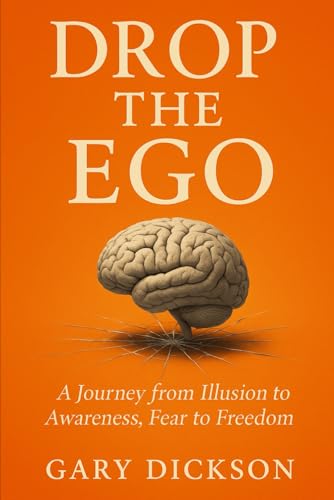
This concise, approachable guide is best for readers who want practical emotional tools rather than theory-heavy tomes, and you’ll appreciate its steady voice and clear exercises (released by an independent mindfulness press, paperback, about 224 pages, matte cover), making it an ideal pick for anyone juggling work, relationships, or anxiety and craving usable insight without fluff! You’ll see how the ego distorts perception and fuels overreacting, people-pleasing, and defensiveness, then practice observing thoughts, separating stories, and using short daily exercises to stay calm. It grows confidence steadily (no quick fixes), improving relationships and bringing quieter, more authentic resilience today.
Best For: Readers juggling work, relationships, or anxiety who want practical, concise emotional tools to reduce reactivity and build steady confidence.
Pros:
- Clear, accessible exercises for noticing ego-driven thoughts and calming reactions.
- Practical, short daily practices suitable for busy schedules.
- Focuses on gradual, sustainable emotional growth and improved relationships.
Cons:
- Not a deep theoretical or academic treatment for those wanting extensive psychological models.
- May feel too simple for readers seeking intensive therapeutic techniques.
- Independent press paperback — limited extras (e.g., multimedia supplements) compared with larger releases.
Psych 101: Psychology Facts and Basics (Adams 101 Series)
Sale


Psych 101: Psychology Facts, Basics, Statistics, Tests, and More! (Adams 101 Series)
- Used Book in Good Condition
Readers who want a lively, hands-on introduction to psychology will find Psych 101 (Adams 101 Series) offers engaging quizzes, classic experiments, and clear explanations in about 240 pages. You’ll get a practical, well-paced primer from Adams 101 (paperback, compact volume), packed with personality quizzes, the Rorschach blot, and summaries of Skinner and other theorists, so you can test ideas while you read. The book’s hands-on tools and concise chapters help you understand development, personality, and behavior (and, yes, answer obscure curiosities), making it a smart, friendly pick for curious readers and students alike! Buy it for classroom or bedside.
Best For: Readers and students seeking a lively, concise, hands-on introduction to psychology with interactive quizzes and clear summaries.
Pros:
- Engaging, accessible writing with interactive quizzes and practical exercises to reinforce learning.
- Concise, well-paced chapters that make complex topics like personality and development easy to understand.
- Compact paperback ideal for classroom use or casual bedside reading.
Cons:
- Compact format means less depth on advanced or technical topics compared with full-length textbooks.
- Uses popular tools (e.g., Rorschach blot) that may be more entertaining than methodologically rigorous.
- May be too introductory for readers seeking comprehensive coverage or graduate-level detail.
Don’t Believe Everything You Think: Why Your Thinking Is the Beginning & End of Suffering (book)

You’ll find Don’t Believe Everything You Think ideal if you want a practical, consciousness-focused guide that dissolves suffering at its root, not just patches symptoms. Published by Sounds True in a compact 224-page paperback with a matte cover and typography, the book offers step-by-step techniques that break negative thought loops. You’ll learn to access intuition and presence, create peace, joy, and unconditional love regardless of circumstance, and deeply shift consciousness rather than reframe thoughts. Practical exercises gently help you overcome anxiety, self-doubt, and self-sabotage without willpower, and consistently promise instant new experiences when you’re ready (I’m excited for you!).
Best For: readers seeking a practical, consciousness-focused guide to dissolve the root of emotional suffering and cultivate presence, intuition, and lasting peace regardless of external circumstances.
Pros:
- Offers step-by-step techniques to break negative thought loops and reduce anxiety, self-doubt, and self-sabotage without relying on willpower.
- Emphasizes deep shifts in consciousness and access to intuition, promoting unconditional love, peace, and joy independent of circumstances.
- Compact, actionable format (224 pages) with exercises intended to produce noticeable inner changes and new life experiences.
Cons:
- Heavy emphasis on consciousness expansion and intuitive methods may frustrate readers looking for evidence-based cognitive or behavioral therapies.
- Promises of “instant” results and dramatic shifts may feel unrealistic or overstated for some practitioners.
- At 224 pages, the compact format may feel too brief for readers wanting exhaustive theory, scientific references, or extensive step-by-step protocols.
The Body Keeps the Score: Brain, Mind, and Body in the Healing of Trauma
Sale


The Body Keeps the Score: Brain, Mind, and Body in the Healing of Trauma
- Penguin Books
- Ideal for a bookworm
- It's a great choice for a book person
If you’re a clinician, therapist-in-training, or someone who’s lived through trauma and wants practical, science-backed help, The Body Keeps the Score (Bessel van der Kolk) is an essential pick, published by Penguin Books/Viking, about 464 pages in most editions, available in sturdy hardcover and pocket-friendly paperback, and it blends clear clinical guidance with vivid case stories and cutting-edge research, so you’ll get both compassionate insight and actionable tools (I love that balance—quietly thrilling!). You’ll learn how trauma reshapes brain and body, discover neurofeedback, yoga, drama, and meditation as recovery paths, and gain tools to rebuild trust and agency again.
Best For: Clinicians, therapists-in-training, and trauma survivors seeking a science-backed, compassionate guide with practical tools for understanding and treating trauma.
Pros:
- Thoroughly research-based with up-to-date neuroscience and clinical findings.
- Offers a wide range of practical, embodied treatment options (neurofeedback, yoga, drama, meditation).
- Balances clinical guidance with vivid case stories, making complex concepts accessible and empathetic.
Cons:
- Lengthy and occasionally dense, which can feel overwhelming for casual readers.
- Contains clinical terminology and case detail that may be heavy for some trauma survivors without professional support.
- Not a substitute for individualized therapy—best used alongside professional guidance.
Recommended Products


The Body Keeps the Score: Brain, Mind, and Body in the Healing of Trauma Paperback

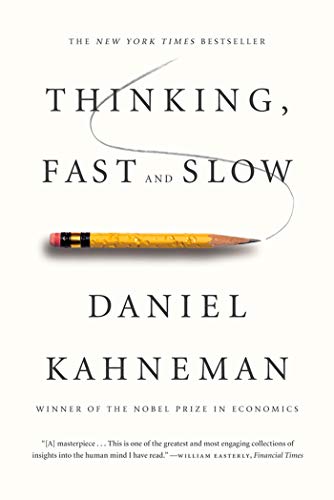
Thinking, Fast and Slow
Sale

Thinking, Fast and Slow
- A good option for a Book Lover
- It comes with proper packaging
- Ideal for Gifting
Curious decision-makers and anyone wanting a sharper inner voice will find Thinking, Fast and Slow a perfect guide, blending clear stories, surprising experiments, and practical takeaways. You’ll read Nobel laureate Daniel Kahneman’s deep but readable exploration (Farrar, Straus and Giroux, 2011), a sturdy 499-page hardcover with dust jacket that sits nicely on your shelf, inviting repeat consultation. As you follow System 1’s snap judgments and System 2’s deliberate checks, you’ll get concrete techniques to curb bias, improve forecasts, and rethink planning, and you’ll appreciate the book’s lasting influence on business and everyday choices. It’s essential, engaging, and surprisingly humane!
Best For: curious decision-makers, behavioral science enthusiasts, and anyone who wants practical tools to recognize cognitive biases and improve judgment.
Pros:
- Clear, engaging explanations of System 1 and System 2 that make cognitive science accessible.
- Packed with surprising experiments and practical techniques to reduce bias and improve decision-making.
- Deeply influential and widely respected — essential reading for business leaders, policymakers, and individuals.
Cons:
- Long and dense in places; some readers may find certain sections repetitive or technical.
- Emphasis on experiments and theory over step-by-step actionable programs for immediate change.
- Examples and language reflect the book’s 2011 context and may feel dated on some contemporary topics.
Recommended Products
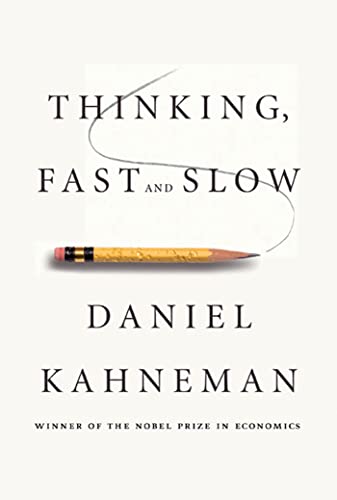
Major New York Times bestseller Winner of the National Academy of Sciences Best Book Award in 2012 Selected by the New York Times Book Review as one of the ten best books of 2011

Inside the Criminal Mind (Newly Revised Edition)

For readers hungry to understand why offenders think the way they do—whether you’re a criminal-justice student, a therapist, or a true-crime fan who wants depth—Stanton E. Samenow’s Inside the Criminal Mind (Newly Revised Edition) is a must-read, updated in 2022 by W. W. Norton & Company, paperback 320 pages, with binding and indexing, and you’ll appreciate the mix of case studies, research, therapy notes. You get historical context from 1984 to modern crises, analyses of social media and opioids, and sensible CBT-based reform ideas, presented in a direct, urgent voice that genuinely changed view (and will likely change yours)!
Best For: Readers seeking a deep, clinically informed understanding of why offenders think and act the way they do—especially criminal-justice students, therapists, and serious true‑crime readers.
Pros:
- Updated 2022 edition combines classic case studies with contemporary issues (social media, opioids, terrorism) for broad relevance.
- Authoritative perspective from five decades of clinical and expert-witness experience lends credibility and practical insight.
- Emphasizes actionable cognitive-behavioral approaches and policy-relevant recommendations for rehabilitation and reform.
Cons:
- Argumentative tone and strong challenges to popular explanations for crime may feel confrontational to some readers.
- Heavy focus on individual thought patterns can underplay broader social, economic, or systemic causes of criminal behavior.
- Clinical detail and case material may be dense for casual readers seeking a light true‑crime read.
The Let Them Theory — Self-Help Book

You’ll find The Let Them Theory ideal if you want a practical, no-nonsense guide that helps you stop wasting energy on others’ opinions, packaged as a sturdy hardcover (glossy dust jacket, 320 pages) and published by a major imprint, so it feels as substantial on your shelf as the advice inside. Robbins, a #1 New York Times bestselling author, over seven million copies sold, mixes research and stories to show you eight life areas for change! You’ll gain tools to stop fearing judgment, pursue goals, strengthen relationships, and boost career momentum (practical, bold!), designed to reshape how you define success.
Best For: readers who want a practical, no-nonsense self-help guide to stop wasting energy on others’ opinions and gain actionable tools to boost confidence, relationships, and career momentum.
Pros:
- Clear, actionable advice that targets eight key life areas for immediate application.
- Mixes relatable stories with research and expert insights for credibility and motivation.
- Sturdy hardcover presentation and concise 320-page format make it feel substantial and easy to reference.
Cons:
- May feel repetitive for readers familiar with popular self-help themes (personal responsibility, mindset shifts).
- Not a substitute for clinical therapy for deep mental health issues; focuses on mindset and behavior change.
- Emphasis on individual control can underplay structural or systemic factors affecting some readers’ lives.
Atomic Habits: An Easy and Proven Way to Build Good Habits and Break Bad Ones

If you want a practical, evidence-backed roadmap to tweak daily routines into lasting change, James Clear’s Atomic Habits (Avery, ~320 pages, sturdy hardcover with dust jacket) delivers clear, usable steps you’ll actually try, and yes, it’s sold over 25 million copies worldwide and been translated into 60+ languages—so it’s not just hype! You’ll learn the “tiny changes, remarkable results” mindset, practical systems that beat wishful goals, and science-backed techniques drawn from psychology and neuroscience, with real-world stories from athletes and leaders illustrating each principle. Use its frameworks to design your environment, make habits obvious, and recover after setbacks confidently.
Best For: Anyone who wants a practical, science-backed guide to build better daily routines and make small, sustainable changes toward long-term goals.
Pros:
- Clear, actionable framework (cue, craving, response, reward) that’s easy to apply to many habits.
- Emphasizes tiny, incremental improvements that compound into big results over time.
- Uses scientific research and real-world stories to illustrate and motivate behavior change.
Cons:
- Less focused on tailored strategies for complex clinical or severe behavioral issues.
- Some readers may find examples repetitive or prefer a shorter format.
- Requires consistent follow-through—principles are simple but demand discipline to produce results.
Recommended Products


by Charles Duhigg The Power of Habit: Why We Do What We Do in Life and Business
Strong Mind: Weightlifter’s Guide to Focus, Confidence, and Resilience
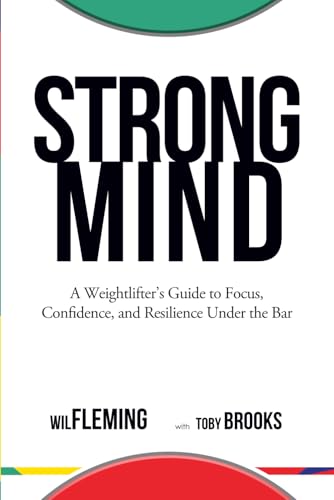
Wil Fleming’s Strong Mind focuses on the mental side of lifting, blending sport psychology with coaching techniques honed with Olympians and champions, and teaching goal-setting, visualization, routines, self-talk, and recovery tools. You’ll find a practical 240-page hardcover (grooved spine, durable dust jacket), published by Peak Performance Press, that lays out the Fix-It Framework, pre-performance rituals, and reflective prompts with athlete stories and step-by-step drills, so you can build a personalized mental system for PRs and competitions, and coaches can adopt ready-to-use templates (yes, I tried one and loved it!). It’s a focused, empowering read you should grab right now.
Best For: Athletes and coaches in Olympic-style weightlifting who want a practical, sport-specific mental-training system to build focus, confidence, and competition resilience.
Pros:
- Practical, applied mental tools used with elite lifters (goal-setting, visualization, routines, Fix-It Framework).
- Actionable templates, drills, and reflective prompts that make it easy to build a personalized system.
- Durable 240-page hardcover with athlete stories and coach-ready material that translates from training hall to platform.
Cons:
- Very weightlifting-focused, so less directly applicable to non-weightlifting sports.
- Emphasis is on mental training rather than in-depth physical programming or technique analysis.
- Hardcover-only presentation may be less portable or convenient than a paperback/e-book for some readers.
Factors to Consider When Choosing Psychology Books

When you pick a psychology book, check the author’s expertise and scientific basis—look for academic affiliations or peer-reviewed citations, a Penguin Random House hardcover with 320 pages signals credibility and durability. Think about target audience and practical application, choosing a Norton paperback (about 256 pages, clear exercises and illustrations) if you want hands-on tools, or an Oxford text (400+ pages, dense theory) when you’re ready for heavy models. Trust your needs and preferences, you’ll feel more confident choosing between theoretical depth and practical tips when you compare publisher details, page counts, and physical features (yes, even the font matters!).
Recommended Products


✅More JOY, MINDFULNESS & CONFIDENCE: Happiness takes practice. Discover what makes you happy with this gratitude journal and bring more of that into your life through daily journaling. Make your well-being your priority with the world's most popular mindfulness journal!

Author Expertise
Because you want trustworthy guidance, look at an author’s academic credentials, research record, and professional experience, details often highlighted in bios for APA Books or Penguin Random House editions. Check for notable accolades and community influence, plus multiple prior titles (hardcover or 300–400 page editions), which signal commitment. Assess publication history and clarity of explanations, neatly noting publisher details, page counts and practical features like dust jackets (a tidy paperback!) for reading! Evaluate engagement with current trends and recent studies, shown in updated editions or brief annotated bibliographies, which shows relevancy you can trust. Finally, favor authors who balance rigor with prose, whose publisher reputation (like APA or Penguin Random House), strong bios and readable 250–350 page formats make learning enjoyable and reliable.
Scientific Basis
Having checked an author’s credentials and publisher details, you’ll want books that rest on clear empirical research and updated science, like APA or Penguin Random House editions with recent revised chapters and annotated bibliographies (I get excited about new editions, yes!). Look for authors with Ph.D. credentials and transparent methods, citations to peer-reviewed studies, clear discussion of neuroplasticity or CBT advances, and chapter notes that total 300–450 pages with readable hardcover bindings and durable dust jackets, which feels reassuring. Prefer works that synthesize clinical, social, and cognitive findings, include statistical summaries and replication notes, and list experiments so you can trace claims. I’m enthusiastic about books that pair solid data with practical layout and index, they make learning joyful! and reference tables included helpful.
Target Audience
If you want a book that truly fits your needs, think about who will read it, which format works best, and how deep the material goes, because your choice changes what you’ll get from it: general readers benefit from Penguin Random House or Riverhead paperbacks around 250–350 pages with readable prose and sturdy spines, self-help fans often prefer practical workbooks or trade paperbacks with exercises and tear-out worksheets, and professionals or students should look for APA or university press hardcovers of 400+ pages with extensive references, indexes, and durable dust jackets (yes, the feel matters to some of us!). Identify your age, background, and goals, so you pick language level, depth, and exercises that match your learning style and time availability, and realistic timelines!
Practical Application
Three things matter most when you want a psychology book you can actually use: practical strategies, hands-on exercises, and evidence-based frameworks that help you change behavior. You should pick titles that explain ego-driven behaviors and emotional regulation with clear steps, like habit formation chapters, typically published by trade houses (Penguin Random House, 320 pages, paperback). Look for books that include quizzes, reflection prompts, and workbook sections so you can practice concepts daily, especially editions with perforated worksheets or companion apps that aid application. Prioritize recent releases citing peer-reviewed studies and offering mental training routines which build resilience against anxiety and self-doubt, and you’ll gain tools that actually work! I love recommending these pragmatic, well-produced guides; they often include short, structured reading plans and worksheets.
Theoretical Vs Practical
Because you want books that change thinking and behavior, pick titles balancing rigorous theory from Cambridge or MIT (hardcover, ~400 pages) with practical Penguin Random House guides (paperback, 320 pages)! You’ll want theory books that map foundational concepts, models, and frameworks—cognitive theories or developmental stages—so you understand why techniques work, and you’ll appreciate the heft and citation depth in those 400-page hardcovers. Pair them with approachable Penguin Random House paperbacks offering strategies for habit formation, emotional regulation, and daily practice, which give actionable tools you can use immediately. Choose by goal: if you’re studying psychology, prioritize theoretical volumes; if you’re improving daily life, favor practical guides, but don’t neglect the complementarity that makes both far more useful together! Treat selections as intentional investments today.
Publication Date
When choosing between a Cambridge or MIT hardcover (about 400 pages, cloth-bound) and a Penguin Random House paperback (roughly 320 pages), check publication date for current evidence! You’ll want the newest editions when you need up-to-date methodologies and evidence-based practices, because recent books synthesize fast-moving findings into usable clinical or research advice. That said, don’t dismiss classic texts (they’re often cloth-bound staples), as they provide foundational theories and historical context you’ll rely on to understand modern developments. Compare publication years, check citations and revised editions from Cambridge, MIT Press, or Penguin Random House, and judge whether the content reflects current professional consensus. Pick newer books for trends and practical techniques, while keeping a classic theory text on your shelf, it will deepen your perspective.
Writing Clarity
If you want usable psychology books, prioritize clear writing that walks you through ideas step-by-step, with logical headings, examples, and tight summaries. You’ll want authors who use plain language, define terms when needed, and structure chapters with subheadings, bullet lists, and end-of-chapter summaries, so you can skim efficiently. Look for editions from publishers like Penguin (trade paperback, 320 pages), Viking (hardcover, 352 pages), or Basic Books (paperback, 288 pages), with sturdy covers and layout. Illustrative examples and relatable anecdotes ground theory in real life, and charts, call-out boxes, and photos help you visualize findings and remember main takeaways for review. Prefer books that use consistent formatting like bullet points, bolded takeaways, and chapter summaries, which boost retention, speed review, and feel like a guide.
Supplemental Resources
Good writing helps you follow a book chapter-by-chapter, and you’ll get even more from titles (Penguin trade, ~320 pages; Viking hardcover, ~352; Basic Books paperback, ~288) by pairing them with outside tools. Look for online courses and workshops tied to the book, which give structured practice, and join forums or book clubs to test ideas with others! When authors cite studies, access journals or databases, read original papers, and use podcasts or documentaries to hear real-world examples and varied perspectives. Grab study guides or companion workbooks for self-assessment and spaced review (they help retention), and pick editions with clear indexes and helpful notes. Join a local reading group or an online club, bring questions, share passages, and you’ll deepen comprehension through debate and shared examples!
Frequently Asked Questions
Are These Titles Available as Audiobooks or Podcasts?
You’ll usually find these titles as audiobooks (Penguin Random House Audio, HarperAudio) and sometimes as companion podcasts, and you’ll often get paperback editions around 320 pages with matte covers and sturdy spines, which sounds great! You can check Audible, Libro.fm, and publisher sites for exact formats, narrated versions, runtime details, and bonus interviews, and you’ll enjoy hearing researchers and authors speak directly (I love that immediacy!). It feels energizing, honestly.
Is There a Recommended Reading Order for These Books?
Yes, treat the list like a map: start with fundamentals, read Thinking Clearly (Harper, 320 pages, paperback), then tackle applied titles, and finish with research reviews for synthesis, consider Penguin editions with solid indexes and durable bindings too. Pace yourself, you’ll enjoy sequenced learning (I promise—subtle enthusiasm!), alternate audiobooks for commutes, and keep a notebook for notes, summaries, quick reference. Start in order, but follow curiosity, you’ll learn faster, deeper.
Do Any Books Include Downloadable Workbooks or Study Guides?
Yes, several titles include downloadable workbooks or study guides, and you’ll find publisher links and extras, online PDF downloads indeed (very handy, I promise!). For example, Routledge offers a 320-page workbook with perforated exercises and online codes, while Penguin Random House bundles a 256-page study guide PDF. You’ll love the practical layouts, glossy covers, and clear step-by-step tasks (yes, you can actually follow them!), they’re worth buying for study groups.
Which Books Are Best Suited for Mental Health Professionals?
Like a reliable toolkit, you’ll grab The Body Keeps the Score, van der Kolk (Penguin, 464 pages, hardcover with dust jacket), for trauma care. You’ll also keep Motivational Interviewing, Miller and Rollnick (Guilford, 560 pages, spiral-bound workbook available), nearby for change-focused therapy, it’s practical! For clinicians, Herman’s Trauma and Recovery (Basic Books, 352 pages, sturdy paperback) and Beck’s CBT text (Guilford, 430 pages) are must-haves now.
Are Translations Available in Languages Other Than English?
Yes, many titles get translated into Spanish, Mandarin, French and German, and you’ll often spot international editions from Penguin Random House (hardcover) or paperback. Oxford University Press often issues translated paperbacks (416 pages, paperback) while Routledge and other presses offer durable cloth or dust-jacketed hardcovers with crisp typography. Check publisher pages or WorldCat to confirm languages and ISBNs, then request library copies to preview editions before you buy (I do)!