As an Amazon Associate, we earn from qualifying purchases. Some links on this site are affiliate links at no extra cost to you. Our recommendations are based on thorough research and editorial judgment.

10 Best Geology Books for Enthusiasts and Students Alike

If you’re diving into geology, grab titles like *Geology: A Complete Introduction* for clear basics or *The Rockhounding Encyclopedia* with GPS-guided U.S. sites and vivid photos; *Gemstones of the World* dazzles with 1,500+ gems in every form, while *Texas Rocks* fits perfectly in your field bag with waterproof pages. Explore Earth’s story through *A Brief History of Earth*, or admire aerial views in *Aerial Geology*. Keep exploring because there’s so much fascinating terrain ahead!
Key Takeaways
- Choose beginner-friendly books like “Geology For Dummies” for clear, accessible geology fundamentals and engaging illustrations.
- “The Geology Book (Wonders of Creation)” combines visuals and practical geology uses, ideal for both novices and dedicated students.
- Field guides like “Texas Rocks and Minerals Identification Field Guide” provide durable, photo-rich tools suitable for outdoor rockhounding.
- Advanced students benefit from in-depth titles such as “Structural Geology” or “A Brief History of Earth” with scientific insights and detailed maps.
- Look for geology books offering a blend of theory, practical applications, clear explanations, and rich visuals to cover varied learning needs.
Geology: A Complete Introduction (Teach Yourself)
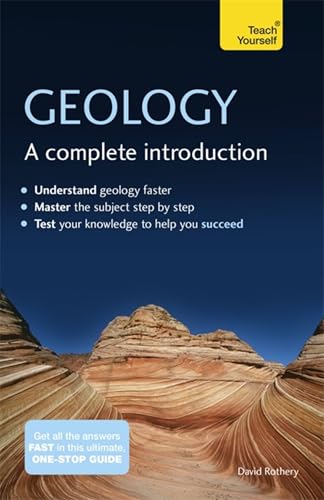
If you’re diving into geology and want a single, reliable companion, David Rothery’s *Geology: A Complete Introduction (Teach Yourself)* is a fantastic choice packed with everything you’ll need—clear explanations of Earth’s structure, plate tectonics, volcanoes, and even Solar System geology, all organized to build your understanding step-by-step. Published by Teach Yourself, this 320-page guide offers practical learning aids like a glossary, exam questions, and web links to help you explore beyond the text. Rothery, a planetary geosciences professor, makes tricky concepts approachable, so you’ll feel confident tackling both school assignments and personal curiosity alike!
Best For: Students and beginners in geology who want a comprehensive, clearly organized introduction with practical learning tools to confidently understand Earth sciences.
Pros:
- Covers a broad range of essential geology topics including Earth structure, plate tectonics, and Solar System geology.
- Includes helpful learning aids such as a glossary, exam questions, web links, and appendices for easy reference.
- Written by an expert in planetary geosciences with clear, approachable language ideal for self-study.
Cons:
- May be too basic for advanced geology students seeking in-depth or specialized content.
- Limited to 320 pages, which might constrain detailed coverage of some complex topics.
- Focus on introductory and broad concepts may not fully satisfy those looking for fieldwork-specific guides or advanced research material.
The Geology Book (Wonders of Creation)
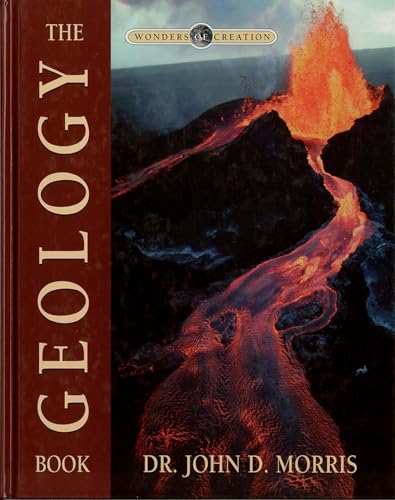
For anyone captivated by Earth’s dynamic story, The Geology Book (Wonders of Creation) stands out as a vibrant guide packed with insights about our planet’s crust, ancient fossils, volcanic wonders, and more, making it an ideal pick for both curious beginners and dedicated students. Published by Quarto, this 320-page hardcover offers rich visuals alongside clear explanations of diverse topics—from sedimentary processes and continental drift to volcanic activity and dating techniques like carbon and radioisotope methods. You’ll especially appreciate its connection between geology and our daily lives, highlighting rocks in jewelry and construction—which makes the Earth feel even more alive and fascinating!
Best For: anyone interested in learning about Earth’s geology, from beginners to students seeking a comprehensive yet accessible resource.
Pros:
- Rich visuals paired with clear explanations enhance understanding of complex geological concepts.
- Covers a wide range of topics including fossils, volcanic activity, sedimentary processes, and dating techniques.
- Connects geology to everyday life by highlighting practical uses of rocks and Earth’s beauty.
Cons:
- May be too detailed for casual readers looking for a brief overview.
- Hardcover format could be less portable compared to digital or paperback versions.
- Some scientific explanations might require additional background knowledge for complete comprehension.
Gemstones of the World: Newly Revised Fifth Edition

Whether you’re a hobbyist keen to identify your latest find or a jeweler seeking a reliable, visually rich reference, *Gemstones of the World: Newly Revised Fifth Edition* by Walter Schumann has you covered with over 1,500 vibrant photos that show stones in both rough and polished forms, making it incredibly easy to appreciate the unique traits of each gem. This 400-page volume from Sterling Publishing not only covers classic gems but introduces you to organic materials like coral and rare gems like charoite, complete with charts to help verify authenticity—perfect for anyone serious about gemstones!
Best For: Hobbyists, jewelers, and rockhounds seeking a comprehensive, visually rich guide to identifying and understanding a wide range of gemstones.
Pros:
- Includes over 1,500 full-color photos of stones in both rough and polished forms for easy visual identification.
- Covers a broad spectrum of gems, including organic materials and recently discovered stones like charoite.
- Provides charts and guidance for verifying authenticity, imitations, synthetics, and combined stones.
Cons:
- At 400 pages, the volume may be overwhelming for casual readers looking for a quick reference.
- Focused primarily on identification and description, with limited content on gemstone pricing or market trends.
- Physical book format may limit portability compared to digital alternatives.
Texas Rocks and Minerals Identification Field Guide Book
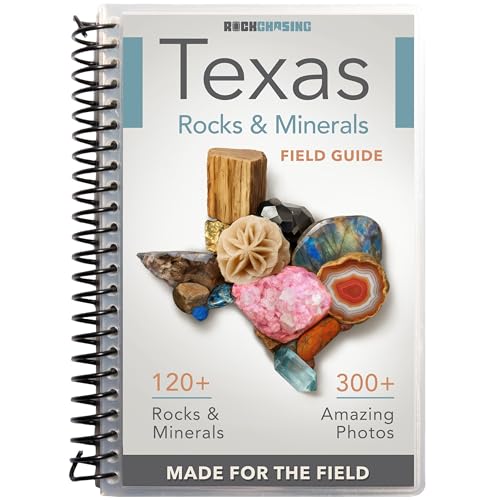
You’ll love the Texas Rocks and Minerals Identification Field Guide Book if you’re keen to recognize more than 120 unique Texas stones—ranging from the iconic Hill Country agates to rugged Llano Uplift granite—with quick, clear explanations designed to boost both beginners’ confidence and experts’ curiosity. This lightweight, spiral-bound guide withstands Texas heat and mud, featuring over 300 vivid photos that make spotting minerals straightforward and fun—great for kids and adults alike. Waterproof laminated pages mean you can take it anywhere without worry, whether you’re hiking or simply exploring your backyard. It’s the perfect gift to spark a lifelong fascination with Texas geology!
Best For: Anyone interested in Texas geology, including beginners, experts, kids, and outdoor enthusiasts who want a durable, portable guide to identify rocks and minerals.
Pros:
- Over 120 Texas rocks and minerals identified with simple, quick explanations.
- Waterproof, laminated pages and spiral-bound design for durability in outdoor conditions.
- Contains 300+ full-color photos that help users of all ages easily recognize stones.
Cons:
- Limited to rocks and minerals found in Texas, may not be useful outside the state.
- Spiral-bound format may not lay completely flat on uneven surfaces.
- While lightweight, carrying the book plus other gear could be cumbersome for some hikers.
A Brief History of Earth: Four Billion Years in Eight Chapters


Plunge into one of the most intriguing geology books out there, Andrew H. Knoll’s *A Brief History of Earth: Four Billion Years in Eight Chapters*—a fascinating read that unfolds Earth’s 4.6 billion-year saga in vivid detail. With nearly 50 original illustrations, including maps and graphs, Knoll combines decades of field research and the latest science to make complex geology surprisingly accessible. You’ll appreciate how he frames today’s climate challenges amid volcanic eruptions, glaciations, and meteor strikes, lending perspective to our planet’s dynamic past. If you crave a sharp, well-illustrated, and approachable geology guide, this one’s a real treasure!
Best For: readers interested in geology, Earth’s history, and climate science who want an accessible yet scientifically rigorous book enriched with illustrations.
Pros:
- Combines decades of research with the latest scientific insights for accuracy and depth.
- Features nearly 50 original illustrations, maps, and graphs that enhance comprehension.
- Places contemporary climate change issues in a broad historical and geological context.
Cons:
- May be too detailed for casual readers seeking a light introduction.
- Some scientific concepts might require prior basic knowledge for full understanding.
- Focuses primarily on geology, which may not appeal to readers looking for broader natural history topics.
Geology For Dummies

If you’re diving into geology for the first time or brushing up before a class, *Geology For Dummies* by WGBH Educational Foundation is a fantastic pick that balances clarity with depth, spanning around 384 pages filled with easy-to-follow explanations, helpful illustrations, and a straightforward approach that feels like a patient friend walking you through Earth’s mysteries. You’ll explore everything from rock records and minerals to tectonic plates’ large-scale motions, covering essential geological processes on Earth’s surface. Whether you’re a college student or a lifelong learner, this book breaks down complex topics into digestible, accessible pieces that truly demystify geology!
Best For: Anyone interested in geology, including college students and lifelong learners seeking a clear and accessible introduction to fundamental geological concepts.
Pros:
- Covers a comprehensive range of foundational geology topics including rocks, minerals, and tectonics.
- Written in an easy-to-understand style with helpful illustrations and straightforward explanations.
- Suitable for both beginners and those reviewing geology for coursework or personal interest.
Cons:
- May lack advanced detail for professional geologists or specialized study.
- Focuses mainly on introductory topics, so complex geological phenomena might be oversimplified.
- Some readers might prefer more interactive content or digital supplements beyond the book format.
The Field Guide to Geology
For anyone enthusiastic to explore geology beyond textbooks, The Field Guide to Geology offers an unbeatable blend of accessibility and depth that’s perfect for both curious nature lovers and dedicated students. This updated edition, praised by the American Reference Books Annual as “a very interesting title,” features over 750 illustrations—including 200 new two-color images—and updated graphs that clarify complex topics like seismic activity, air currents, and desertification. New chapters on “Monitoring the Earth’s Changes” and “Geologists of Note” add contemporary relevance, making it a must-have reference whether you’re hiking rugged trails or diving into academic studies!
Best For: geology enthusiasts, nature lovers, and students seeking an accessible yet comprehensive guide to earth sciences.
Pros:
- Contains over 750 illustrations including 200 new two-color images for enhanced visual learning.
- Includes updated graphs and tables that clarify complex geological phenomena.
- Features new chapters on contemporary topics like “Monitoring the Earth’s Changes” and notable geologists.
Cons:
- May be too detailed for casual readers looking for a brief overview.
- The extensive content could be overwhelming for absolute beginners without any geology background.
- Physical edition size might be bulky for field use despite being a “field guide.”
The Rockhounding Encyclopedia: Guide to Identifying and Collecting Gemstones, Minerals, Fossils & Geodes

You’ll find The Rockhounding Encyclopedia, published by Cool Springs Press and spanning just over 400 vibrant pages, an ideal pick if you’re someone enthusiastic to both identify and collect a wide range of gems, minerals, fossils, and geodes—whether you’re just starting out or already knee-deep in your rockhounding hobby. This thorough guide highlights over 100 unique specimens with vivid photos and sharp identification tips, while listing 500+ U.S. sites complete with GPS coordinates. It also breaks down essential gear and geological basics (without getting too technical), making it your perfect companion for every exciting rockhounding trip!
Best For: beginners and experienced rockhounds looking for a comprehensive, visually-rich guide to identifying and collecting a wide variety of gemstones, minerals, fossils, and geodes.
Pros:
- Covers over 100 unique specimens with vivid photos and sharp identification tips.
- Lists 500+ U.S. rockhounding sites with GPS coordinates and detailed location info.
- Simplifies geological concepts and offers detailed gear advice for successful trips.
Cons:
- May be overwhelming for absolute beginners due to the depth of information.
- Focuses primarily on U.S. locations, limiting use for international rockhounds.
- The physical size (400+ pages) might be cumbersome to carry on field trips.
Aerial Geology: High-Altitude Tour of North America’s Volcanoes and Landscapes
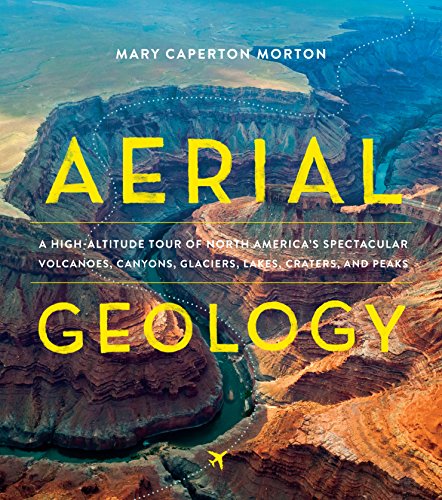
Readers who crave a fresh perspective on Earth’s dynamic landscapes will find “Aerial Geology: High-Altitude Tour of North America’s Volcanoes and Landscapes” (published by Mountain Press, 304 pages, lavishly illustrated) an exhilarating choice, especially because it reveals over 100 stunning formations through breathtaking aerial and satellite photography. You’ll journey from Alaska’s Aleutian Islands to Utah’s Great Salt Lake, exploring volcanoes and landscapes from a bird’s-eye view, enhanced by detailed maps and diagrams. The engaging explanations clarify complex geological processes, making it perfect for curious travelers or armchair geologists alike—plus, The New York Times calls it a enthralling and educational adventure!
Best For: Anyone fascinated by Earth’s geological formations who enjoys visually rich, educational content from a bird’s-eye perspective, including travelers, armchair geologists, and curious readers.
Pros:
- Stunning aerial and satellite photography showcasing over 100 geological formations.
- Clear, engaging explanations of complex geological processes with supportive maps and diagrams.
- Wide geographic coverage from Alaska to Utah, offering diverse and spectacular landscapes.
Cons:
- May be less appealing to readers seeking in-depth technical geology without photographic emphasis.
- The large-format illustrated style might be cumbersome for casual, on-the-go reading.
- Focused solely on North America, limiting global geological context for some readers.
Earth History: Stories of Our Geological Past
Immerse yourself in a fascinating journey through Earth’s epic past with this approachable, narrative-driven geology book that’s perfect if you’re new to the subject or just curious about the dramatic stories behind famous events like the dinosaur extinction or the rise of the Himalayas. This 350-page gem from Cambridge University Press cleverly blends stratigraphy, paleontology, and geophysics to reveal Earth’s key moments, guiding you through a tapestry of evidence that’s both broad and deep. Its conversational style invites you to connect the dots across diverse geological episodes, making complex history feel surprisingly accessible—and pretty exciting!
Best For: Students and newcomers to geology seeking an engaging and accessible introduction to Earth’s geological history through key events and integrative scientific approaches.
Pros:
- Uses a narrative style that makes complex geological history easy to understand and engaging.
- Integrates multiple sub-disciplines like stratigraphy, paleontology, and geophysics for a well-rounded perspective.
- Focuses on landmark geological events, making the content relevant and memorable for learners.
Cons:
- May lack detailed coverage of every geological period, which might limit depth for advanced readers.
- The broad approach might oversimplify certain scientific complexities for some users.
- Primarily aimed at beginners, so it may not fully satisfy experienced geologists or professionals seeking comprehensive technical detail.
Factors to Consider When Choosing Geology Books

When you’re picking a geology book, it’s vital to think about your current knowledge level and what areas you want to explore, whether that’s broad earth history or detailed mineralogy. Look for books that balance clear explanations with rich visuals—like the 300-page “Geology Essentials” from Wiley, packed with full-color maps and photos you can actually use on field trips. And don’t forget, a great geology guide should include practical tips for real-world rock hunting, plus thorough coverage of key topics that keeps you curious and informed!
Target Audience Knowledge Level
Since geology covers such a wide range of topics and complexities, picking a book that matches your current knowledge level makes all the difference in how much you enjoy and learn from it! If you’re just starting out, look for beginner-friendly books like “Essentials of Geology” by Marshak—its clear language and colorful illustrations (over 500 pages, Cambridge University Press) make fundamental concepts, like rock types and geological processes, easy and fun to grasp. But if you’ve got some background or want to dive deeper, advanced texts—say, “Structural Geology” by Davis and Reynolds—offer dense explanations and technical terms meant for college students or professionals hungry for detail. Choosing wisely means you won’t get overwhelmed or bored, letting your curiosity thrive as you explore Earth’s wonders!
Content Scope and Depth
Now that you’ve figured out which knowledge level suits you best, it’s time to think about what kind of content and depth will keep you engaged. Look for books that cover foundational topics—like Earth’s structure, plate tectonics, and geological processes—so you develop a solid base. Explore whether the book dives into fascinating areas such as volcanic activity and sedimentation, especially if you have specific interests. It’s a bonus when the author blends theory with practical applications, helping you understand real-world geology and fieldwork. Also, check if the book explains key methods like radioisotope and carbon dating to deepen your grasp of geological timelines. Choosing books with well-rounded, detailed content will make your reading both exciting and educational—trust me, it’s worth it!
Visual Aids and Illustrations
A vibrant photo of a polished gemstone can turn a geology book from just another dusty read into an irresistible visual journey, and trust me, the best guides—like those from National Geographic or the Smithsonian Institution—pack their pages with over 1,500 full-color images that not only showcase minerals in stunning detail but also help you spot them in the field. When choosing your next geology book, prioritize those rich in photographs, diagrams, and maps, because they make complex concepts way easier to grasp. Infographics illustrating landform formation or mineral structures boost retention, while detailed illustrations connect what you see on the page to real-world features during outdoor exploration. These visuals don’t just clarify—they invite you to appreciate geological beauty deeply, turning every page into a mini adventure!
Practical Field Application
Although you might love flipping through pages filled with stunning rock photos, the best geology books truly come alive when they equip you for hands-on fieldwork—offering clear identification tools, practical methodologies, and detailed guidance on essential gear for safe exploration. You want guides that include vivid images and visual aids, helping you spot rocks and formations accurately during outdoor adventures. Look for books detailing step-by-step techniques for geological surveys, ensuring you gather samples and data like a pro. Bonus points if they feature GPS coordinates for local field sites, so you know exactly where to explore! Extensive advice on field equipment rounds out your prep, making sure every trip is safe and successful. Books like *Rockhounding America* (well-published, 320 pages) nail these essentials—trust me, they’re worth carrying in your pack!
Coverage of Geologic Topics
Since a solid grasp of geology hinges on understanding a broad spectrum of topics, you’ll want books that cover everything from Earth’s structure and plate tectonics to volcanism, sedimentation, and fossilization, ensuring you get the full picture of our planet’s complex story. Great picks often delve into geological history too, so you can trace events like mass extinctions and continental shifts—context that makes those chapters come alive. Don’t forget to check if the book tackles practical applications like mineral ID and resource management, plus newer tools like remote sensing or geochemical analysis. For example, titles by Cambridge University Press often blend these elements beautifully in 400-500 page volumes, giving you breadth and modern insight all at once (yes, your shelf deserves that upgrade!).
Author Expertise and Background
When you’re picking up a geology book, knowing the author’s expertise can make all the difference between getting lost in jargon and feeling inspired by clear, well-grounded explanations that really stick. You want to look for authors who hold academic positions or boast years of research—these credentials often mean the book’s content is rich, reliable, and grounded in real science. If the author actively participates in field research, you’ll benefit from vivid, practical examples that bring concepts alive. Also, check if they’ve published in reputable geological journals or contributed to professional communities; it’s a sign of respected insight. Finally, authors who teach geology tend to craft clearer, more accessible texts, helping you grasp tricky topics without feeling overwhelmed.
Update Frequency and Editions
Picking up at least one geology book with recent updates, such as the 9th edition of *Earth: An Introduction to Physical Geology* by Tarbuck and Lutgens (published by Pearson, around 700 pages), can instantly boost your understanding by including the latest climate science shifts and groundbreaking discoveries, offering vivid photos, refined diagrams, and expanded sections on plate tectonics that keep you well-informed and enthusiastic to explore more! When choosing your geology guides, it pays to check how often editions are updated since new research can dramatically change how we interpret Earth’s processes. Look for recent publication dates and authors who actively revise their work—this signals that the material reflects cutting-edge methods and findings. Staying current means you won’t miss out on exciting, fresh perspectives in geology’s ever-evolving field!
Accessibility and Language Clarity
Alongside choosing the latest editions, paying attention to how accessible a geology book is can make a huge difference in your learning experience. Look for titles that use clear, concise language to break down tricky concepts, ideal for both beginners and those brushing up on basics. Books with glossaries explaining technical terms—such as *Essentials of Geology* by Marshak (around 600 pages, often praised for clarity)—help cement your understanding. Visual learners will appreciate texts packed with diagrams, maps, and vibrant photos, which bring rocks and formations to life. Also, check for a logical progression—from foundational ideas to advanced topics—so you won’t feel overwhelmed. Finally, authors who weave real-world examples and stories into explanations make geology relatable and exciting (yes, rocks can have narratives!). This approach truly elevates your study efforts!
Frequently Asked Questions
What Careers Can a Geology Degree Lead To?
You can immerse yourself in careers like environmental consulting, oil and gas exploration, or even paleontology, where you’ll analyze earth’s secrets and advise on resource use. You might work for government agencies, mining companies, or research institutions, uncovering insights that shape our planet’s future. Geology graduates often become geotechnical engineers or natural hazard specialists, combining fieldwork with data analysis. It’s a thrilling pathway, blending science and adventure, perfect if you crave discovery!
How Can I Start Rockhounding as a Hobby?
You can start rockhounding by grabbing a solid guide like “National Geographic Pocket Guide to Rocks and Minerals” (about 200 pages, spiral-bound for easy field use, by National Geographic). Then, hit local parks or public lands, always with permission, carrying a sturdy rock hammer and safety goggles. Joining a local rockhounding club is great too—they offer tips, identify your finds, and share secret spots! Trust me, once you start, you’ll be hooked!
Are There Geology Apps for Field Identification?
Absolutely, awesome apps abound for fieldwork! You’ll love Rock Identifier (available on both iOS and Android), boasting instant mineral recognition through photos—a fabulous feature when you’re out exploring. Another gem, Geology Toolkit, offers detailed geological maps plus a handy compass tool, letting you pinpoints rocks precisely. Both apps keep your adventures organized and educational, turning your phone into a pocket geologist. Immerse yourself; your rockhounding just got way smarter!
What Safety Gear Is Essential for Geology Fieldwork?
You absolutely need a sturdy helmet to protect against falling rocks, plus durable gloves to handle sharp specimens without getting hurt. Don’t forget thick-soled boots with good ankle support for uneven terrain—REI’s hiking boots are great! A high-visibility vest helps others spot you on busy sites, and sunglasses with UV protection shield your eyes from glare. Finally, pack a first aid kit; injuries happen, even when you’re super careful! Safety first, always.
How Do Geological Time Scales Correlate With Fossils?
You’ll find geological time scales directly link to fossils by marking eras when particular organisms thrived, helping you date rocks by the creatures preserved inside! I love “The Story of Earth” (Vince, 2011, 320 pages), which has clear timelines plus vivid fossil images, published by Sterling, perfect for your collection. Its sturdy hardcover and vibrant photos make learning these connections exciting, so you can confidently explore Earth’s deep history with a clear, visual timeline!