As an Amazon Associate, we earn from qualifying purchases. Some links on this site are affiliate links at no extra cost to you. Our recommendations are based on thorough research and editorial judgment.

3 Best DIY Electronics Books to Spark Your Creativity and Skills

If you want hands-on fun with Arduino and Raspberry Pi, Hacking Electronics (Second Edition) offers creative projects and solid soldering tips; Make More Electronics dives into logic chips and sensors with colorful photos for hobbyists ready to level up; and Encyclopedia of Electronic Components Volume 1 packs clear diagrams and detailed facts on resistors and transistors, perfect for deepening your component know-how. Keep going to discover which titles match your skills and spark your inventiveness!
Key Takeaways
- “Hacking Electronics” teaches practical Arduino and Raspberry Pi projects, perfect for makers aiming to creatively repair and modify electronics.
- “Make More Electronics” offers engaging hands-on projects with logic chips and sensors, great for hobbyists building intermediate skills.
- “Encyclopedia of Electronic Components Volume 1” provides detailed component info, ideal for learners seeking in-depth understanding of essential parts.
- Choose books blending practical experiments and clear theory to effectively build electronics skills and maintain motivation.
- Prioritize titles with varied projects, quality visuals, and repair focus to enhance creativity, problem-solving, and sustainable electronics use.
Hacking Electronics: Learning Electronics with Arduino and Raspberry Pi (Second Edition)
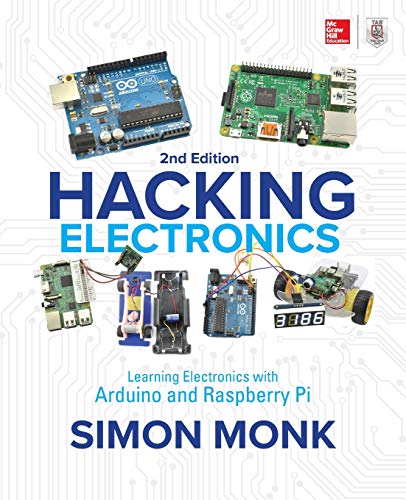
If you’re enthusiastic to plunge into hands-on projects that blend Arduino and Raspberry Pi with everyday gadgets, Hacking Electronics: Learning Electronics with Arduino and Raspberry Pi (Second Edition) is a top pick for you, offering a fresh collection of practical hacks and creative builds that turn ordinary devices into smart, interactive tools. This 350-page guide by Simon Monk (published by McGraw-Hill) walks you through fun projects like a remote-controlled rover, ultrasonic rangefinder, and smart card reader. You’ll master soldering, component ID, and power management—all while reworking common gadgets into marvels of DIY engineering. It’s a truly rewarding read!
Best For: DIY electronics enthusiasts and makers eager to integrate Arduino and Raspberry Pi with household gadgets for creative, hands-on projects.
Pros:
- Provides step-by-step guides for a variety of engaging projects like remote-controlled rovers and smart card readers.
- Covers essential skills such as soldering, wiring, component identification, and power management.
- Encourages learning through repair, modification, and creative hacking of everyday electronics.
Cons:
- May require some prior basic knowledge of electronics for beginners to fully benefit.
- Projects might demand access to specific tools and components not readily available at home.
- The focus on Arduino and Raspberry Pi may limit appeal for those interested in other microcontroller platforms.
Make More Electronics: Journey Into Logic Chips, Amplifiers, Sensors, and Randomicity
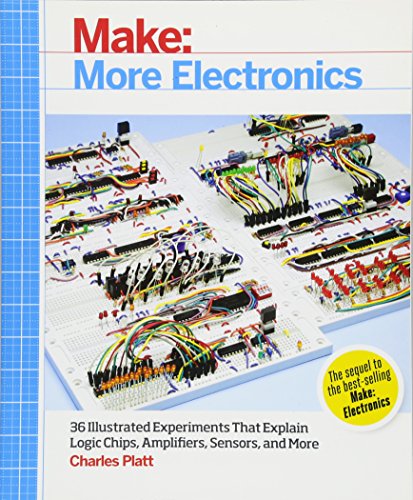

Enthusiastic tinkerers who’ve already dipped their toes into basic electronics will find “Make: More Electronics” an ideal next step, offering hands-on projects that deepen your understanding of logic chips, sensors, and amplifiers. This practical guide, packed with hundreds of vivid color photos and step-by-step instructions, covers essential intermediate topics like comparators, multiplexers, and magnetic sensors, plus explorations into audio amplification and randomicity. You’ll build circuits before diving into theory, which keeps learning engaging and effective. If you’ve finished “Make: Electronics,” this book from Maker Media expands your skills with real-world experiments that feel both challenging and rewarding!
Best For: Enthusiastic hobbyists and learners with foundational electronics knowledge seeking to deepen their understanding through hands-on projects involving intermediate to advanced components.
Pros:
- Offers a project-based learning approach that emphasizes building circuits before theory for better engagement.
- Covers a wide range of important intermediate electronics topics, including comparators, multiplexers, and sensors.
- Richly illustrated with hundreds of color photographs and step-by-step instructions to clarify complex concepts.
Cons:
- May be challenging for complete beginners without prior electronics experience.
- Focuses more on intermediate topics, which might not cover all advanced electronics needs.
- Requires access to various electronic components and tools, which could be costly or difficult for some learners to obtain.
Encyclopedia of Electronic Components Volume 1

You’ll find the Encyclopedia of Electronic Components Volume 1 an invaluable resource if you’re passionate about building your foundational electronics knowledge or guiding others through it—this 430-page hardcover edition from Maker Media lays out the ins and outs of essential parts like resistors, capacitors, and transistors, with clear diagrams and expert facts that make complex ideas surprisingly approachable. Designed for everyone, from hobbyists to engineers, it organizes topics by component type, covering power, electromagnetism, and discrete semiconductors. Each entry explains functionality, uses, and common issues, making this first volume a reliable, authoritative guide you’ll return to often!
Best For: Anyone from hobbyists and students to professional engineers seeking a thorough and reliable reference to foundational electronic components.
Pros:
- Comprehensive coverage of key components like resistors, capacitors, and transistors with clear, instructive descriptions.
- Well-organized by component type, making it easy to find information quickly.
- Fact-checked and authoritative content ensures accurate, trustworthy data for both learning and project work.
Cons:
- Focuses mainly on discrete components, so integrated circuits and sensors are covered in later volumes.
- Physical hardcover format may not be as convenient for quick reference compared to digital alternatives.
- May be too detailed or technical for absolute beginners without any prior exposure to electronics.
Factors to Consider When Choosing Diy Electronics Books

When you choose a DIY electronics book, make sure it matches your skill level and offers a variety of projects that keep you engaged without overwhelming you. Look for books like “Make: Electronics” by Charles Platt, which balances practical experiments with clear explanations, includes quality visuals, and covers components in detail across its 400 pages. Trust me, picking a book with great diagrams and a mix of theory and hands-on work (few things beat flipping sturdy, glossy pages!) can boost your learning and excitement big time!
Skill Level Alignment
Although diving into any DIY electronics book can spark your curiosity, picking one that matches your current skill level truly makes all the difference in keeping you motivated and avoiding frustration. If you’re just starting, look for beginner-friendly books like “Make: Electronics” by Charles Platt (around 400 pages, hands-on projects, beginner-focused) that gently introduce basic components and simple circuits. Once you’ve built a solid foundation, intermediate titles, often 300–500 pages long and packed with detailed explanations of comparators or advanced logic chips, can expand your skills considerably. For those ready to tackle complex theory and practical applications, advanced books with dense content and specialized subjects will challenge you—but only if you already understand the fundamentals. Choosing a well-matched book guarantees exciting, doable learning that keeps you coming back for more!
Project Variety Offered
Matching your skill level to the right electronics book sets the stage, but exploring a wide variety of projects truly brings your learning to life, offering an even richer experience. Look for books that include hands-on projects, like building ultrasonic rangefinders or smart card readers, which make theory click instantly. When titles cover diverse themes—from remote-controlled gadgets to audio mods and home automation—they invite you to immerse yourself in what excites you most, keeping motivation high. Plus, mixing simple parts like resistors with logic chips and sensors guarantees you grow steadily without feeling overwhelmed. I especially appreciate books emphasizing repair and modification, as they not only teach troubleshooting but also encourage sustainability by repurposing old electronics (a neat bonus!). This variety keeps your creativity buzzing and skills sharpening!
Component Coverage Depth
Since having a solid grasp of components like resistors, capacitors, inductors, and transistors truly sets the foundation for any electronics enthusiast, it’s essential to pick DIY books that dive deep into what makes each part tick—titles like Charles Platt’s *Make: Electronics* (over 350 pages, chock-full of detailed explanations and practical tips, published by Maker Media) really stand out for their thorough approach. You want books that systematically organize content by component type, making it easy to flip back and forth during projects. Look for those that explain not only discrete parts but also integrated circuits, bridging simple components and complex systems. Bonus points if they offer practical advice on substitutions and troubleshooting because real-world fixes are vital for your maker journey!
Practical Versus Theory
When you plunge into DIY electronics books, you’ll notice some focus on hands-on projects that get your soldering iron buzzing and components clicking, while others unfold the underlying theories that explain why circuits behave as they do—both styles have their perks! If you’re just starting out, books like “Make: Electronics” by Charles Platt (over 400 pages of clear, step-by-step projects) offer practical experience that builds confidence quickly. On the other hand, seasoned tinkerers might prefer more theory-heavy texts, such as Horowitz and Hill’s “The Art of Electronics,” which dives deep into complex principles with thorough explanations. Ideally, choosing a book that mixes clear projects with solid theory—bridging abstract concepts and real-world circuits—will supercharge your learning and keep you engaged every step of the way!
Visual Aids Quality
After figuring out how much hands-on practice or theory you want in your DIY electronics book, it’s equally important to check out the quality of its visual aids, since clear and colorful diagrams or photos can make a huge difference in how well you grasp complex circuits and assembly steps. Books like “Make: Electronics” by Charles Platt (400 pages, O’Reilly) excel here, offering detailed, step-by-step photos and bright diagrams that clarify component layouts and soldering techniques. Visual aids not only reduce errors during builds but also boost your confidence as you progress through each project phase. Plus, graphs and tables that summarize component specs help you pick parts faster—saving time and frustration. Trust me, high-quality visuals turn a book into an enjoyable, engaging learning experience, making your electronics journey smoother and way more fun!
Tools and Materials
The toolbox you’ll need for DIY electronics projects often shapes your learning experience, so choosing books that clearly list and explain essential tools and materials can make all the difference—titles like “Electronics for Beginners” by Jonathan Mitchell (250 pages, TechPress) shine by not only detailing required parts but also guiding you through using soldering irons, multimeters, and specialty sensors with confidence. When picking a book, look for detailed materials lists per project to avoid mid-build scrambles, and check if the author addresses safety tips, which is vital to prevent injuries. Also, consider if the tools and parts are affordable and easy to find locally, so you’re not stuck ordering obscure items. Having a book that walks you through both the why and how of each item turns challenging projects into exciting learning adventures!
Problem-Solving Guidance
Even if you’re brand new to circuits, choosing a DIY electronics book that actively nurtures your problem-solving skills through hands-on projects can transform your learning experience from frustrating to downright thrilling! Opt for titles like “Practical Electronics for Inventors” by Paul Scherz, which offers clear, step-by-step instructions paired with engaging experiments that challenge your troubleshooting abilities. These books don’t just show you how to assemble circuits—they explain the why behind each component’s function, building your confidence to adapt solutions when things inevitably go sideways. Look for editions around 500 pages with sturdy hardcover bindings, as these often combine theory with real-world applications, ensuring you don’t just follow instructions but truly understand the workings beneath. This approach will spark your creativity and solidify your skills faster than you might expect!
Frequently Asked Questions
Can I Start DIY Electronics Without Prior Programming Knowledge?
Absolutely, you can start DIY electronics without prior programming knowledge! Books like “Make: Electronics” (Maker Media, 576 pages, detailed illustrations) break down basics step-by-step, letting you build confidence and skills gradually. They weave simple code intro with hands-on projects, so you’re not overwhelmed but engaged. Plus, many titles feature helpful troubleshooting tips and clear diagrams, making learning interactive and fun—a perfect way to spark creativity whether you’re tech-shy or just enthusiastic to dive right in!
What Safety Precautions Should Beginners Take While Working With Electronics?
Did you know that roughly 70% of home electronics accidents happen due to ignoring basic safety steps? When you start, always unplug devices before tinkering, wear insulated gloves, and use tools with non-slip handles to prevent shocks or short circuits. Keep a fire extinguisher nearby (ideally Class C), and work in a clutter-free area with good lighting. Trust me, these habits, highlighted in “Make: Electronics” by O’Reilly (450 pages, vivid diagrams), keep your creative journey safe and exciting!
Are There Online Communities for DIY Electronics Enthusiasts?
Absolutely, you’ll find thriving online communities like Reddit’s r/electronics and the EEVblog forums, where thousands of enthusiasts share tips, troubleshoot projects, and post tutorials—you’ll feel instantly supported! Sites like Instructables also host vibrant DIY electronics sections, offering step-by-step guides. These platforms, packed with passionate makers and engineers, can boost your skills and creativity, much like flipping through a thick, detailed book from O’Reilly or Maker Media—except, you know, with real-time feedback!
How Do I Choose Affordable Components for My Projects?
You’ll want to embrace the art of savvy sourcing—snagging affordable components means checking sites like Digi-Key or Mouser for bulk deals, and don’t overlook eBay’s hidden gems! Books like “Make: Electronics” (Maker Media, 464 pages, sturdy paperback) offer excellent tips on component quality vs. cost, guiding you to balance savings with reliability. Always compare specs, read reviews, and, trust me, a little patience pays off big on price and performance!
Can DIY Electronics Skills Help in Professional Career Advancement?
Absolutely, your DIY electronics skills can turbocharge your career! Employers value hands-on knowledge, and mastering circuits or microcontrollers (like Arduino or Raspberry Pi) can set you apart. Pick up books like “Make: Electronics” by Charles Platt (Maker Media, 416 pages, with clear diagrams and real-world projects) to build confidence and practical skills that employers find impressive. Your ability to problem-solve creatively makes you a versatile, sought-after professional—trust me, it’s a game-changer!