As an Amazon Associate, we earn from qualifying purchases. Some links on this site are affiliate links at no extra cost to you. Our recommendations are based on thorough research and editorial judgment.


10 Best Data Visualization Books to Master the Art of Storytelling With Data

If you want to master storytelling with data, you’ll love classics like Edward Tufte’s *The Visual Display of Quantitative Information* (Graphics Press, 250+ illustrations) alongside creative gems like *Data Sketches*, full of hands-on coding projects for web visuals. For business pros, *The Big Book of Dashboards* offers practical, scenario-driven tips, while *Fundamentals of Data Visualization* grounds you with clear, effective figure-making guidance. Immerse yourself here, and your journey through compelling data visuals just got a whole lot clearer!
Key Takeaways
- *The Visual Display of Quantitative Information* offers foundational principles and historical context for mastering clear, accurate data storytelling through static visuals.
- *Fundamentals of Data Visualization* guides on choosing visual types and color use to create compelling, informative figures for scientific and business presentations.
- *Data Sketches* unlocks creative and technical skills for artistic, web-based data storytelling with hands-on projects and coding insights.
- *Better Data Visualizations* equips researchers with over 500 examples for selecting appropriate graphs to communicate complex data effectively to academic audiences.
- *The Big Book of Dashboards* provides practical, real-world dashboard scenarios to design engaging, actionable visuals for business and organizational storytelling.
The Visual Display of Quantitative Information, 2nd Ed.

If you’re someone who thrives on mastering the art of clarity in data, *The Visual Display of Quantitative Information, 2nd Ed.* is a fantastic choice that never goes out of style! This classic by Edward Tufte, renowned for its 250 detailed illustrations (some brilliant, others cautionary), dives deep into statistical graphics, charts, and tables with a thoughtful balance of theory and practice. You’ll discover essential principles like the data-ink ratio, explore time-series and relational graphics, and even unmask graphical deception—all while appreciating splendid color reproductions of William Playfair’s pioneering works. It’s a must-have for anyone serious about data storytelling!
Best For: Anyone passionate about mastering the clarity and effectiveness of data visualization, including statisticians, designers, analysts, and data storytellers.
Pros:
- Comprehensive coverage of statistical graphics with 250 detailed illustrations, including both exemplary and poor examples for balanced learning.
- Introduces fundamental principles like the data-ink ratio and discusses diverse data display types such as time-series, relational, and multivariate graphics.
- Provides insightful analysis on graphical deception and includes historic color reproductions of William Playfair’s pioneering work.
Cons:
- As a theory-heavy classic, it may be dense or challenging for beginners without prior knowledge of data visualization concepts.
- Limited focus on modern interactive or digital visualization tools given its primary emphasis on print graphics.
- Some content may feel dated compared to the rapid advancements in software and digital graphics since the publication.
Data Sketches: Imagination and Exploration in Data Visualization

Data Sketches: Imagination and Exploration in Data Visualization is a fantastic pick for creative coders and visual storytellers who crave an inside look at how art and data collide. Written by Nadieh Bremer and Shirley Wu, this 248-page, full-color book dives into 24 unique data projects across 12 themes like Olympics and Myths, showing you both the wild creative process and the coding challenges behind each visualization. You’ll get personal notes, detailed tutorials, and technical insights right from the creators, making it perfect if you want to sharpen your skills while admiring stunning, web-based data art!
Best For: creative coders, visual storytellers, and data visualization enthusiasts looking to deepen their skills through a blend of artistic exploration and technical insight.
Pros:
- Provides detailed behind-the-scenes insights and personal notes from two expert data visualization artists.
- Includes beginner-friendly tutorials and technical write-ups that demystify complex coding and design concepts.
- Features 24 full-color, visually stunning data visualizations across diverse and engaging themes.
Cons:
- Focuses primarily on web-based visualization, which may not appeal to those interested in other mediums.
- Some technical content may still be challenging for complete beginners without prior coding experience.
- The artistic and exploratory emphasis might leave readers seeking purely practical or corporate data visualization solutions wanting more.
Better Data Visualizations: A Guide for Scholars, Researchers, and Wonks
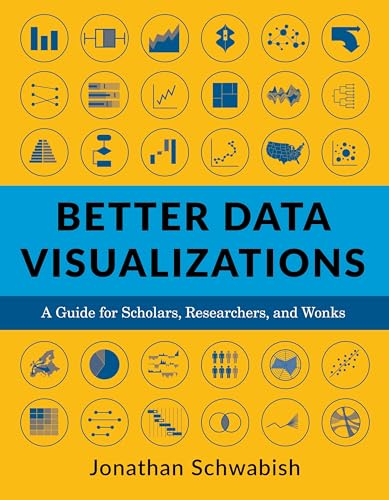

For anyone diving into the world of research or scholarly work, Jonathan Schwabish’s *Better Data Visualizations: A Guide for Scholars, Researchers, and Wonks* is a fantastic companion that truly bridges the gap between complex data and fascinating storytelling. Published by Columbia University Press, this 240-page guide packs over 500 examples and surveys more than eighty visualization types—from histograms to choropleth maps—helping you pick the perfect graph for your audience and goals. Schwabish not only teaches practical design choices but also fills the training gap many researchers face, empowering you to craft visuals that engage readers and boost understanding.
Best For: Researchers, scholars, and academics seeking to improve their data visualization skills and effectively communicate complex data through engaging and informative graphics.
Pros:
- Provides over 500 practical examples covering a wide array of visualization types.
- Offers clear guidance on selecting the right graph according to audience and purpose.
- Bridges the training gap for researchers lacking formal instruction in visual data presentation.
Cons:
- May be overwhelming for beginners due to the vast number of visualization types covered.
- Primarily focused on academic and research contexts, which might limit applicability for casual users.
- The printed format may lack interactive elements that some users expect for learning visualizations.
Fundamentals of Data Visualization: A Primer on Making Informative and Compelling Figures

Crafted especially for scientists, engineers, and business analysts who want to tell engaging stories through their numbers, *Fundamentals of Data Visualization: A Primer on Making Informative and Compelling Figures* stands out as a go-to resource you’ll appreciate, whether you’re just beginning or looking to polish your skills. This compact guide breaks down how to choose the right visualization, use color effectively for emphasis, and apply redundant coding to make key points unforgettable. With its clear examples, visual directory, and practical tips on integrating figures into reports, it’s like having a seasoned mentor helping you craft compelling, info-rich visuals every time!
Best For: Scientists, engineers, and business analysts seeking to create clear, engaging, and informative visual stories from complex data.
Pros:
- Provides clear guidelines on choosing the right visualization type to convey messages effectively.
- Emphasizes the use of color and redundant coding to enhance comprehension and retention.
- Includes extensive examples and a visual directory that serve as practical references for creating and integrating figures.
Cons:
- May be too concise for those looking for in-depth statistical or technical visualization methods.
- Primarily focused on foundational skills, possibly limiting advanced users seeking specialized techniques.
- Limited coverage on the use of interactive or dynamic visualizations.
The Big Book of Dashboards: Visualizing Your Data Using Real-World Business Scenarios
If you’re someone who thrives on real-world examples and craves practical solutions for business dashboard challenges, The Big Book of Dashboards is a treasure trove you’ll want to explore. Packed with scenario-based examples from industries like healthcare, finance, and marketing, this hefty, well-crafted book shows you how to design dashboards that work across platforms — from smartphones to conference rooms. The authors, with decades of combined experience, plunge into psychological and practical hurdles, guiding you through creating functional yet visually appealing dashboards. It’s a must-have reference, filled with actionable insights to transform your data storytelling instantly!
Best For: Professionals and organizations seeking practical, scenario-based guidance to design effective, visually appealing business dashboards across multiple industries and platforms.
Pros:
- Provides real-world, industry-specific dashboard examples for immediate application.
- Addresses both practical design challenges and psychological factors influencing dashboard effectiveness.
- Offers expert insights from authors with decades of combined experience in data visualization.
Cons:
- The extensive scenario-based content may overwhelm beginners seeking basic dashboard design fundamentals.
- Heavy focus on complex, multi-platform dashboards might not suit users with simple, single-platform needs.
- Some visual examples (e.g., packed bubbles, donut charts) might not align with all users’ preferences or best practices.
Good Charts: The HBR Guide to Making Smarter Data Visualizations
You’ll find *Good Charts: The HBR Guide to Making Smarter Data Visualizations* a standout choice if you want practical strategies tailored for managers enthusiastic to communicate complex ideas clearly and persuasively—Scott Berinato’s approachable 200-page guide (published by Harvard Business Review Press) not only breaks down how to craft compelling visuals through a thoughtful process of talking, sketching, and prototyping but also blends neuroscience and real-world anecdotes that make each concept stick. This book shows you why good charts go beyond decoration, becoming essential tools that help you convey impact and emotion, boosting your data storytelling skills with scientific insight and clear, actionable steps!
Best For: Managers and professionals seeking practical strategies to create clear, persuasive, and impactful data visualizations without requiring specialized design training.
Pros:
- Provides a practical, step-by-step methodology of talking, sketching, and prototyping to build effective charts.
- Integrates neuroscience and visualization science to explain why certain visuals evoke emotional responses.
- Includes real-world anecdotes that make complex concepts accessible and memorable.
Cons:
- Focused primarily on managers, so may offer less depth for advanced data scientists or designers.
- The 200-page guide might be too concise for those seeking detailed technical tutorials.
- Emphasis on process over software tools could be less helpful for readers looking for specific tool recommendations.
Data Visualization: A Practical Introduction
For anyone diving into the world of data visualization, *Data Visualization: A Practical Introduction* stands out as a superb choice, especially if you’re enthusiastic to master R’s ggplot2 with clear, step-by-step examples that gradually build your skills from simple plots to complex, informative graphics. This friendly guide, published by Princeton University Press, offers practical instruction on data transformation, grouping, and layering, helping you craft honest and compelling visuals. The integration with the tidyverse means you’ll learn consistent tools supporting your journey. It’s about hands-on learning, enhancing your ability to tell meaningful stories with data—definitely worth adding to your shelf!
Best For: Beginners and intermediate R users looking to develop practical data visualization skills using ggplot2 and the tidyverse framework.
Pros:
- Provides clear, step-by-step examples that build skills progressively from simple to complex graphics.
- Emphasizes honest, effective visualization principles to improve data communication.
- Integrates data manipulation and visualization techniques using tidyverse tools for a streamlined workflow.
Cons:
- Focuses primarily on R and ggplot2, which may not benefit users preferring other data visualization software.
- May require some foundational knowledge of R to fully grasp all examples.
- Less coverage on advanced statistical graphics beyond the scope of introductory to intermediate levels.
Storytelling with Data: A Data Visualization Guide for Business Professionals
Sale


Storytelling with Data: A Data Visualization Guide for Business Professionals
- Wiley
- Language: english
- Book - storytelling with data: a data visualization guide for business professionals
Business professionals enthusiastic to sharpen their ability to communicate complex data effectively will find *Storytelling with Data: A Data Visualization Guide for Business Professionals* an invaluable companion, especially since it blends practical theory with vivid real-world examples that you can apply immediately. Published by Wiley (275 pages), this book teaches you to think like a designer, choose the right graphs, and cut through clutter to spotlight essential insights. By focusing on context and audience, it transforms raw numbers into compelling stories that resonate. If you crave practical tools to make your data unforgettable, this guide delivers with style and substance!
Best For: Business professionals and data communicators seeking to enhance their ability to present complex data effectively using design principles and storytelling techniques.
Pros:
- Blends practical theory with vivid, real-world examples for immediate application.
- Emphasizes audience and context to turn raw data into compelling stories.
- Guides readers to think like designers and eliminate clutter for clearer visualization.
Cons:
- May require prior familiarity with basic data concepts to fully benefit.
- Focuses primarily on business-related data, which might limit appeal for non-business audiences.
- Theoretical components might feel dense for readers seeking only quick tips.
Data Visualization with Microsoft Power BI: How to Design Savvy Dashboards
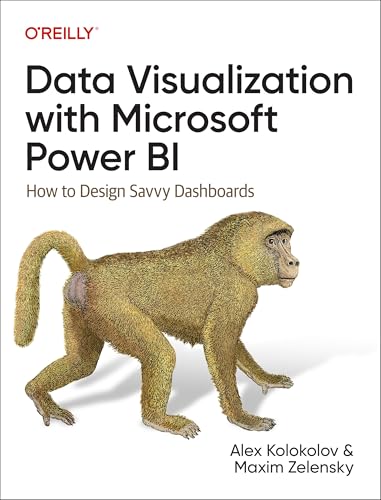
If you’re keen to master data storytelling with Microsoft Power BI, this book’s practical approach and vibrant 400-color-page layout make it a perfect choice, especially since it caters to both tech-savvy analysts and non-technical pros in sales or marketing (yes, you!). “Data Visualization with Microsoft Power BI” breaks down 25 chapters into classic, trusted advanced, and risky advanced visuals, guiding you on chart selection, interactions, and dashboard design. With step-by-step instructions, quizzes, and insights from 15 years of BI experience, it’s a hands-on, trustworthy guide that’ll help you build savvy, impactful dashboards that truly engage your audience!
Best For: Both experienced data analysts and non-technical professionals in fields like finance, sales, and marketing looking to master data storytelling and dashboard design with Microsoft Power BI.
Pros:
- Comprehensive coverage of 25 chapters including classic, trusted advanced, and risky advanced visuals.
- Practical, step-by-step instructions with quizzes and data preparation tips to reinforce learning.
- Draws on 15 years of business intelligence experience and insights from over 300 dashboards developed.
Cons:
- May be overwhelming for absolute beginners due to advanced visual topics.
- Risky advanced visuals section may confuse less experienced users despite guidance.
- Focuses exclusively on Power BI, limiting broader applicability to other BI tools.
SAP Analytics Cloud Handbook for Business Leaders
You’ll appreciate the SAP Analytics Cloud Handbook for Business Leaders if you want a practical, strategic guide that demystifies powerful data tools without drowning you in jargon (trust me, it’s invigoratingly clear!). This 320-page guide breaks down SAP Analytics Cloud’s core features—like planning, forecasting, and real-time dashboards—helping you leverage data for smarter business moves. It walks you through setting up the platform, integrating diverse data sources, and using advanced analytics to tell compelling stories. Perfect for leaders enthusiastic to fuel digital transformation and competitive advantage, the handbook combines expert insights with actionable advice, making complex analytics feel achievable, not overwhelming!
Best For: Business leaders and executives seeking a clear, strategic, and practical guide to leverage SAP Analytics Cloud for data-driven decision-making and digital transformation.
Pros:
- Clear and jargon-free explanations, making complex analytics accessible to non-technical leaders
- Comprehensive coverage of core features including planning, forecasting, and real-time dashboards
- Practical, actionable advice with expert insights and real-world applications for competitive advantage
Cons:
- At 320 pages, it may require significant time investment to read thoroughly
- Primarily focused on leadership-level understanding, with limited deep technical details for IT specialists
- May not cover very recent updates or niche industry-specific customizations beyond general use cases
Factors to Consider When Choosing Data Visualization Books

When picking data visualization books, you’ll want to take into account who they’re really made for—whether you’re a beginner, a pro, or someone in between. Pay attention to how deep the content goes, how clear and impactful the visual examples are, and if the book includes hands-on projects or practical tips you can actually use. Also, check which software or tools it covers, because a well-rounded guide (like the 350-page “Storytelling with Data” by Wiley, featuring colorful charts and real-world workflows) can make your learning curve much smoother!
Target Audience Fit
Choosing the right data visualization book often boils down to understanding your unique needs as a reader—whether you’re a beginner enthusiastic to grasp foundational concepts or a seasoned analyst craving advanced techniques designed for specific industries like business analytics or academic research. You should consider how well the book matches your expertise level and professional aims; for example, a 350-page guide with hands-on projects might suit a data scientist keen to apply practical tools, while a slim volume focused on storytelling could appeal to a marketer wanting clear communication tips. Don’t forget to check if the book covers tools you actually use (like Tableau or Python), and whether it aligns with your learning style—some unfold through real-world examples, others via step-by-step tutorials. Picking the right fit means faster growth and more enjoyable reading!
Content Depth Level
Although it might seem intimidating at first, diving into a data visualization book that balances foundational principles with advanced techniques can transform your understanding, especially if it combines clear, step-by-step instructions and vibrant examples—like the 400-page gem from O’Reilly that offers not just charts and graphs but interactive dashboard case studies you can actually try out! When choosing a book, look for those that cover a wide variety of visualization types, from classic bar charts to sophisticated interactive graphics, so you get a well-rounded grasp. Books packed with practical guidance and common pitfalls help you avoid mistakes early on, while real-world case studies provide context that makes learning stick. This kind of content depth guarantees you’re not just reading theory but gaining skills you can apply confidently!
Visual Examples Quality
Visual examples are the lifeblood of any good data visualization book, and you’ll find that those featuring crisp, full-color reproductions (like the impressive 350-page volume from Wiley) can truly bring concepts to life, helping you see what works and what falls flat right on the page. When you choose books with a wide range of visuals—showing both stellar charts and common mistakes—you’ll quickly sharpen your eye for design dos and don’ts. Books that nail color accuracy and clarity not only keep you engaged but also make it easier to remember and apply the lessons. Plus, those that cover varied data types, from time-series to multivariate graphics, offer a deeper, well-rounded understanding, mixing beauty with practical insights you won’t want to miss!
Practical Application Focus
Beyond just admiring beautiful charts on glossy pages, you’ll want books that roll up their sleeves and get you practicing—yes, those that include hands-on exercises with popular tools like ggplot2 or Power BI really cement your learning, giving you the confidence to create your own stunning visuals. Look for titles that break down complex concepts into manageable, step-by-step examples, helping you build skills steadily rather than feeling overwhelmed. Books featuring real-world case studies invite you to see how pros navigate challenges, making lessons practical and relatable. Plus, choosing resources that emphasize knowing your audience guarantees your visuals won’t just look good—they’ll communicate clearly and powerfully. This practical approach transforms reading into doing, turning knowledge into skill, which is exactly what you need!
Technical Tool Coverage
When choosing a data visualization book, you’ll want one that dives into the nuts and bolts of powerful tools like R’s ggplot2 or Microsoft Power BI, showing you not just the how but the why through clear, hands-on examples and step-by-step instructions, often spread across 300-plus pages of carefully crafted content by publishers like O’Reilly or Packt; these practical guides typically cover a wide variety of chart types—from simple bar graphs to complex interactive dashboards—making it easier to adapt skills across industries and projects, so you’re not left guessing how to tackle your next visualization challenge! Also, look for books that explain data prep and manipulation, since mastering these basics boosts your tech toolkit. Beginner-friendly explanations guarantee everyone’s invited, making your learning journey smooth and exciting!
Storytelling Emphasis
Technical skills like mastering ggplot2 or Power BI are invaluable, but you’ll find the magic truly happens when data visualization books teach you how to tell a story with your numbers—turning dry datasets into engaging narratives that stick with your audience. Look for books that focus on storytelling emphasis, guiding you to pick the right graph types and cut clutter, so your key data points shine through clearly. These books often include practical techniques and real-world examples to help you craft visuals that resonate and guarantee your message isn’t lost in complexity. When a book highlights storytelling, it encourages you to see every dataset as a story waiting to be told, making your presentations not just informative but memorable—and who doesn’t want that?
Latest Edition Insights
Picking the latest edition of a data visualization book can be a game-changer for your learning journey, especially when publishers—like O’Reilly or Wiley—update content with fresh theories, polished examples, and eye-catching illustrations that make complex ideas click. These new editions often include practical tips for popular tools like Tableau or Python’s libraries, helping you build hands-on skills alongside design principles. They also explore emerging trends like interactive graphics or real-time dashboards, keeping you ahead of the curve. What’s more, updated books emphasize tailoring visuals to your audience’s needs, which is essential for storytelling that truly connects. So, grabbing the newest edition isn’t just about being current; it means engaging with data storytelling in a way that’s relevant, practical, and visually inspiring—definitely worth the investment!
Frequently Asked Questions
Which Software Tools Do These Books Primarily Focus On?
You’ll find many of these books champion tools like Tableau and Microsoft Power BI—powerhouses in the visualization world that spark creativity and clarity in your data stories. Others explore R’s ggplot2 or Python libraries like Matplotlib and Seaborn, perfect if you’re into coding (and who isn’t, occasionally?). For example, “Storytelling with Data” by Cole Nussbaumer Knaflic, a 280-page gem from Wiley, skillfully blends theory with hands-on Tableau examples that’ll seriously boost your skills!
Are These Books Suitable for Beginners in Data Visualization?
Absolutely, you’ll find these books surprisingly beginner-friendly, designed with clear explanations and vibrant visuals that guide you step-by-step through concepts, making complex ideas accessible right from the start. For example, “Storytelling with Data” by Cole Nussbaumer Knaflic (published by Wiley, around 230 pages, softcover with plenty of charts) really breaks down techniques without assuming prior expertise—you’ll gain confidence quickly, and it’s a fantastic foundation for mastering data storytelling!
Do Any Books Include Exercises or Practical Projects?
Yes, some fantastic books include exercises or practical projects to sharpen your skills! For example, “Storytelling with Data” by Cole Nussbaumer Knaflic (Wiley, 240 pages, softcover) offers hands-on activities that challenge you to apply principles immediately, making learning active and engaging. This approach turns concepts into real-world practice, which is gold when you want to go beyond theory and master storytelling through data visualization with confidence!
Can These Books Help With Data Storytelling in Specific Industries?
Absolutely, these books bring brilliant business breakthroughs by tailoring techniques to specific sectors, whether healthcare, finance, or marketing! For instance, Alberto Cairo’s *The Truthful Art* (2016, 272 pages, hardback) offers real-world case studies and clear visuals to tackle industry-specific storytelling challenges. Likewise, *Storytelling with Data* by Cole Nussbaumer Knaflic (2015, 288 pages, paperback) bridges tech tips and tangible tools, making your data narratives sharper and more persuasive across any field. You’ll love the practical insights!
Are There Digital or Audiobook Versions Available for These Books?
You’ll be glad to hear many top data viz books come as digital editions and audiobooks, often via Audible or Kindle, so you can immerse yourself anywhere! For instance, “Storytelling with Data” by Cole Nussbaumer Knaflic (Wiley, 280 pages) is available as an eBook and audio, letting you absorb practical tips during commutes. This flexibility makes mastering data storytelling more accessible and engaging than ever—give it a try!