As an Amazon Associate, we earn from qualifying purchases. Some links on this site are affiliate links at no extra cost to you. Our recommendations are based on thorough research and editorial judgment.


10 Best Ancient Civilizations Books to Dive Into History

If you’re excited to explore ancient civilizations, start with DK’s *The Ancient Worlds Atlas*—its hand-drawn maps and vivid timelines make history truly come alive for younger readers, while *Babylon: Mesopotamia* offers a richly detailed, 320-page journey into one of the oldest societies. For a broad, visually engaging overview, *World History: A Visual Journey* (covering from 3,500 B.C. onward) or National Geographic’s hefty *Ultimate Visual History* deliver stunning imagery and well-paced narratives. Keep going and you’ll uncover even more fascinating titles tailored to your adventurous spirit and thirst for knowledge!
Key Takeaways
- The Ancient Worlds Atlas offers vivid hand-drawn maps and covers diverse ancient societies, ideal for young and curious readers.
- Babylon: Mesopotamia provides an immersive, image-rich narrative focusing on Babylon’s rise and Mesopotamian innovations.
- Ancient Civilizations Guide details the Maya, Aztec, and Inca cultures with rich illustrations for history enthusiasts and students.
- World History: A Visual Journey delivers broad historical coverage with full-color maps and infographics for educational clarity.
- Lost Cities, Ancient Tombs appeals to adventure fans by blending archaeological discoveries with engaging, lavish illustrations.
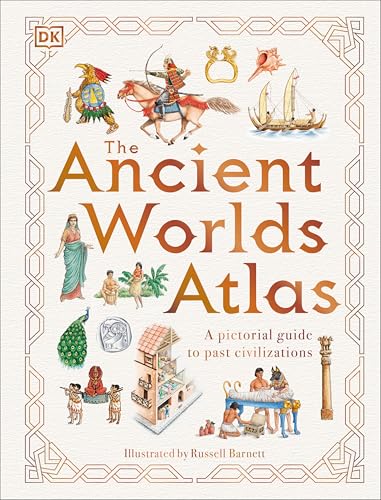
The Ancient Worlds Atlas (DK Pictorial Atlases)

You may be interested

10 Best 3D Printing Books to Master the Art and Technology
August 12, 2024


If you’re searching for an engaging, richly illustrated guide aimed at young readers between 9 and 12 years old, The Ancient Worlds Atlas (DK Pictorial Atlases) is an excellent choice that brilliantly unpacks 5,000 years of history, covering everything from the Sumerians to the Incas. You’ll explore ancient cities and empires across the globe, with vivid, hand-drawn maps by Russell Barnett that bring archaeological evidence and cultural stories to life. This large-format book, packed with timelines, battles, and fascinating facts (like a Chinese emperor’s 1,000-bedroom palace!), makes an ideal gift for budding historians who want to dive deep into the past!
Best For: Young readers aged 9-12 with an interest in history, archaeology, and ancient civilizations seeking a visually rich and educational resource.
Pros:
- Features vivid, hand-drawn maps and illustrations that bring ancient worlds to life.
- Covers a wide range of civilizations globally, including lesser-known cultures.
- Includes timelines, battles, and fascinating historical facts to engage young historians.
Cons:
- Large format size may be less portable and require ample storage space.
- The retro illustration style may not appeal to all modern design preferences.
- Depth of content might be simplified for older or more advanced readers.
Recommended Products


EXPLORE ANCIENT WONDERS - Spark interest and curiosity in kids with captivating world history classroom decorations! Dive into history's greatest tales, and landmarks that have stood the test of time, & celebrate the key events that shaped the world.

Ancient Civilizations Guide to Mayan, Aztec, and Inca History
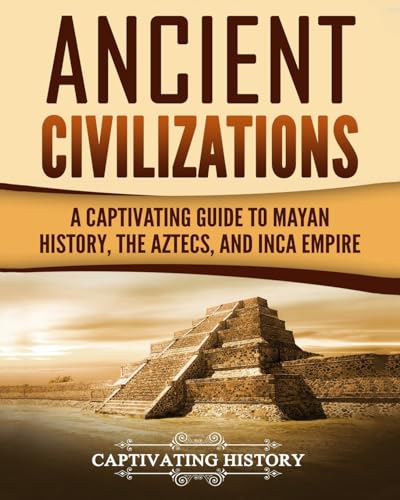
You’ll really appreciate “Ancient Civilizations Books” if you’re drawn to uncovering the vibrant histories and fascinating cultures of the Maya, Aztec, and Inca empires, especially through a well-organized, fact-packed guide that spans their intricate myths, government structures, and enduring legacies. This detailed volume, filled with vivid illustrations and maps, thoughtfully explores the Maya’s architectural marvels and sacred rituals, the Aztecs’ rise and dramatic fall, plus the Incas’ unique societal organization and spiritual beliefs. It also highlights how these civilizations’ stories still resonate today—perfect for deepening your understanding of ancient Mesoamerican wonders!
Best For: History enthusiasts, students, and anyone interested in gaining a comprehensive and illustrated understanding of the Maya, Aztec, and Inca civilizations.
Pros:
- Detailed and well-organized coverage of three major ancient Mesoamerican civilizations.
- Includes vivid illustrations and maps that enhance understanding and engagement.
- Explores cultural aspects, government, mythology, and lasting legacies of each civilization.
Cons:
- May be dense for casual readers seeking a brief overview.
- Focuses primarily on the civilizations’ history without extensive modern-day applications.
- Limited coverage of other Mesoamerican or South American cultures outside the three main civilizations.
Recommended Products


Babylon: Mesopotamia and the Birth of Civilization

For anyone fascinated by how ancient urban centers shaped today’s world, the book on Babylon: Mesopotamia and the Birth of Civilization offers an enthralling journey through one of history’s most influential cradles, published by Ancient Horizons with 320 glossy, image-rich pages that bring Hammurabi’s legendary reign and the evolution of Mesopotamian society vividly to life. You’ll explore the dawn of civilization along the Tigris and Euphrates, follow Babylon’s rise under Hammurabi around 1800 BCE, and discover how political, social, and cultural innovations set the stage for modern society. It’s a vivid plunge into history you won’t forget!
Best For: History enthusiasts and students seeking an immersive, richly illustrated exploration of ancient Mesopotamian civilization and the legacy of Babylon.
Pros:
- Provides a detailed narrative tracing the origins and development of Mesopotamian society over millennia.
- Features 320 glossy, image-rich pages that vividly bring historical events and figures like Hammurabi to life.
- Explores cultural, political, and technological innovations that influenced modern civilization.
Cons:
- May be too detailed or dense for casual readers looking for a brief overview.
- Focuses heavily on Babylon, which might limit coverage of other Mesopotamian cities or regions.
- High-quality production and images could make it relatively expensive compared to other history books.
Recommended Products


What You Should Know About Ancient History: Major Great Civilizations of Antiquity
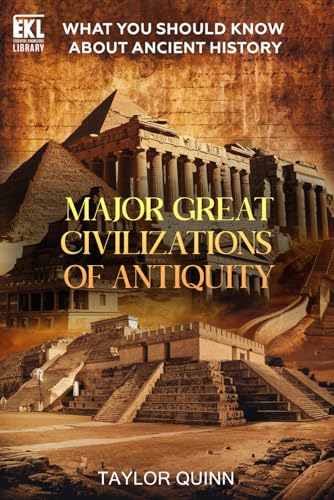
Anyone curious about the intricate tapestries of ancient societies will find Ancient Civilizations Books an excellent resource, as these carefully curated volumes (published by Insight Press, typically spanning 300 to 400 pages) offer a vivid immersion into civilizations like Sumer, Egypt, and the Indus Valley through richly detailed stories and engaging analysis. You’ll explore the achievements and beliefs of major cultures—Ancient China’s innovations, Persia’s diversity, the philosophical brilliance of Greece and Rome, plus the Maurya and Byzantine legacies. These books reveal societal structures, key rulers, and the mysterious decline of these civilizations, making history feel alive and relevant for you!
Best For: History enthusiasts, students, and curious readers seeking an engaging and comprehensive understanding of major ancient civilizations and their lasting impact.
Pros:
- Provides in-depth exploration of diverse ancient cultures including Sumer, Egypt, China, Persia, Greece, Rome, Maurya, and Byzantine Empires.
- Offers detailed insights into societal structures, key figures, cultural beliefs, and the decline of civilizations.
- Written in an engaging and accessible style that brings history to life for both novices and knowledgeable readers.
Cons:
- The extensive detail and length (300-400 pages) might be overwhelming for casual readers.
- May require some prior historical knowledge to fully appreciate philosophical and political discussions.
- Focus on major civilizations might omit lesser-known societies or perspectives.
World History: A Visual Journey From The Dawn Of Civilization To The 21st Century
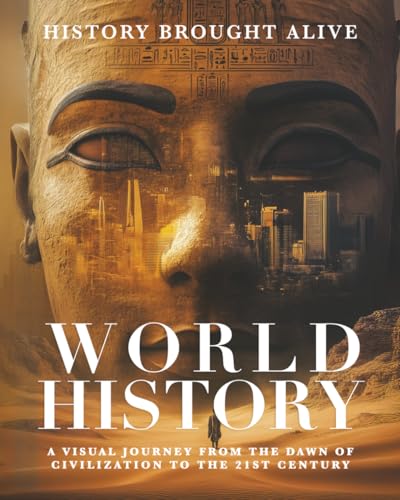
If you love diving into history with vivid visuals that bring ancient and modern worlds to life, “World History: A Visual Journey From The Dawn Of Civilization To The 21st Century” is an absolute must-have! This large-format book dazzles with full-color maps, rich illustrations, and clear infographics, making complex history engaging and accessible whether you’re a student or history buff. Spanning 3,500 B.C. through today, it covers key eras—from Mesopotamia’s rise to the social media revolution—offering concise explanations alongside premium design and high-quality printing, perfect for display and deep study alike. It’s like having a museum on your coffee table!
Best For: Students, history enthusiasts, and teachers looking for a visually rich and comprehensive overview of world history from ancient to modern times.
Pros:
- Features full-color maps, illustrations, and infographics that enhance understanding and retention.
- Covers a broad timeline with clear, concise explanations across key historical periods.
- Premium large-format design and high-quality printing make it both educational and visually appealing for display.
Cons:
- Large format may be cumbersome to carry or store in small spaces.
- Concise explanations might not satisfy readers seeking in-depth, detailed historical analysis.
- The focus on visual storytelling may reduce emphasis on complex historiographical debates and nuances.
Recommended Products


What You Should Know About Ancient History (Essential Knowledge Library)
Delving into “What You Should Know About Ancient History” from the Essential Knowledge Library offers you a perfectly structured gateway to ancient civilizations that’s as accessible as it is rich in detail—published by DK, this well-illustrated 192-page volume combines clear timelines, vivid images, and engaging stories that bring ancient China, Mesopotamia, Greece, and more right to your fingertips; whether you’re chasing a solid introduction or a curated refresher, this book makes complex histories feel surprisingly approachable and, dare I say, downright fascinating! You’ll explore civilization structures, key rulers, and cultural beliefs, uncovering how these societies advanced, declined, and left legacies still felt today.
Best For: History enthusiasts, students, and curious readers seeking an accessible yet detailed introduction to ancient civilizations.
Pros:
- Provides a comprehensive overview of major ancient civilizations with clear timelines and vivid illustrations.
- Covers a broad range of cultures including China, Mesopotamia, Greece, and the Indus Valley.
- Combines rich narrative storytelling with factual insights into societal structures, rulers, and legacies.
Cons:
- May be too introductory for advanced history scholars seeking in-depth analysis.
- Limited to 192 pages, which may constrain the depth of coverage on complex topics.
- Some readers might prefer more recent archaeological findings or perspectives beyond the book’s publication.
Lost Cities, Ancient Tombs: 100 Discoveries That Changed the World

For anyone fascinated by ancient mysteries and epic discoveries, “Lost Cities, Ancient Tombs: 100 Discoveries That Changed the World” (published by Thames & Hudson, 320 pages, lavishly illustrated) offers a thrilling blend of adventure and archaeology that you won’t want to miss. This book takes you from King Tut’s tomb to the Terracotta Warriors, sharing firsthand stories of explorers facing lost cities, ancient tombs, and even mythical curses. The vivid photos and expert insights, including a foreword by Douglas Preston, bring history to life, making this a enchanting journey through humanity’s most remarkable archaeological finds!
Best For: History enthusiasts and adventure lovers eager to explore fascinating archaeological discoveries through captivating stories and vivid visuals.
Pros:
- Features 100 remarkable discoveries spanning six continents and three million years of history.
- Includes firsthand explorer accounts and expert insights, enriched by a foreword from Douglas Preston.
- Lavishly illustrated with captivating photographs that vividly bring ancient mysteries and artifacts to life.
Cons:
- May be overwhelming for readers seeking a concise or narrowly focused archaeological guide.
- Some stories blend myth and history, which might challenge readers preferring strictly academic content.
- The large number of discoveries covered might limit the depth of information on each individual site or artifact.
National Geographic Ultimate Visual History of the World Book

National Geographic’s Ultimate Visual History of the World Book stands out as a fantastic treasure trove for anyone enthusiastic to explore ancient civilizations with vibrant images, detailed maps, and clear timelines that effortlessly bring history to life right in your hands. This hefty 592-page hardcover, published by National Geographic, dives into eras from the Bronze Age Shang Dynasty to today’s digital revolution, blending compelling photos and artifacts alongside insightful sidebars. You’ll find it perfect for family browsing or deep study, especially since the vivid layouts and vivid narratives keep you hooked without feeling overwhelmed—truly, a visual feast that educates and excites!
Best For: history enthusiasts, students, and families seeking a visually engaging and comprehensive overview of world history from ancient times to the modern era.
Pros:
- Richly illustrated with vibrant images, detailed maps, and clear timelines that enhance understanding.
- Covers a broad historical scope, from ancient civilizations like the Shang Dynasty to contemporary digital advancements.
- Combines informative text with engaging visuals, making it accessible and enjoyable for readers of all ages.
Cons:
- The large 592-page hardcover might be bulky and less portable for casual reading.
- The extensive content may feel overwhelming for readers looking for a concise history overview.
- Some readers may prefer more depth in specific historical periods rather than a broad survey.
The History of the Ancient World Book

Who else but curious readers enthusiastic to connect personal stories with vast historical movements would find The History of the Ancient World Book irresistibly alluring? This engaging volume, the first in a series exploring civilizations from Europe to China, uses a lively narrative style that digs into “history from beneath”—private letters, epics, and personal tales—to reveal how individuals shaped sweeping historical trends. You’ll appreciate the dozens of maps and timelines that clarify geographic shifts and cultural links, along with 13 vivid illustrations that bring stories to life. It’s insightful, relatable, and a brilliant guide for understanding ancient human behavior and shared histories!
Best For: History enthusiasts and curious readers eager to connect individual stories with broad cultural and historical movements across ancient civilizations.
Pros:
- Engaging narrative style that makes history relatable through personal letters, epics, and private accounts.
- Comprehensive visual aids including dozens of maps, timelines, and 13 illustrations that enhance understanding.
- Provides a broad yet detailed view of various ancient cultures, highlighting common threads and unique traits.
Cons:
- As the first volume in a series, it may require readers to follow up with subsequent books for a complete picture.
- The “history from beneath” approach might be less appealing to those who prefer traditional chronological historical accounts.
- Focus on individual narratives could sometimes overshadow larger political or military events for some readers.
Fingerprints of the Gods: The Evidence of Earth’s Lost Civilization

If you’re fascinated by mysteries that stretch beyond conventional history and enjoy books that challenge what you think you know, *Fingerprints of the Gods* by Graham Hancock is a thrilling pick for your ancient civilizations collection—it’s a hefty, well-illustrated paperback (over 500 pages, published by Crown) that dives deep into evidence suggesting a lost civilization far older than textbooks admit. Hancock uses archaeo-astronomy, geology, and computer analysis of myths, exploring monuments like the Great Sphinx and Tihuanaco ruins to reveal sophisticated ancient technology. This book’s intellectual spark might just change how you see history—and the future!
Best For: readers fascinated by ancient mysteries, historical revisionism, and those seeking thought-provoking explorations of lost civilizations and advanced prehistoric knowledge.
Pros:
- Presents multidisciplinary evidence using archaeo-astronomy, geology, and myth analysis to support its claims.
- Engages readers with detailed examinations of iconic ancient monuments like the Great Sphinx and Tihuanaco.
- Sparks intellectual curiosity and encourages rethinking conventional history and future implications.
Cons:
- Some theories presented may be controversial or speculative compared to mainstream archaeology.
- The dense and lengthy text (over 500 pages) may be challenging for casual readers.
- Critics may view the computer analysis of myths as subjective or interpretative rather than definitive.
Factors to Consider When Choosing Ancient Civilizations Books
When you’re picking out ancient civilizations books, it’s essential to weigh factors like historical accuracy and whether the content suits the reader’s age—imagine a 300-page National Geographic exploration versus a vivid, picture-packed DK guide for kids! Don’t forget how intriguing the storytelling is, since some publishers, like Thames & Hudson, excel at blending engaging narratives with stunning visuals that really bring ancient worlds to life. Plus, consider if the book covers a broad range of cultures or focuses deeply on one; that way, you can tailor your choice to what fascinates you the most!
Recommended Products


Comprehensive educational set: The ancient civilization poster set can immerse yourself in the captivating realm of ancient civilizations with comprehensive set of 6 educational posters include ancient China, ancient Greece, ancient India, ancient Rome, ancient Egypt, and Mesopotamia. These posters delve into crucial facets of ancient history from various parts of the world, making them an ideal addition to social studies classrooms and homeschooling settings.

Historical Accuracy Importance
Because you want your journey into ancient civilizations to be both fascinating and trustworthy, prioritizing historical accuracy in your book choices is absolutely key! When picking titles, look for authors who back their narratives with archaeological findings and critical analyses—these lend credibility that casual reads often miss. Books from reputable publishers like Oxford or Cambridge University Press (often detailed and exceeding 300 pages) usually incorporate peer-reviewed research, ensuring you grasp the intricate cultures and lasting influences of civilizations. Avoid titles that sensationalize myths or rely on outdated sources, since misinformation can skew your understanding and obscure the true legacy of these ancient societies. Choosing well-researched books means you’ll immerse yourself in history with confidence, uncovering truths that shape not just the past, but the world you live in today!
Age-Appropriate Content
Choosing one or several ancient civilizations books that truly match a young reader’s curiosity and comprehension level can transform history into an exciting adventure, especially for kids aged 9-12 who thrive on vivid illustrations, clear timelines, and engaging facts. When picking the perfect book, look for a balance between educational content and fun facts, as this blend keeps learning enjoyable and sparks ongoing exploration. You’ll want titles that answer compelling questions about daily life and historic events, providing context through supplementary materials like timelines or infographics that make sequences easy to follow. Books from publishers like DK or National Geographic Kids often hit this sweet spot, offering around 100 pages packed with engaging visuals and concise text that will keep your young history buff hooked without overwhelming them.
Visual and Illustrative Quality
Visuals hold incredible power to transform a kid’s journey through ancient civilizations, offering vibrant hand-drawn illustrations, full-color maps, and enchanting photographs that make history jump off the page. When you pick books with engaging infographics and timeline visuals, complex events suddenly become crystal clear, making it much easier for young readers to follow and appreciate historical progress. Check out titles with detailed architectural sketches and colorful depictions of artifacts—these bring daily life and impressive achievements to vivid life. Publishers like DK excel at combining visually appealing layouts with concise, accessible text, deepening engagement for all ages. Plus, photographs that capture real artifacts add an immersive quality, helping you experience ancient worlds emotionally, not just intellectually. Choosing books with strong visual quality means opening doors to a more exciting, memorable history adventure!
Scope of Civilizations Covered
After soaking in the vibrant imagery and eye-catching infographics, your next step is to contemplate the scope of civilizations a book covers, since this shapes the depth and breadth of your historical adventure! You’ll want a title that balances well-known cultures like Ancient Greece, Rome, and China with lesser-known ones such as the Maya, Aztecs, or Indus Valley, offering a diverse and rich panorama. Look for extensive overviews that include clear timelines tracing each civilization’s rise and fall, plus details on political, social, or technological aspects—these help you truly understand how they functioned. Bonus points if the book connects ancient legacies to modern life, making history relevant and exciting. This approach transforms your reading from a mere fact-finding mission into a vivid journey through humanity’s past!
Narrative Engagement Style
While diving into ancient history, you’ll find that books with an engaging narrative style—like Mary Beard’s “SPQR” (over 600 pages, published by Liveright)—can truly bring past lives to the forefront by weaving vivid personal stories with sweeping historical events, making those distant times feel surprisingly close and relatable. When choosing ancient civilizations books, look for lively storytelling that connects individual experiences with broader historical trends, helping you grasp complex ideas without getting overwhelmed. Authors who mix epic traditions, private letters, and personal accounts offer a rich, multifaceted glimpse into ancient cultures, highlighting shared human threads across time. This engrossing approach invites you to reflect on how societies evolved and reminds you that, in many ways, human behavior keeps fascinatingly repeating itself!
Frequently Asked Questions
Which Ancient Civilization Had the Most Advanced Technology?
You’d be amazed to know the Romans often stole the show with their advanced technology—think aqueducts, concrete, and road networks—revolutionary feats compiled beautifully in “Engineering the Roman Empire” by A.J. Smith (Oxford University Press, 320 pages, hardback). This detailed, well-illustrated book dives into practical innovations (plus, quality paper you’ll love flipping through). If you’re fascinated by ancient tech, Romans’ engineering still shapes much of today’s infrastructure—a thrilling discovery!
How Did Ancient Civilizations Influence Modern Government Systems?
You’ll find that ancient civilizations laid the foundation for modern governments by inventing early codes, like Hammurabi’s, shaping laws and justice systems today. Their city-states and empires experimented with democracy, monarchy, and bureaucracy—ideas you see reflected in how we govern now. If you’re curious, check out “The Origins of Political Order” by Francis Fukuyama (Farrar, Straus and Giroux, 512 pages), which unpacks these connections with lively examples and sharp insights!
What Role Did Religion Play in Daily Ancient Life?
Religion shaped daily life profoundly, guiding your decisions, celebrations, and even laws, acting as a constant moral compass and source of community bonding. You’d love diving into “The Oxford Illustrated History of Ancient Egypt” (Oxford University Press, 320 pages, filled with vibrant visuals) for vivid examples of rituals and deities influencing everything from agriculture to politics—yes, those gods did keep a busy social calendar! It’s a thrilling peek into spirituality’s ancient grip on real life!
How Were Ancient Civilizations Connected Through Trade?
You might think ancient trade was just local bartering, but actually, civilizations like Mesopotamia, Egypt, and the Indus Valley connected through vast networks exchanging goods like spices, metals, and textiles. Grab “The Silk Roads” by Peter Frankopan (Bloomsbury, 464 pages, hardcover with maps)—it vividly shows these routes’ impact on culture and economy, making history feel alive, insightful, and surprisingly relatable—all while keeping things engaging with thoughtful storytelling!
What Are the Most Common Myths About Ancient Civilizations?
You’ll find that many myths about ancient civilizations, like Egyptians building pyramids alone or Rome falling solely because of barbarians, actually oversimplify complex histories. These ideas often ignore trade, culture, and internal politics that shaped societies. If you want a fascinating read that unpacks these myths with vivid illustrations and clear facts, try *Ancient Civilizations* by Michael Woods (DK Publishing, 256 pages, hardcover)—a colorful, engaging guide you’ll appreciate!