As an Amazon Associate, we earn from qualifying purchases. Some links on this site are affiliate links at no extra cost to you. Our recommendations are based on thorough research and editorial judgment.


10 Best Anatomy Drawing Books for Artists — Learn Figure, Proportion, and Movement

You’ll love this curated list of 10 anatomy drawing books that teach figure, proportion, and movement, starting with Dover’s Anatomy and Drawing (Dover, 128 pages, paperback) and Loomis’s Figure Drawing (Watson‑Guptill, 192 pages, large‑format), both clear and practical; also check Anatomy for Artists (large-format, studio-style binding), Basic Human Anatomy (compact hardcover), Pocket Anatomy Vol.2 (full-color, portable), and Morpho titles (hands, feet, layered diagrams), all offering exercises, sturdy formats, and progressive lessons—keep going to learn more.
Key Takeaways
- Choose books that match your level: beginner-friendly guides for basics, intermediate for musculature, and advanced tomes for detailed anatomy and biomechanics.
- Prioritize resources with progressive exercises, clear diagrams, and step-by-step figure-building approaches for learning proportion and movement.
- Look for large-format or spiralbound books that lie flat and include many illustrations for studio use and repeated practice.
- Include at least one pocket or portable reference for on-the-go studies and one comprehensive atlas for in-depth anatomical reference.
- Balance gesture-focused titles with anatomy-focused manuals to develop both dynamic posing and accurate structural understanding.
How to Draw People: Step-by-Step Lessons for Figures and Poses
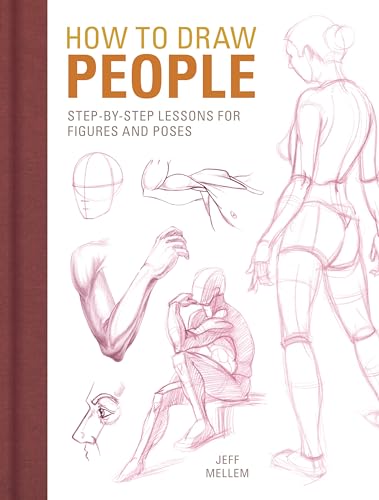

If you’re a beginner who wants clear, practical figure lessons, How to Draw People by Jeff Mellem is a compact, user-friendly paperback with step-by-step diagrams and hands-on exercises (you’ll improve quickly)! You’ll find 144 pages from Walter Foster Publishing, spiralbound-style images on heavy paper, and five progressive chapters called Levels that teach you to go from stick figures to expressive, anatomically aware poses, with exercises and Level-Up Checklists to test your skills before you move on. The tone is encouraging and precise, it balances practical drills with short anatomy notes, and you’ll actually finish assignments (fun, right!). Really helpful.
Best For: Beginners who want a compact, hands‑on, step‑by‑step guide to drawing human figures that builds skills progressively from stick figures to expressive poses.
Pros:
- Clear, progressive Level-based lessons that take you from basic stick figures to anatomically aware poses.
- Hands-on exercises and Level‑Up Checklists help reinforce skills and track progress.
- Spiralbound-style heavy paper and 144 pages make it user-friendly and durable for practice.
Cons:
- Not in-depth enough for advanced anatomy study or professional figure drawing needs.
- Short anatomy notes may feel too brief for learners wanting more theory.
- Physical paperback format may be limiting for those who prefer fully digital or high-resolution reference images.
Anatomy and Drawing (Dover Art Instruction)
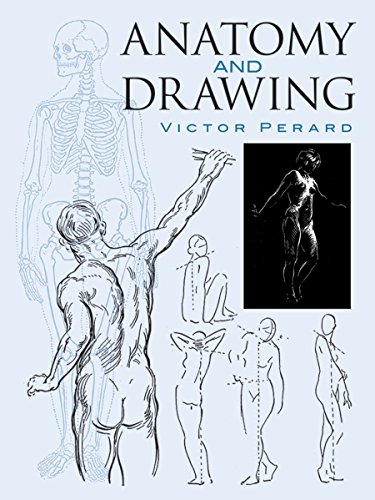
You’ll find Dover’s Anatomy and Drawing (Dover Art Instruction) perfect if you’re a beginning artist who wants clear, pocket-friendly guidance, with annotated line drawings and plain explanations that feel like a helpful tutor! You’ll get a Dover publication that reads like a compact, affordable reference, paperback-sized and easy to carry, covering proportions, skeleton, head and neck, torso, arms, hands, legs, feet, and musculature in organized sections, with many annotated line drawings showing movement and age-related proportion changes. Written in simple terms, it teaches function and visualization of bones and muscles, making it an invaluable, no-nonsense classroom companion, truly practical!
Best For: Beginner artists and art students seeking a compact, affordable, and easy-to-understand reference for basic human anatomy and figure drawing.
Pros:
- Clear, annotated line drawings that make bones, muscles, and movement easy to visualize.
- Simple, plain-language explanations that act like a helpful tutor for novices.
- Compact, paperback format that’s pocket-friendly and well organized by body region.
Cons:
- Not in-depth enough for advanced anatomy study or professional reference needs.
- Primarily line drawings (limited color/photographic detail) that may not satisfy those wanting realistic rendering examples.
- Smaller, concise format can omit nuanced discussion of complex anatomical variations.
Recommended Products


Anatomy for Artists Simplified Forms
![[LEZHIN] Point Character Drawing [paperback]](https://m.media-amazon.com/images/I/51dIdFtGMDL._SL500_.jpg)
A set of 2 volumes of Point Character Drawing Books
Anatomy for Artists: Drawing Form & Pose — Guide to Drawing Anatomy

When you’re looking for a single, practical anatomy guide that helps you build believable figures from gesture to finished pose, Tom Fox’s Anatomy for Artists: Drawing Form & Pose stands out, because it pairs hands-on mannequin construction with clear XYZ-axis instruction and approachable skeleton diagrams, all presented in a large-format layout with crisp plates and sturdy binding that make drawing from the book feel as close to a studio session as possible. You’ll find stepwise chapters on torso, arms, legs, head, hands and feet in 192pp Quarto, with instructor tips honed in teaching, so you gain confident skill fast!
Best For: Artists of all levels seeking a practical, studio-style guide to building believable figures from gesture to finished pose.
Pros:
- Clear XYZ-axis and mannequin construction techniques that simplify 3D figure building.
- Step-by-step chapters (torso, arms, legs, head, hands, feet) with instructor tips for fast learning.
- Large-format layout and sturdy binding that make drawing from the book feel like a studio session.
Cons:
- Not a substitute for detailed medical or graduate-level anatomy reference for specialists.
- 192 pages may limit exhaustive coverage of every anatomical variation or advanced musculature.
- Physical large-format book may be less convenient for digital-only workflows.
Recommended Products


Anatomy for Artists Skeleton and Bone Reference Points
Basic Human Anatomy: An Essential Visual Guide for Artists
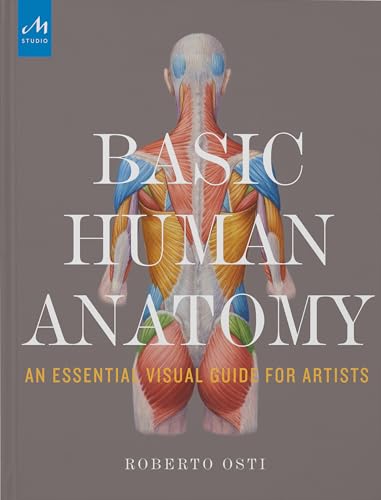
Artists seeking a practical, inside-out understanding of the figure will find Roberto Osti’s Basic Human Anatomy an ideal companion, especially if you want clear, plate-style illustrations and a methodical progression that builds skills step-by-step (yes, even the boring-but-useful stuff). Published by Laurence King, the compact 192-page hardcover presents skeletal proportions, scales, and front-and-side views with clean plates, teaching simplified bones and joints alongside a practical muscle map that emphasizes volumetric form. You’ll master hands, feet, and skull renderings through stepwise exercises and helpful page layouts, gaining confidence to apply anatomy directly to finished drawings (I love that clarity!). Seriously.
Best For: Artists (beginners to intermediate) seeking a practical, inside-out, step-by-step guide to drawing the human figure with clear plate-style illustrations.
Pros:
- Clear, plate-style illustrations and clean layouts that make skeletal proportions and front/side views easy to learn.
- Systematic, progressive teaching approach that builds skills step-by-step, including useful foundational exercises.
- Practical focus on volumetric muscle maps and mastery of hands, feet, and skull for direct application to finished drawings.
Cons:
- Compact 192-page format means less exhaustive detail than larger anatomy references.
- Emphasis on foundational, “boring-but-useful” material may feel slow for artists seeking advanced or highly technical content.
- Less suited as a sole resource for medical-level anatomy study or highly specialized anatomical research.
Pocket Anatomy Vol.2 Head & Face Drawing Handbook in Color for Artists
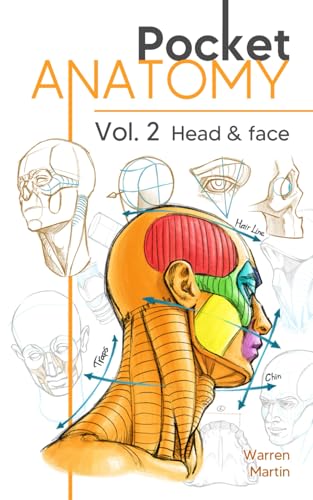
If you sketch faces on the go and want a clear, compact reference that breaks down skulls, muscles, and features into simple shapes, Pocket Anatomy Vol.2: Head and Face fits that need perfectly, offering full-color plates and a pocket-friendly handbook format you’ll actually carry. You’ll see publisher Pocket Anatomy Press on the spine, a durable softcover (128 pages) with full-color plates and clear, step-by-step diagrams that explain eyes, nose, jaw, teeth, hair and facial muscles, helping you sharpen proportion and imaginative portraiture quickly (yes, it’s small but surprisingly thorough!). I recommend it warmly, especially for plein-air sketch sessions daily
Best For: Artists and sketchers who want a portable, color-illustrated reference for learning and improving head and face anatomy on the go.
Pros:
- Pocket-friendly handbook with durable softcover and full-color plates for quick reference.
- Clear, step-by-step diagrams that simplify skull, muscles, and facial features into easy shapes.
- Suitable for all skill levels — helps with both proportion practice and imaginative portraiture.
Cons:
- Focused solely on head and face, so it doesn’t cover full-body anatomy or other regions.
- Not a substitute for in-depth medical anatomy texts for professional clinical study.
- Compact format (128 pages) limits space for exhaustive detail on every topic.
Perspective Made Easy (Dover Art Instruction)

This Dover Art Instruction paperback, aimed squarely at beginners who want clear, practical guidance, offers over 250 illustrations and step-by-step lessons to teach the essentials of perspective! You’ll find Dover Publications’ 128-page paperback uses a non-technical voice, clear diagrams, and repetition to make horizon lines, vanishing points and eye-level relationships usable. Practically, the book teaches you how to place figures and objects, render interiors with depth, and use shade and shadows to reinforce form and space. I recommend it, because its stepwise exercises and concrete examples will sharpen your perspective skills faster than vague theory. You’ll enjoy practicing regularly.
Best For: Beginners and hobbyist artists who want clear, practical, step-by-step instruction to learn the fundamentals of linear perspective quickly and confidently.
Pros:
- Clear, non-technical explanations with over 250 illustrations that make concepts like horizon lines and vanishing points easy to grasp.
- Practical, stepwise exercises for placing figures, rendering interiors, and using shade and shadow to convey depth.
- Concise 128-page format with repetition that helps learners internalize skills through practice.
Cons:
- Geared toward beginners; lacks extensive advanced theory or contemporary applications for experienced artists.
- Short length and simplified approach may feel too basic for those seeking in-depth study or technical precision.
- Repetitive style might be less engaging for readers who prefer more varied or project-based instruction.
Morpho: Simplified Forms: Anatomy for Artists
Sale


Morpho: Simplified Forms: Anatomy for Artists (Morpho: Anatomy for Artists, 2)
- Anatomy for Artists Simplified Forms
You’ll find Michel Lauricella’s Morpho immediately useful if you want a pocket-sized, exposed-binding guide that lies flat for sketching and breaks the body into a few simple, repeatable forms, making study manageable whether you’re a beginner or a pro (yes, it’s small but mighty!). You’ll flip through its compact, approximately 128-page format and appreciate the tactile exposed spine and sturdy paper, as Lauricella shows head, torso, upper and lower limbs through simple shapes, encouraging you to combine forms into dynamic poses for figure drawing, fashion, comics, fine arts, or game design, with actionable tips that spark observation and creativity!
Best For: Artists of all levels who want a compact, tactile guide that breaks figure anatomy into simple, repeatable forms for quick sketching and creative practice.
Pros:
- Pocket-sized with exposed binding that lies flat for on-the-go sketching and reference.
- Simplifies the body into a small set of versatile forms, making study manageable and repeatable.
- Applicable across disciplines (figure drawing, fashion, comics, game design) with actionable tips to spark observation and creativity.
Cons:
- Compact ~128-page format limits depth and exhaustive anatomical detail.
- Focuses on simplified forms rather than detailed musculature or medical anatomy.
- May provide fewer reference poses or photo resources compared with larger anatomy books.
Figure Drawing: Design and Invention

Artists looking for a clear, practical bridge between anatomy theory and creative inventiveness will find Michael Hampton’s Figure Drawing: Design and Invention a standout, adaptable workbook that helps you move from observation to invention with confidence. You get a clear, simplified approach to surface anatomy, practical gesture studies and figure construction, and head drawing guidance, all explained step-by-step. The book (Watson-Guptill, 224 pages, paperback with sturdy paper and bold diagrams) feels like a trusted workshop manual, concise and lively. You’ll apply theory directly through exercises that boost invention, character design, so you can create dynamic figures confidently (and enjoyably!).
Best For: Artists (beginners to experienced) seeking a practical, hands-on bridge from anatomy theory to creative figure invention.
Pros:
- Clear, simplified surface-anatomy approach that makes complex concepts easy to grasp.
- Practical step-by-step exercises and gesture/figure-construction workflows that promote invention and character design.
- Sturdy paperback format with bold diagrams—feels like a concise, trusted workshop manual.
Cons:
- Not an exhaustive academic anatomy reference—some advanced anatomical detail is simplified.
- At 224 pages, depth on certain niche topics (e.g., specialized muscles or medical anatomy) is limited.
- Workbook-style focus may be less appealing to readers wanting primarily photographic references or purely theoretical texts.
Morpho Hands and Feet: Anatomy for Artists
Sale

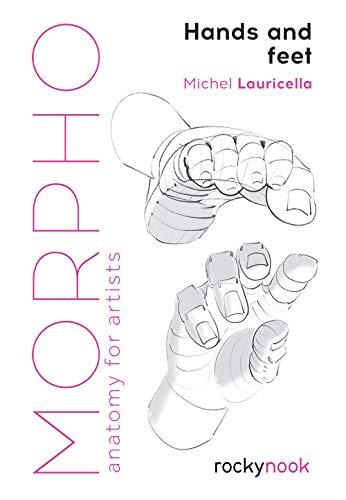
Morpho: Hands and Feet: Anatomy for Artists (Morpho: Anatomy for Artists, 5)
- Anatomy for Artists Hands and Feet
- 4½" x 7" (12 cm x 18 cm)
If you want a compact, practical manual that tackles two of the trickiest body parts with clarity, Michel Lauricella’s Morpho: Hands and Feet fits the bill, pocket-sized with exposed binding so it lays flat while you draw, organized into skeletal, muscular, skin, fat, and vein layers, and packed with gesture studies and a clear table of contents—I’m genuinely excited by how usable it is (you’ll actually reach for it during sessions)! You’ll find approach, published by 3dtotal Publishing, 160 pages, with sections on hands, feet, foreword, introduction, and resources, really useful and ideal for practice sessions and design work!
Best For: Artists (beginners to professionals) who want a compact, practical reference for mastering the anatomy and gestures of hands and feet.
Pros:
- Pocket-sized with exposed binding that lays flat for easy use during drawing sessions.
- Clear, layered approach (skeleton, muscles, skin, fat, veins) that builds understanding step-by-step.
- Numerous gesture studies and positions useful across figure drawing, fashion, game, and comic art.
Cons:
- Limited to hands and feet—doesn’t cover full-body anatomy.
- Pocket format means less room for extended, in-depth explanations or very large reference plates.
- Some beginners may still find anatomical details challenging without supplementary foundational resources.
Morpho: Anatomy for Artists

A pocket-sized, illustration-rich guide, Morpho: Anatomy for Artists makes a perfect reference for anyone who wants a compact, visual primer on the human figure—particularly students of figure drawing, fashion design, and sequential art—because it packs over 1,000 drawings, écorché studies, and pose sketches into a portable format that’s easy to carry to the studio or life-drawing session. You’ll find Michel Lauricella’s clear, artistic approach across roughly 208 pages in a sturdy paperback, organized into Head and Neck, Torso, Upper and Lower Limbs and Overviews, with a bibliography, practical tips, and inspiration that’ll boost your sketches (and confidence) instantly! Now
Best For: artists and students in figure drawing, fashion design, comics/manga, and game or concept art who want a portable, illustration-rich reference to improve anatomy and pose work.
Pros:
- Pocket-sized with over 1,000 drawings and écorché studies—great for quick visual reference at life-drawing sessions.
- Clear, artistic approach that helps translate anatomical knowledge into expressive poses and better sketches.
- Covers head, torso, upper/lower limbs and overviews with practical tips and bibliography for further study.
Cons:
- Not a substitute for a full academic anatomy textbook—limited explanatory text for deeper anatomical study.
- Small format/paperback can limit the size and fine detail of complex diagrams.
- May be less useful for medical or highly technical anatomy needs (focused on artistic use).
Factors to Consider When Choosing Anatomy Drawing Books
You’ll want books that match your skill level and scope — from beginner fundamentals to advanced musculature — for example Watson-Guptill’s 320-page large-format anatomy guides, sturdy hardcovers that teach systematically.
Look for the right balance of visuals and text, and plenty of practice (not just theory), such as Dover’s 208-page plates and Titan’s spiral-bound exercise workbooks that make sketching repeatable.
Consider portability and format too, grab a Phaidon 144-page pocket guide or a laminated foldout for on-location studies, you’ll thank yourself later (seriously—pack one!).
Recommended Products


Master Human Anatomy with Hands-On Practice: Reusable dry-erase pages let you label bones, muscles, organs, and systems repeatedly until you master them. Perfect for active recall and long-term retention.
Skill Level Alignment
How do you choose an anatomy drawing book that fits your level and keeps you motivated, whether you’re just starting out or you’ve already mastered gesture and musculature? Look for beginner-focused titles (Watson-Guptill editions, often 160–200 pages) that explain landmarks, proportion, and simple exercises with clear diagrams and sturdy softcover formats that lie flat, they’ll build confidence fast! If you’re intermediate or advanced, seek extensive volumes (Titan or Dover reprints, 250–400 pages) offering nuanced musculature, layered figure studies, and practice assessments that push technical range without being dry. Books labeled “for all levels” usually include progressive lessons and checkpoints, ideal if your interests tilt toward fashion, comics, or classical figure work, so pick one matching your artistic focus and enjoy steady growth, always progressing!
Scope and Depth
After you’ve matched a book to your skill level, check scope and depth: Watson-Guptill softcovers (160–200 pages) or Titan/Dover volumes (250–400 pages) with annotated plates that lie flat. You should verify the book covers skeletal basics, major muscle groups, and focused body-part chapters, so you get a thorough roadmap that builds from foundation to nuance. Look for titles that balance clear fundamentals with advanced technique discussions, allowing you to practice progressive challenges without feeling lost. Prefer well-organized layouts that move logically from structure to function, with labeled illustrations and proportional guides to reinforce retention. I get excited when a volume pairs practical drills with reference plates (yes, I flip through them voraciously!), because tangible content beats vague theory every time. You’ll learn faster, honestly.
Visual vs. Text
While some artists need dense explanations to feel confident, you’ll often learn faster from books that favor annotated line drawings, high-quality illustrations, and clear plates that lie flat, like Watson-Guptill softcovers (160–200 pages) or Titan and Dover volumes (250–400 pages), which balance concise captions with usable reference art. You should pick books that match your learning style, so if you’re a visual learner choose volumes heavy on diagrams and step-by-step visuals with short captions, and if you like context seek text-rich tomes that explain function and movement; both approaches work, but visual-first books keep you engaged and speed skill uptake. Look for durable bindings, good paper, and examples you can copy and return to again! Ask peers for recommendations, compare spreads before buying online.
Practice and Exercises
Because practice makes anatomy stick, pick books that give you clear, progressive exercises—Watson-Guptill softcovers (160–200 pages), Titan or Dover volumes (250–400 pages)—with durable bindings and plates that lie flat, so you can draw directly from them and return to assignments again and again. You’ll want titles that pair structured practice approaches, like lessons that move from basic shapes to detailed muscles, with Level-Up Checklists or similar assessment tools so you know when to advance. Look for books offering focused drills for specific body parts (hands, torso, limbs), plus varied assignments that alternate imaginative figure work with realistic studies to broaden your skill set. Choose resources that reinforce concepts through repetition and measured progression, because deliberate practice builds confident observation and expressive drawing skills now!
Portability and Format
One compact, well-made anatomy book can change how you sketch on the go, so look for pocket-sized Watson-Guptill or Dover titles (160–200 or 250–400 pages), exposed bindings that lay flat, and lightweight covers that won’t weigh down your bag. You’ll want a volume that fits standard sketchbook dimensions, so it slides into your workflow, offers high-quality illustrations and concise instructions, and stays usable during quick studies, which makes field drawing joyful and efficient! Choose exposed binding or spiral formats that open fully, providing a stable drawing surface without holding pages, and prefer sturdy yet light materials (soft-touch or thin cardstock covers) to minimize bulk while keeping durability. These features make a portable anatomy book an everyday tool you’ll actually take along every day easily.
Frequently Asked Questions
Can These Books Substitute for Live Model Figure Drawing Sessions?
They can’t fully substitute live model sessions, but you’ll learn so much from solid books like Bridgman (Dover, 240 pages), Loomis (Titan, 224 pages), and Goldstein (Watson‑Guptill, 192 pages)! Use them for anatomy, proportion, gesture, and construction, enjoy sturdy hardcovers with clear plates and ribbon bookmarks, follow the step-by-step diagrams and photo references, and then take at least one live class to test your eye (trust me, you’ll be glad).
Are There Downloadable Exercise Sheets or Printable Practice Templates Included?
Like a Swiss-army knife, yes — some books include downloadable exercise sheets and printable templates you’ll use at home, and publishers often host them; for example, Michael Hampton’s Figure Drawing (Gnomon, 160 pages) and Andrew Loomis reprints (Titan, ~240 pages) commonly offer PDFs or companion downloads, and larger titles (Watson-Guptill hardcovers with foldouts) include high-quality plates and perforated study pages you can copy or print, low-cost, really!
Do Any Books Specifically Cover Anatomical Differences Across Ages and Genders?
Yes, Anatomy for Sculptors (3dtotal Publishing, 304 pages, hardcover with sturdy paper) examines age and gender differences, using detailed clear diagrams and sculptural landmarks. Eliot Goldfinger’s Human Anatomy for Artists (Watson-Guptill, 496 pages, large-format paperback) breaks down male, female, child anatomy with tables, photos, and concise commentary. You’ll find practical, actionable guidance across life stages and sexes, illustrated with measurements, photographs, and tips (you’ll smile at some cheeky captions, too)!
Which Books Pair Best With 3D Anatomy Software or Mobile Apps?
Like a compass guiding your edits, you should pair Gray’s Anatomy for Students (Elsevier, 1152 pages, hardcover) with 3D apps, for structure mapping accurately. Also use Anatomy for Sculptors (3dtotal, 272 pages, lay-flat binding) and Human Anatomy for Artists (Oxford, 480 pages, handy), they clarify forms superbly! Pair them with ZBrush or Complete Anatomy (mobile, rotatable models, layers), you’ll study surfaces, tweak poses, and learn faster (yes, you will daily)!
How Should I Preserve and Archive Long-Term Sketchbook Studies?
You’ll preserve sketchbook studies by storing them in acid-free archival boxes (Avery or Gaylord, sturdy construction, fits up to 100 pages), adding silica-gel packets to control humidity, and placing interleaving tissue between pages. Digitize at 600–1200 dpi with a flatbed scanner (Epson V600 recommended, color-calibrated), label files by date and medium, keep TIFF masters plus JPEG derivatives on two drives and cloud, and catalog page numbers regularly for easy retrieval!