As an Amazon Associate, we earn from qualifying purchases. Some links on this site are affiliate links at no extra cost to you. Our recommendations are based on thorough research and editorial judgment.

10 Best Chess Strategy Books to Elevate Your Game in 2026

If you want to boost your chess skills in 2026, grab gems like “How to Win at Chess” for beginner-friendly humor and interactive QR codes or “Chess: 5334 Problems, Combinations and Games” to challenge yourself with thousands of crisp, practical puzzles. Capablanca’s “Chess Fundamentals” offers timeless, annotated classics, while “The Chess Puzzles & Tactics Blueprint” sharpens your tactics with over 2,000 themed exercises. Curious about more top picks to elevate your game? Keep exploring this lineup!
Key Takeaways
- Top chess strategy books balance foundational concepts and advanced tactics for players from beginners to experienced competitors seeking improvement.
- Books with clear diagrams, organized lessons, and annotated real-game examples enhance understanding and practical application of strategies.
- Interactive features like QR codes and structured problem sets engage learners and provide hands-on experience with tactical challenges.
- Selections from renowned authors ensure reliable insights, simplifying complex strategies through easy-to-follow explanations and real-life game scenarios.
- Effective strategy book recommendations cater to skill progression, mixing engaging content with diverse levels of difficulty for steady game elevation.
How to Win at Chess: The Ultimate Guide for Beginners and Beyond


If you’re someone enthusiastic to crush those early roadblocks in chess and steadily climb the ranks from beginner to intermediate, Levy Rozman’s How to Win at Chess: The Ultimate Guide for Beginners and Beyond is a no-brainer choice—especially since Rozman, an International Master and YouTube’s beloved GothamChess, delivers this New York Times Bestseller packed with over 500 gameplay illustrations, practical tips, and even QR codes linking to exclusive content on Chessly, all wrapped up in a lively, approachable style that makes learning both effective and genuinely fun! Targeted for players rated 0-1300 Elo, the book carefully guides you through openings, endings, tactics, and strategy, then deepens these skills in its second half. Rozman’s humor and clarity guarantee you stay engaged while mastering fundamentals, making it perfect whether you’re a casual enthusiast or aiming higher.
Best For: Beginner and intermediate chess players rated 0-1300 Elo who want a fun, clear, and comprehensive guide to improving their skills from fundamentals to more advanced concepts.
Pros:
- Written by Levy Rozman, an International Master and popular chess teacher with a relatable and engaging style.
- Includes over 500 gameplay illustrations and QR codes for exclusive bonus content, enhancing visualization and interactive learning.
- Covers a wide range of essential topics from openings to strategy, suitable for progressing from beginner to intermediate levels.
Cons:
- Primarily targeted at players below 1300 Elo, so advanced players may find it less challenging.
- Focus on humor and accessibility might not appeal to those seeking a purely technical, dense chess manual.
- Some may prefer video-based instruction over a book format despite the inclusion of QR code bonus content.
Chess: 5334 Problems, Combinations and Games
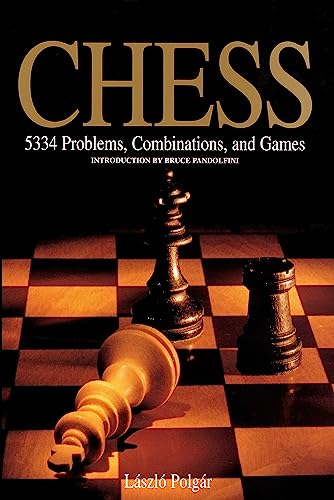
For anyone enthusiastic to sharpen their chess skills through hands-on practice, *Chess: 5334 Problems, Combinations and Games* is an invaluable treasure trove, packed with over 5,000 unique challenges ranging from quickmate puzzles to complex endgames—all designed to boost both your tactical sharpness and strategic depth in countless realistic scenarios! You’ll find everything from 306 one-move checkmate problems to 128 intricate tournament game combinations, each paired with clear diagrams and over 6,000 illustrations that make visualizing moves straightforward. The solutions are neatly tucked at the back, making this 400+ page guide your perfect companion for solid, practical improvement.
Best For: Chess enthusiasts and competitive players seeking to improve their tactical and strategic skills through extensive practice with a wide variety of problems and scenarios.
Pros:
- Contains over 5,000 unique chess problems covering a broad range of situations from quick mates to complex endgames.
- Clear, easy-to-follow diagrams and more than 6,000 illustrations enhance understanding and visualization of moves.
- Includes rules of the game and an international bibliography, making it a comprehensive resource.
Cons:
- The large volume of problems and content might be overwhelming for absolute beginners.
- Solutions are provided only at the back, which may disrupt study flow for some users wanting immediate feedback.
- Focuses heavily on problem-solving rather than in-depth explanations of chess theory or opening strategies.
Chess Fundamentals
Chess Fundamentals by World Champion José Raúl Capablanca offers a perfect starting point if you’re enthusiastic to move beyond the basics and really sharpen your chess skills, with its clear, step-by-step guidance covering openings, middlegames, and endgames across roughly 170 pages published by Everyman Chess. You’ll appreciate its use of algebraic notation, making modern play easier to grasp, and the inclusion of 14 fully annotated games that reveal Capablanca’s world-class strategies in action. This book transforms your understanding from knowing rules to confidently applying proven tactics, providing a rock-solid foundation for elevating your game like never before!
Best For: Novice chess players eager to advance beyond the basics and build a strong strategic foundation using clear guidance and annotated games by a world champion.
Pros:
- Covers all essential phases of the game: openings, middlegames, and endgames.
- Uses algebraic notation, aligning with modern chess learning standards.
- Includes 14 fully annotated games that provide real-world strategic insights from Capablanca.
Cons:
- May be too advanced for absolute beginners who need more basic instruction.
- Limited to around 170 pages, so some complex topics may not be exhaustively detailed.
- Focuses primarily on classical strategies, which may not cover all modern chess theory variations.
Beginner Chess Made Easy Illustrated Guide to Rules & Strategies
Designed specifically for absolute beginners who feel overwhelmed by complex rules and strategies, Beginner Chess Made Easy Illustrated Guide to Rules & Strategies delivers a straightforward, visually engaging approach that’ll help you build confidence quickly; published by ChessMaster Press and spanning 192 pages filled with bright illustrations and step-by-step lessons, this guide transforms what might seem like an intimidating game into an accessible, enjoyable journey you can start right away! You’ll master basic rules, opening plans, and middle-to-endgame tactics, all explained in plain language with helpful diagrams. Plus, it includes practical exercises and online tools that make learning chess both manageable and genuinely fun!
Best For: Absolute beginners who want a clear, visually engaging introduction to chess rules and strategies without feeling overwhelmed.
Pros:
- Clear, step-by-step lessons with bright illustrations make learning accessible and enjoyable.
- Covers essential areas including basic rules, opening strategies, and middle-to-endgame tactics.
- Includes practical exercises and online tools to enhance skill-building and retain interest.
Cons:
- May be too basic for those with some chess experience looking for advanced strategies.
- Limited depth on complex tactics and variations due to beginner focus.
- Requires a time commitment to complete the 192 pages effectively.
The Chess Puzzles & Tactics Blueprint: 2000+ Chess Exercises
If you’ve ever felt stuck missing obvious winning moves or wished you could spot tactical patterns faster, The Chess Puzzles & Tactics Blueprint: 2000+ Chess Exercises is the perfect companion to supercharge your skills. Packed with over 2000 handpicked puzzles from real games, this book, published by ChessMaster Press, guides you through forks, pins, and sacrifices with step-by-step themes arranged by difficulty. Whether you play casually or aspire to climb the ranks, its focused training sharpens your pattern recognition, helping you avoid blunders and seize winning combos confidently. A solid choice for anyone aiming to raise their rating in 2026!
Best For: casual and online chess players, beginners to masters, and anyone looking to improve tactical skills and increase their rating.
Pros:
- Contains over 2000 handpicked puzzles sourced from real games for practical learning.
- Organized by theme and difficulty, allowing focused, step-by-step skill development.
- Helps players quickly recognize tactical patterns to avoid blunders and seize winning opportunities.
Cons:
- May be overwhelming for absolute beginners due to the large volume of puzzles.
- Primarily focuses on tactics, so it may lack in-depth strategy or endgame coverage.
- Requires consistent practice and dedication to see significant rating improvement.
How To Beat Anyone At Chess: Tips, Moves, and Tactics
Whether you’re just starting to learn the ropes or already know your knights from your bishops, this guidebook—published by MasterPlay Press with 320 pages packed full of clear diagrams and actionable advice—caters to every chess enthusiast enthusiastic to elevate their game. You’ll master essential strategies, focusing on the queen’s devastating power, while learning traps, squeezes, and sacrifices to outsmart opponents. Detailed move explanations and smart tips help you stay one step ahead, aiming straight for checkmate. It’s an all-encompassing, approachable manual designed to help you conquer the board and rapidly climb toward grandmaster status—seriously exciting stuff for any player!
Best For: Chess players of all skill levels seeking a comprehensive and practical guide to improve their gameplay and strategies.
Pros:
- Covers essential strategies and techniques suitable for both beginners and experienced players.
- Includes clear diagrams and detailed move explanations for better understanding.
- Focuses on powerful tactics like queen utilization, traps, squeezes, and sacrifices to outsmart opponents.
Cons:
- May be overwhelming for absolute beginners due to the depth of content.
- Heavy focus on aggressive tactics might not suit more defensive-minded players.
- Aspiring for rapid grandmaster status could set unrealistic expectations for casual players.
Silman’s Complete Endgame Course: From Beginner to Master

You’ll find Silman’s Complete Endgame Course an absolute gem if you’re keen to master endgames tailored to your exact skill level, as it cleverly breaks down complex concepts into manageable lessons for beginners through advanced players alike. This 368-page masterpiece, published by Siles Press, guides you step-by-step with rating-based instruction, ensuring you absorb essential endgame techniques vital for long-term chess growth. Jeremy Silman’s focus on practical application means you won’t just memorize facts—you’ll build real skills that elevate your strategic game. If you want a systematic, progressive approach that grows with you, this course delivers brilliantly!
Best For: Players of all skill levels seeking a structured, rating-based endgame course that progressively builds practical chess skills from beginner to master.
Pros:
- Tailors endgame instruction to individual rating levels for targeted learning.
- Emphasizes practical application for long-term skill development.
- Comprehensive 368-page guide covering essential endgame techniques systematically.
Cons:
- May require consistent study time to fully absorb material due to course depth.
- Focused exclusively on endgames, so not a complete chess curriculum.
- Some advanced concepts might still be challenging without prior chess experience.
How to Reassess Your Chess: Chess Mastery Through Chess Imbalances
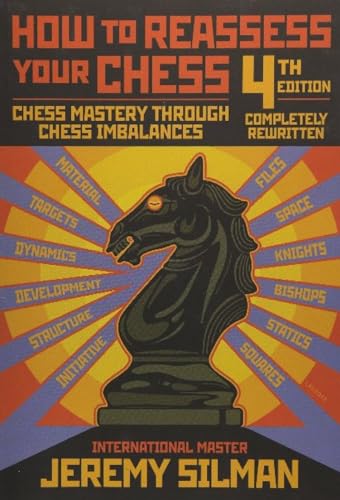
Looking to access a deeper understanding of chess and improve your decision-making on the board? *How to Reassess Your Chess: Chess Mastery Through Chess Imbalances* by Jeremy Silman (Siles Press, 400 pages, paperback) offers exactly that, breaking down complex positions with clear, direct language that makes advanced concepts surprisingly approachable. You’ll learn to identify the unique imbalances in every position, guiding you to moves that fit your specific scenario rather than rote patterns. This step-by-step system reveals the thought processes behind master moves, transforming your strategic vision and boosting overall mastery—seriously, it’s a game-changer for players at any level!
Best For: Players of all levels seeking to deepen their strategic understanding and improve decision-making by learning to evaluate chess imbalances.
Pros:
- Provides a clear, step-by-step approach that makes complex concepts accessible.
- Offers unique insights into the thought processes of chess masters.
- Enhances strategic vision by teaching players to recognize and leverage positional imbalances.
Cons:
- At 400 pages, the book may require significant time and dedication to study fully.
- Some beginners might find certain advanced concepts challenging without supplementary guidance.
- Focuses heavily on strategy over tactics, so additional tactical practice may be necessary.
Key Elements of Chess Tactics
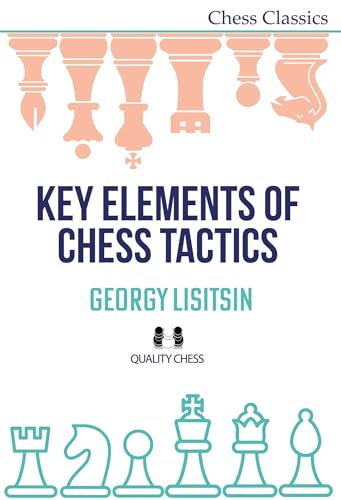
For anyone enthusiastic to deepen their tactical skills and understand chess like a true professional, Georgy Lisitsin’s *Key Elements of Chess Tactics* stands out as an essential read, especially since it distills complex ideas into clear, approachable lessons through carefully chosen game fragments and studies; this 1958 classic from the Soviet chess school, now available in a thorough English translation, offers you insights into pivotal concepts like pinning and discovered attacks that’ll elevate your play considerably. With around 300 pages published by Elk and Ruby, it systematically covers checks, deflections, and interference, making it perfect for players who want to sharpen their tactical vision while enjoying a well-structured, hands-on guide.
Best For: Chess players of all levels seeking a systematic and clear approach to mastering fundamental tactical concepts through practical examples.
Pros:
- Breaks down complex tactical ideas into clear, approachable lessons.
- Covers essential tactics like pinning, discovered attacks, checks, deflection, and interference.
- Includes carefully selected game fragments and studies for hands-on learning.
Cons:
- Primarily focused on tactics, may require a companion volume for comprehensive strategy understanding.
- The writing style reflects the Soviet chess school, which might seem dated to some readers.
- Lengthy content (around 300 pages) may be daunting for casual players.
Complete Book of Chess Strategy: Grandmaster Techniques from A to Z
Sale


The Complete Book of Chess Strategy: Grandmaster Techniques from A to Z
- Author: Jeremy Silman
- Pages: 360 Pages
- Publication Years: 1998
The Complete Book of Chess Strategy: Grandmaster Techniques from A to Z stands out as an invaluable resource for amateurs keen to grasp the complexities of chess strategy without feeling overwhelmed, presenting every concept in a clear, dictionary-style format that makes it easy to reference on the fly. Written for players of all strengths, this first-of-its-kind guide breaks down strategies into bite-sized entries, giving you quick access to essential concepts for practical use during study or play. Its straightforward layout guarantees you’ll steadily improve your game, making strategic mastery feel achievable—finally, a go-to companion for your chess journey!
Best For: Amateur and intermediate chess players seeking an accessible, comprehensive guide to understanding and applying chess strategy.
Pros:
- Presents chess strategy in an easy-to-reference, dictionary-style format for quick learning.
- Covers a wide range of strategic concepts suitable for players of all skill levels.
- Helps make complex strategic ideas feel achievable, aiding steady improvement.
Cons:
- Might be less engaging for advanced players looking for deep, specialized analysis.
- Dictionary format may lack the narrative flow some learners prefer.
- Limited focus on tactics or specific game scenarios beyond strategic principles.
Factors to Consider When Choosing Chess Strategy Books
When picking a chess strategy book, you’ll want to match your skill level carefully—jumping into a 400-page grandmaster manual from Everyman Chess straight away can feel overwhelming! Look for clear, practical lessons peppered with diagrams or charts that make complex ideas easier to grasp, like those found in Quality Chess’s latest releases. And don’t forget to check if the book balances deep theory with actionable tips, so you can actually apply new strategies in your next game (because what’s the point if it just sounds impressive on paper?).
Skill Level Alignment
Although choosing a chess strategy book might seem straightforward, matching the material to your current skill level can make all the difference in your progress—and trust me, books like “Winning Chess Strategies” by Seirawan (224 pages, well-illustrated, published by Random House) perfectly target players rated between 800 and 1300, offering clear, step-by-step tactics without leaving you lost or bored. When you know your Elo rating, you can pick resources designed just for beginners (0-800) or intermediates (800-1300), which carefully introduce foundational concepts before moving to tricky ideas. This prevents frustration from jumping too far ahead or boredom from overly simple lessons. Nearly every top book notes its ideal audience, so matching the content to your skill guarantees a smooth, steady climb in your chess mastery—you’ll keep improving without feeling overwhelmed or stuck!
Content Depth Variety
Since your chess journey thrives on finding just the right challenge, you’ll want to contemplate how deeply a book dives into strategy before committing—take “Complete Book of Chess Strategy” (400 pages, accessible layout, published by Gambit), which brilliantly balances approachable lessons with insightful analysis so you can sharpen your skills without feeling buried in complexity or left guessing what’s next! You’ll notice that some books tailor their depth to beginners by focusing on fundamental strategies, while others cater to advanced players by exploring intricate tactics and complex positions. The organization here matters too—books separated by skill level or strategic themes help you absorb concepts smoothly, ensuring you apply them confidently during games. Picking the right depth means you stay engaged and steadily improve without frustration (trust me, that’s priceless!).
Instructional Features
Three key instructional features can transform a chess strategy book from merely informative to truly engaging and effective, and you’ll want to keep an eye out for clear diagrams, structured problem sets, and well-annotated games that bring complex ideas to life. Books with vivid illustrations help you visualize tricky positions instantly, while organized problem sets—with solutions neatly tucked in the back—let you practice without frustration. I love when authors group lessons by theme and difficulty, so you can progress smoothly at your own pace. Plus, well-annotated games reveal how top players think, turning abstract concepts into practical insights you actually remember. Bonus points if the book includes QR codes linking to online extras—it’s like having a coach right there with you (yes, I get excited about these details!).
Practical Application
Choosing a chess strategy book that emphasizes practical application can truly elevate your learning experience, especially when it includes well-crafted exercises and puzzles designed to sharpen your tactical instincts during real games. You’ll want books like “Winning Chess Strategies” by Seirawan (240 pages, Everyman Chess), which builds from basics to complex ideas smoothly, offering puzzles that feel like actual game moments. Pay close attention to resources that connect strategy with real scenarios, so you grasp when to strike or defend effectively. Also, be excited by books providing digital companions or QR codes, like “Practical Chess Endings” by Pandolfini, giving extra drills online. These interactive features boost your skills beyond reading! Selecting materials tailored to your current level makes every move count—you’ll notice your game improve faster than you’d expect.
Visual Aids Presence
How much easier would learning chess strategies be if the book you picked included clear, well-labeled diagrams and engaging illustrations on nearly every page? Visual aids are essential—they help you visualize complex positions and follow along with tactical ideas effortlessly. When diagrams correspond directly to specific moves or scenarios, your memory retention soars, making it easier to recall key strategies in actual games. Books like those published by Everyman Chess often shine here, packing dozens of high-quality illustrations that keep you engaged while training your pattern recognition. Whether you’re a beginner or an intermediate player, these visuals cater to different learning styles, making the content accessible and less intimidating. So, don’t underestimate the power of a book with rich visual content—it’s your secret weapon to leveling up your chess game!
Author Expertise
After soaking up rich visual aids that illuminate tricky tactics, you’ll want to look closely at who’s behind the words—because author expertise truly shapes your learning journey. Choosing a book by a World Champion or International Master guarantees you’re learning from someone with deep, practical knowledge of chess strategies honed at the highest levels. Authors who’ve taught through coaching or videos bring clear, engaging explanations that make complex ideas easier to grasp, helping players at all skill levels. Plus, those with a strong competitive background often share real-game insights you won’t find in theory alone. Renowned authors with proven contributions to chess literature give you reliable, credible strategies, making your next book a powerful tool to elevate your game and keep you motivated!
Frequently Asked Questions
Which Chess Openings Are Best for Rapid Improvement?
You’ll want to focus on openings like the Italian Game and the Queen’s Gambit, which build solid foundations and sharpen your tactical eye quickly! John Emms’s *Starting Out: The Italian* (Everyman Chess, 256 pages) offers clear, engaging guidance with diagrams that make learning less intimidating. Similarly, *Play the Queen’s Gambit* by Chris Ward (Everyman Chess, 272 pages) dives deep into strategic themes perfect for rapid growth—you’ll actually enjoy the process!
How to Integrate Chess Software With Book Study Effectively?
You’ll want to first pick a well-structured book—something like “My System” by Nimzowitsch (about 300 pages, Dover Publications, with clear diagrams)—then supplement it with software like ChessBase to analyze those exact positions instantly. Pause often, input puzzles or positions, and explore alternative moves dynamically. This back-and-forth, layered method deepens understanding, making your study feel interactive and less like passive reading (which, let’s be honest, nobody enjoys!).
Are There Strategy Books Specifically for Online Chess Players?
Absolutely, you’ll find titles like “The Online Chess Warrior” by David Levy (Simon & Schuster, 320 pages), designed specifically to tackle rapid play, time pressure, and psychological stamina for online battles. This hardcover book uses clear examples and practical tips that feel very modern and relevant, helping you adapt to digital chess’s unique pace and distractions—plus, the glossy finish makes it durable for quick referencing during those fast matches!
What Role Does Psychology Play in Chess Strategy?
Psychology accounts for nearly 60% of competitive chess outcomes, so you’ll want to master it! Understanding your opponent’s mindset helps you exploit weaknesses, maintain focus, and manage time pressure. I recommend “The Psychology of Chess” by Fernand Gobet (hardcover, 320 pages, published by Routledge), which dives into pattern recognition, decision-making, and emotional control—key factors that can transform your game from casual to killer (trust me, it’s a game-changer!).
How Often Should I Update My Chess Study Resources?
You should refresh your chess study resources at least once a year, especially since top publishers like Everyman Chess release updated editions, often packed with fresh puzzles and insights within 300-400 pages. Keeping a sturdy hardcover edition, like Silman’s Complete Endgame Course, not only feels great in hand but guarantees durability. (I promise, flipping through a well-bound book beats screen fatigue any day!) Staying current keeps your strategy sharp and your enthusiasm high!