As an Amazon Associate, we earn from qualifying purchases. Some links on this site are affiliate links at no extra cost to you. Our recommendations are based on thorough research and editorial judgment.

10 Best Graphic Novels for Adults to Read Now — Riveting Stories & Stunning Art

You’ll love this list of ten graphic novels mixing riveting stories with stunning art: Abrams’ DUNE: The Graphic Novel, Book 1 (hardcover, 144 pages, foil-stamped, art by Raúl Allén and Patricia Martín), Daytripper (Vertigo, ~240 pages, B&W by Fábio Moon and Gabriel Bá), Sapiens: A Graphic History Vol. 1 (primer), The Art of War (128 pages, trade paperback), plus Watership Down and Batman: The Killing Joke—now keep going to see format notes, themes, buying tips!
Key Takeaways
- Start with acclaimed adaptations and originals like DUNE: The Graphic Novel, Daytripper, and Sapiens: A Graphic History for high storytelling and art.
- Prioritize books with standout art styles and formats (full-color hardcovers or trade paperbacks) for visual impact and durability.
- Choose by theme—literary adaptations, existential dramas, historical primers, or crime—to match mood and reading preferences.
- Look for award recognition, author/artist reputation, and positive reviews to ensure narrative depth and production quality.
- Consider length and completeness: collected editions and deluxe prints offer fuller stories, while single-volume adaptations may be condensed.
DUNE: The Graphic Novel, Book 1: Dune (Volume 1)

You may be interested

10 Best 3D Printing Books to Master the Art and Technology
August 12, 2024

If you love big, layered science fiction that respects adult themes and complex worldbuilding, you’ll find DUNE: The Graphic Novel, Book 1 an ideal pick, because it adapts Frank Herbert’s classic with fidelity while reimagining scenes through Raúl Allén and Patricia Martín’s detailed illustrations and Bill Sienkiewicz’s striking cover art. Published by Abrams ComicArts, it runs 144 pages, hardcover, foil-stamped, and collects the first third of Herbert’s novel across three volumes, and you’ll love it! You’ll appreciate the balanced adaptation (by Brian Herbert and Kevin J. Anderson), which keeps political depth and ecology central while moving briskly for readers.
Best For: Fans of classic, multilayered science fiction and visually driven readers who want a faithful, illustrated adaptation of Frank Herbert’s Dune that preserves political and ecological depth.
Pros:
- Faithful adaptation that retains the novel’s political and ecological complexity while streamlining for the graphic format.
- Stunning artwork by Raúl Allén and Patricia Martín with a striking cover by Bill Sienkiewicz.
- High-quality hardcover presentation (144 pages, foil-stamped) collecting the first third of the novel.
Cons:
- Only the first third of Dune—story is incomplete without subsequent volumes.
- Dense themes and worldbuilding may still feel heavy for casual or new sci‑fi readers.
- Adaptation by Brian Herbert and Kevin J. Anderson may not satisfy purists who prefer the original prose.
The Art of War: A Graphic Novel (Graphic Classics)
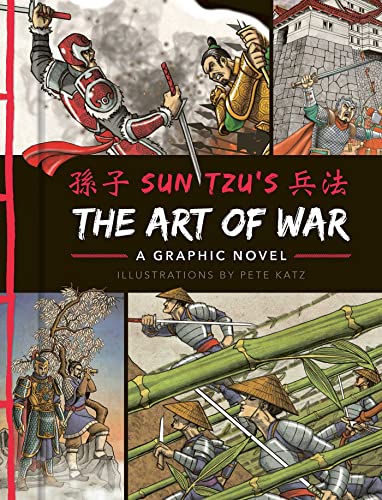

For readers who love seeing timeless strategy translated into striking visuals, The Art of War: A Graphic Novel (Graphic Classics), adapted by award-winning illustrator Pete Katz, is a compact, full-color Graphic Classics trade paperback that brings Sun Tzu’s fifth-century BC principles—planning, tactics, maneuvering, and spying—to life through a teacher-and-pupil narrative and vibrant battle scenes, so you’ll get both philosophical insight and cinematic artwork in one accessible package (I got pleasantly hooked, and you might too!). It’s a roughly 128-page, full-color trade paperback with glossy stock, sturdy binding, pocketable trim, and clear lettering that keeps Sun Tzu’s aphorisms neatly readable.
Best For: Readers who enjoy classic military strategy presented visually—fans of graphic novels, military history enthusiasts, and newcomers wanting a concise, illustrated introduction to Sun Tzu.
Pros:
- Vibrant full-color illustrations make complex strategic concepts easy to grasp and engaging.
- Accessible teacher-and-pupil narrative frames Sun Tzu’s aphorisms for modern readers.
- Compact, well-made trade paperback (roughly 128 pages, glossy stock, sturdy binding) for convenient reading and display.
Cons:
- Graphic adaptation may simplify or omit nuances of the original text for brevity and visual storytelling.
- Relatively short length limits depth for readers seeking comprehensive commentary or analysis.
- The teacher-pupil framing and cinematic scenes might not appeal to purists who prefer a literal, unillustrated translation.
Daytripper

You’ll love Daytripper if you’re drawn to intimate, existential stories that squeeze life’s meaning into moments, and it’s perfect for readers who want literary comics with emotional depth. You’ll follow Bras de Olivias Dominguez through fragmented chapters (each ending with his death), a structure that forces you to ponder mortality while celebrating small joys, and the book’s 240 pages, sturdy hardcover (DC/Vertigo edition) and black-and-white, expressive art make it a tactile experience you’ll want on your shelf. Crafted by brothers Fábio Moon and Gabriel Bá, it’s poignant, beautifully paced, and often devastatingly honest—seriously recommended! Buy or borrow it today.
Best For: readers who appreciate literary, emotionally resonant graphic novels that explore mortality and the beauty of everyday moments.
Pros:
- Poignant, tightly crafted storytelling that provokes deep reflection on life and death.
- Striking black-and-white artwork and thoughtful pacing by Fábio Moon and Gabriel Bá.
- High-quality 240-page hardcover (DC/Vertigo) that’s both durable and collectible.
Cons:
- Recurrent deaths and existential themes can feel heavy or emotionally draining.
- Fragmented chapter structure may frustrate readers who prefer linear narratives.
- Black-and-white art and a slow, contemplative pace might not appeal to those seeking action or bright, flashy visuals.
Sapiens: A Graphic History: The Birth of Humankind (Vol. 1)

Sapiens: A Graphic History: The Birth of Humankind (Vol. 1) makes an ideal pick if you want a smart, visually rich primer on human history, presenting the official U.S. edition in full color with 27 photographs, 6 maps and 25 illustrations/diagrams that help the narrative pop off the page. You’ll recognize Dr. Yuval Noah Harari’s voice as it traces cognition’s rise seventy thousand years ago, examines vanished human species, and questions our future trajectory. It’s a #1 New York Times bestseller and reading pick for Obama, Gates, and Zuckerberg, packed in a striking, debate-sparking full-color volume you’ll return to!
Best For: readers who want a visually engaging, accessible introduction to human history and evolution by Yuval Noah Harari.
Pros:
- Full-color, graphic format with 27 photos, 6 maps, and 25 illustrations/diagrams that make complex ideas easy to absorb.
- Harari’s clear, provocative narrative condenses big-picture history and science into an approachable primer.
- Sparks debate and curiosity, appealing to fans of popular science and history authors (e.g., Jared Diamond, James Gleick).
Cons:
- Simplifies complex scholarly debates and may omit nuance sought by academic readers.
- As Vol. 1, it covers the early chapters of human history and leaves later developments for subsequent volumes.
- Graphic-novel style might feel too informal for readers preferring traditional, text-heavy history tomes.
The Odyssey Graphic Novel (Modern Visual Adaptation for Young Adults)
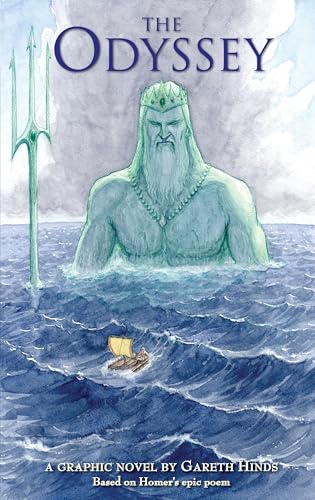
Gareth Hinds’s graphic adaptation of The Odyssey (Candlewick Press, 160 pages) drops you into Homer’s stormy world with full-color, cinematic art and sturdy hardcover that feels like a collector’s item. You follow Odysseus, a cunning, heroic king haunted by Poseidon, through shipwrecks, monsters, temptations, and divine interventions, while Hinds’s layered panels make every peril cinematic and immediate. This New York Times bestseller, praised by Rick Riordan, condenses Homer’s sprawling tale into concise pacing, accessible language, and rich visuals, perfect for adults wanting mythic adventure with modern readability! The hardcover’s heft invites re-reading, a satisfying keepsake for your shelf now.
Best For: readers (teens and adults) who want a fast-paced, visually-driven modern adaptation of Homer’s Odyssey that balances mythic adventure with accessible storytelling.
Pros:
- Vivid, cinematic full-color art that brings monsters, storms, and divine scenes to life.
- Concise, modern pacing and language make the epic approachable for young adults and newcomers.
- Sturdy hardcover presentation feels like a collectible and invites re-reading.
Cons:
- Condensing the sprawling epic into 160 pages means some plot details and nuances are necessarily trimmed.
- Purists may object to interpretive changes or the graphic-novel format over a direct translation.
- Fast pacing can make some character development and subplots feel abbreviated.
To Kill a Mockingbird: A Graphic Novel

If you’re looking for a graphic novel that turns a literary touchstone into something immediately accessible and visually arresting, HarperCollins’s To Kill a Mockingbird: A Graphic Novel is a standout choice, published in 2018 with roughly 320 pages of full-color art (hardcover editions come with a dust jacket and a sturdy spine that feels like a book built to last), and Fred Fordham’s illustrations do more than retell the plot—they reveal new emotional layers in Scout, Jem, Boo Radley, and Atticus, making the themes of race, innocence, and moral courage hit home for both longtime fans and newcomers alike!
Best For: readers (teens and adults) seeking an accessible, visually engaging entry point to Harper Lee’s To Kill a Mockingbird or a fresh way for longtime fans to revisit the story.
Pros:
- Fred Fordham’s full-color illustrations add emotional depth and make characters and themes immediately accessible.
- Faithful adaptation that highlights core themes (race, innocence, moral courage) while streamlining the narrative for modern readers.
- Well-produced hardcover edition with durable binding and ~320 pages—good for classrooms and collectors.
Cons:
- Graphic format inevitably condenses and simplifies some of the novel’s nuanced prose and interior monologue.
- May be seen as a substitute for, rather than a complement to, reading the original novel.
- Some readers may prefer a text-first experience and find visual storytelling less immersive for complex themes.
The Hobbit: A Graphic Novel

David Wenzel’s evocative art, collected from Eclipse Comics’ three-issue series, makes The Hobbit: A Graphic Novel ideal for you, if you’re seeking a faithful, visually rich Tolkien gateway! You’ll follow Bilbo, Thorin and Gandalf through trolls, goblins and Smaug across Rivendell to Mirkwood, rendered in lush panels that clarify character and mood, and the collected edition (160 pages, trade paperback with sturdy sewn binding and color-enhanced plates) feels substantial on your shelf. If you’re a longtime fan or newcomer, you’ll appreciate faithful adaptation, clear pacing, and evocative visuals that invite rereading and sharing (yes, even gift-worthy). Do pick it.
Best For: Fans and newcomers who want a faithful, visually rich graphic adaptation of The Hobbit that serves as an accessible, gift-worthy gateway to Tolkien’s story.
Pros:
- Faithful retelling of Tolkien’s tale with clear pacing that suits both longtime fans and new readers.
- Evocative, striking artwork by David Wenzel that enhances mood and character throughout the journey.
- Collected 160-page trade paperback with sturdy sewn binding and color-enhanced plates feels substantial and re-readable.
Cons:
- As an adaptation, some textual detail and nuance from the original novel are inevitably condensed or omitted.
- Art style and coloring may not match every reader’s personal taste.
- Readers seeking the complete original prose experience may prefer the novel over a graphic-format interpretation.
Watership Down: The Graphic Novel
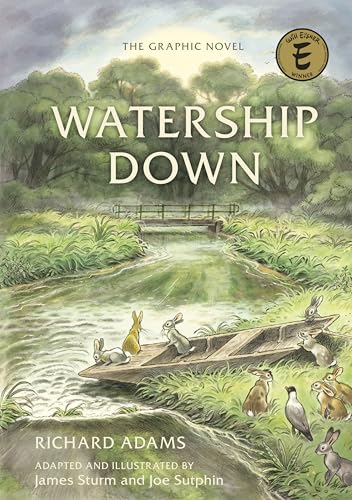
You’ll find Watership Down: The Graphic Novel a perfect pick if you want a grown-up comic that treats Richard Adams’s classic seriously, offering a vivid, cinematic adaptation you can display on your shelf; published by First Second Books in a handsome hardcover (about 160 pages), it’s printed on heavy stock with an embossed dust jacket and thoughtful French flaps that make it feel like a keepsake. James Sturm’s adaptation and Joe Sutphin’s art render survival, hope, courage, and friendship with clarity, pacing and emotional heft, the book won an Eisner and Ohio Book Award (with Harvey and Ringo nods).
Best For: Readers who love faithful, grown-up comic adaptations of classic literature—especially long-time fans of Richard Adams and collectors who want a handsome, display-worthy hardcover.
Pros:
- Faithful, cinematic adaptation by James Sturm with emotionally resonant pacing and themes of survival, hope, courage, and friendship.
- High-quality production: handsome hardcover (~160 pages) on heavy stock with embossed dust jacket and French flaps—feels like a keepsake.
- Award-winning recognition (Eisner, Ohio Book Award; Harvey and Ringo nominations) signaling strong critical reception.
Cons:
- Not ideal for young children expecting a simple picture book—mature themes and a serious tone.
- Some readers may miss the depth and detail of the original prose that can be condensed in an adaptation.
- Art style and interpretive choices may not match every reader’s vision of the characters or settings.
Batman: The Killing Joke Deluxe (New Edition)
Sale


Batman: The Killing Joke Deluxe (New Edition)
- Care instruction: Keep away from fire
- It can be used as a gift
- It ensures you get the best usage for a longer period
Batman: The Killing Joke Deluxe (New Edition) is perfect for readers who want a darker, more adult Batman experience, pairing Alan Moore’s unnerving Joker origin with Brian Bolland’s immaculate artwork and lush recoloring from DC’s deluxe line, presented as a handsome hardcover that highlights covers, sketches, and bonus short stories. You’ll see Moore’s grim thesis — one bad day topples sanity — as the Joker escapes Arkham, targets Commissioner Jim Gordon and Barbara (yes, Barbara), forcing Batman into a raw moral confrontation. DC’s deluxe hardcover, roughly 120 pages, collects Black and White, Countdown #31, sketches, and Absolute-only art.
Best For: Fans of darker, more adult Batman stories who want Alan Moore’s unsettling Joker origin paired with Brian Bolland’s pristine artwork in a deluxe hardcover package.
Pros:
- Stunning Brian Bolland art and lush recoloring that showcase the story in a high-quality deluxe presentation.
- Alan Moore’s tightly focused, philosophically charged script that deepens the Batman–Joker dynamic.
- Extras (Black and White, Countdown #31, covers/sketches and Absolute-only art) add collector value beyond the main graphic novel.
Cons:
- Contains a controversial and disturbing sequence involving Barbara Gordon that many readers find upsetting and dated.
- At roughly 120 pages, some may feel the deluxe edition is short for its price compared with other collected editions.
- Recoloring may not appeal to purists who prefer the original coloring or the Absolute edition’s presentation.
MrBallen Presents: Strange, Dark & Mysterious — The Graphic Stories

If you’re drawn to true crime and uncanny tales, MrBallen Presents: Strange, Dark & Mysterious collects nine vividly illustrated stories (a New York Times bestseller), and it’ll grab you from the first page. You’ll follow John Allen’s narrations adapted into comics, encounter Nahanni Valley screams, the Kandahar Giant, Utah UFOs, and darker human horrors, rendered with eerie art by Andrea Mutti and plotted with Robert Venditti’s skill, published in a sturdy hardcover edition with roughly 192 pages, crisply printed on matte stock, and it’s paced to spook you, deliver bizarre, dark surprises, and keep you reading aloud (quietly, ironically!).
Best For: Fans of true crime, uncanny real-life mysteries, and visually driven storytelling who enjoy eerie, well-researched narratives in graphic-novel form.
Pros:
- Vivid, atmospheric art by Andrea Mutti that heightens the creep factor and visual storytelling.
- Compelling, true-story narratives adapted by John Allen with plotting by Robert Venditti, offering strong pacing and twists.
- Sturdy hardcover, ~192 pages on matte stock—high-quality production for collectors and fans.
Cons:
- Disturbing themes and graphic depictions may be upsetting or triggering for sensitive readers.
- Nine short stories mean some individual tales feel brief and may leave readers wanting more depth.
- Niche appeal—readers who prefer optimistic or lighthearted comics may not enjoy the dark tone.
Factors to Consider When Choosing Graphic Novels for Adults

When you pick a graphic novel, weigh genre and themes alongside art style — whether Image, Fantagraphics, or Vertigo offerings with glossy covers and hardcover options — exciting!
You should consider story complexity and age appropriateness, from straightforward 120-page thrillers to layered 500–600-page epics (mature-rated or not), which shapes mood, pacing, and trigger content.
Also factor length and format — trade paperback, deluxe hardcover with dust jacket, or serialized floppies — check page counts, spine durability, and your available reading time so you choose the right fit for you!
Genre and Themes
Anyone choosing adult graphic novels should weigh genre and themes—Pantheon’s Maus (296 pages, clothbound) and Image’s Saga trades (≈160 pages, glossy) show how art, story, and topicality drive impact. You should scan genres from classic adaptations and historical narratives to contemporary fiction and horror, matching mood and curiosity so you stay engaged through dense themes and pacing. Seek thematic depth—works that probe societal injustices, psychological struggles, and existential questions—because these narratives resonate, reward rereads, and reveal new facets on reflection, trust me! Favor books that engage current social issues or relevant history, especially when publishers include forewords or annotations that contextualize events. Remember thematic range: love, loss, identity, morality, all handled with sophisticated storytelling and visual interplay that amplifies emotional stakes (yes, art matters!).
Art Style
Art style shapes your reading mood and can make a 296-page, clothbound Pantheon book like Maus feel intimate and grave, or turn a glossy, ≈160-page Image Saga trade into a raucous, color-drenched binge—so you’ll want to pay attention to palette, linework, and composition before you buy! You should look at how vivid, full-color printing (think Image or Dark Horse deluxe editions) boosts action and spectacle, while Penguin Classics or Pantheon softcovers with monochrome art often deepen intimacy and reflection, and you’ll notice linework and shading guide your eye across panels. Favor consistent, cohesive art throughout a 200–400 page trade so immersion stays intact, and don’t hesitate to sample pages in-store (trust me, you’ll know it when it clicks!). Also check for embossed spines, always.
Story Complexity
After you’ve thumbed through Pantheon’s clothbound Maus or a glossy Image Saga and felt the art click, you’ll want to weigh story complexity next, since denser, multi-layered narratives—think 200–400 page trades from Pantheon, Fantagraphics, or Drawn & Quarterly—often reward slow reading and re-reading, and can turn a striking visual experience into something haunting and discussable (yes, that means bringing it to book club!). You’ll gravitate toward stories that probe moral ambiguity and existential questions, with non-linear timelines or shifting perspectives that regularly invite multiple readings and lively discussion among friends, colleagues, or book groups. Look for art that works symbolically or experimentally, as avant-garde visuals can deepen themes and character arcs, challenging conventions and rewarding you with richer interpretation and sustained reflection!
Length and Format
When you decide how much time and shelf space you want to commit, consider that graphic novels can run from tight 60-page stories to 300-plus page epics (Pantheon’s clothbound Maus or Drawn & Quarterly doorstoppers), and that length directly shapes character depth and thematic scope, so pick accordingly. You’ll weigh single-volume 60–120 page works that deliver arcs, against 200–400 page volumes or multi-book series that let characters breathe and plots thicken, and you’ll appreciate hardcover bindings for shelf durability. Choose paperback or digital editions when portability and cost matter, and expect panel layout and art style to drive pacing, with cinematic spreads accelerating momentum and dense grids slowing reflection. I truly get excited recommending Drawn & Quarterly omnibus and Fantagraphics gem — indeed satisfy!
Age Appropriateness
If you’ve been weighing page counts and bindings—60-page singles, 200–400 page doorstoppers, clothbound Pantheon or Drawn & Quarterly omnibus editions—you’ll also want to think about who the book’s actually aimed at, because length and format often signal thematic ambition and audience. Look for adult-targeted imprints (Pantheon, Fantagraphics, Dark Horse’s mature lines), note page counts and trim size, and expect denser themes like morality, identity, and societal critique that reward slow reading, which I love! Check content warnings and reviews before buying, since explicit violence, sexual content, or harsh language can surprise younger readers and change where you shelve a book. Choose editions with sturdy bindings and clear lettering if you want a lasting, thoughtful reading experience (and to display proudly). You’ll feel satisfied always.
Author Reputation
You’ll want to check an author’s track record—Eisner or Pulitzer winners, longtime Pantheon or Drawn & Quarterly creators, or Fantagraphics veterans—because those names often mean strong storytelling, reliable 200–400 page narratives, and first-rate collaborators (colorists, letterers, editors) who lift the whole book into a lasting clothbound or hardcover package you’ll be proud to display! Look up awards and previous titles, noting if an author’s work at Pantheon or Drawn & Quarterly consistently lands around 200–350 pages with bindings and acid-free paper, since those production choices matter to collectors, and they signal editorial rigor. Follow creators on social threads to see engagement and creative process insights, because authors who converse with readers often polish themes, hire top artists, and deliver cohesive, resonant books you’ll recommend.
Adaptation Faithfulness
A faithful adaptation feels like finding a lost chapter, and you’ll value Pantheon or Drawn & Quarterly editions that keep 200–350 pages, clothbound covers, and precise lettering! When you assess faithfulness, notice if adaptations preserve character voices, thematic arcs, and pacing, because faithful versions honor the original’s intent and reader expectations. Some graphic novels take creative liberties for visual or narrative impact, which can enhance interpretation or alienate fans depending on editorial choices and translation. Artistic style matters quite a lot, since stylized illustration can shift emotional beats or setting specificity, altering how faithful an adaptation feels to you. Check critics’ responses and the source’s legacy as checkpoints, they often reveal whether an adaptation succeeds in honoring the original while offering a fresh perspective!
Price and Availability
After weighing how faithful an adaptation feels, consider price and availability, since Pantheon and Drawn & Quarterly clothbound 200–350 page editions often cost $25–$40, while paperbacks start near $10! You’ll want to check format, because digital editions are often cheaper and instantly accessible, while hardcover special editions (embossed covers, sewn bindings) can push prices past $30, especially from boutique presses. If a title belongs to a series, availability can vary wildly, with delays between volumes affecting whether you can complete a run without paying premium resale prices. Shop online retailers during sales, compare listings, and don’t forget libraries, which let you borrow beautiful physical editions for free (yes, try your local branch!). Also, watch for signed copies and limited prints, they add collector value.
Frequently Asked Questions
Are There Audiobook Versions of Graphic Novels?
Yes, many graphic novels have audiobook versions, with dramatized adaptations that reproduce dialogue and sound effects, publishers like Penguin Random House Audio and HarperCollins produce high-quality recordings! You’ll often find companion editions noted on trade paperback or deluxe hardcover releases (for example, Alan Moore’s Watchmen tie-ins, usually around 416 pages, or Marjane Satrapi’s Persepolis, about 160 pages), and narrations run from one hour to ten hours depending on the title.
Which Graphic Novels Work Well for Book Clubs?
Brave, bittersweet beginnings! You’ll want to choose Persepolis (Pantheon, 152 pages, paperback with stark black-and-white art), which invites political and personal conversations among readers for adults. Pick Fun Home (Houghton Mifflin Harcourt, 240 pages, with dust jacket) for memoir depth, delicate family themes, rich language fueling debate. Include My Favorite Thing Is Monsters (Farrar, Straus and Giroux, 400 pages, oversized art book) for visual complexity, historical context, and emotional reactions.
Do Graphic Novels Hold Resale or Collector Value?
Yes, you’ll find many graphic novels hold resale or collector value, especially signed first editions, deluxe hardcovers, and limited prints from publishers like Image! Check colophon print runs, paper quality, embossed covers and notable page counts (300-plus ages better), because physical features really affect value over time. You’ll want market know-how, platforms like Heritage or eBay, grading (CGC) for comics, and patience to fetch top prices, but it’s often rewarding!
How Can I Protect and Display My Graphic Novel Collection?
You should store copies in acid-free Mylar sleeves with backing boards, choosing BCW or ComicProtect bags sized to comic sizes, which preserves spines and vibrancy. Display non-graded volumes on UV-filtered glass shelves (I love Ikea Kallax), keep editions by Fantagraphics and Image upright, dusted, and temperature stable, away from sunlight! For high-value books, you’ll slab-grade them, keep climate-controlled boxes, and carefully document publisher, page count, and print run for resale.
Are Accessible Formats Available for Visually Impaired Readers?
Yes, like finding a lighthouse in fog, you can get accessible editions of graphic novels, including large-print reprints, high-contrast pages, tactile features, and audio!
You’ll find Drawn & Quarterly and Abrams offering 200–350 page editions with sturdy bindings and clear gutters (you’ll feel smug), plus Fantagraphics too.
RNIB and libraries offer audio, embossed or tactile-image editions, apps like Bookshare provide files, and suppliers sell tactile prints—you’re going to love them!